 [1]
[1]TEL GEZER, Israel (BP) – The sun and moon stood still for about a day over Gibeon, as factually recorded in Joshua 10 in a biblical miracle unlike any other, giving Joshua an extra day of sunlight as he defeated the Amorites centuries ago.
New Orleans Baptist Theological Seminary (NOBTS) archaeological scholar Jim Parker believes the miracle is pertinent to findings at Tel Gezer, an archeological site where Parker helped lead an excavation of the ancient water system with a team of scholars and volunteers 2010-2018.

The nine-year project took archeologists as deep into the tunnel as safety allowed, Parker said, reaching the water basin at the tunnel’s bottom and finding clues of the inhabitants’ interest in the calendrical cycle, movements of the sun, moon and planets, and cult worship of related idols, such as Shemesh, the Sun god, in addition to Baal and other idols.
“We think this event – this idea that they’re studying the sun, moon and stars – somehow connects to Joshua 10 in the Bible, because it’s just above Gezer, in that valley called Ayalon, where the sun and the moon stand still,” said Parker, executive director of the Moskau Institute of Archaeology at NOBTS and co-director of the seminary’s Museum of the Bible and Archaeology. “This obviously has some connection to this particular tale.”
The findings and artifacts from the nine-year excavation of the tunnel, dating to the Middle Bronze Age 2B or 1750-1650 B.C, are recorded in the new publication, “The Canaanite Water System at Gezer,” with Parker, a co-director of the excavation, among the principal authors in addition to co-directors Tsvika Tsuk, chief archaeologist, Israel Nature and Parks Authority; Eli Yannai, representing the Israel Antiquities Authority; in addition to other NOBTS representatives Daniel Warner, former NOTBS professor of Old Testament and archaeology and former director for the Moskau archaeological institute; and Dennis Cole, who was an NOBTS professor emeritus.
“As professional archaeologists,” Parker said, “our job is just simply to uncover and assess the findings, and then make a conclusion based on that” absent from theology, Parker said. “However, it’s always my passion to connect whatever we do to Scripture. And I think that even though we don’t know exactly how it connects, I do believe strongly that this connects to Joshua chapter 10, and so I’m glad for that. We also may have uncovered something about the Canaanites and their religion and their worship that we may not have known precisely before.”
Some answers will rely on future excavations from the next generation of archeologists, Parker said, as technology allows additional work at the site.
But the excavation was successful in accomplishing its main goals, said Parker, who met with project co-directors and others in Israel in September for the book unveiling.
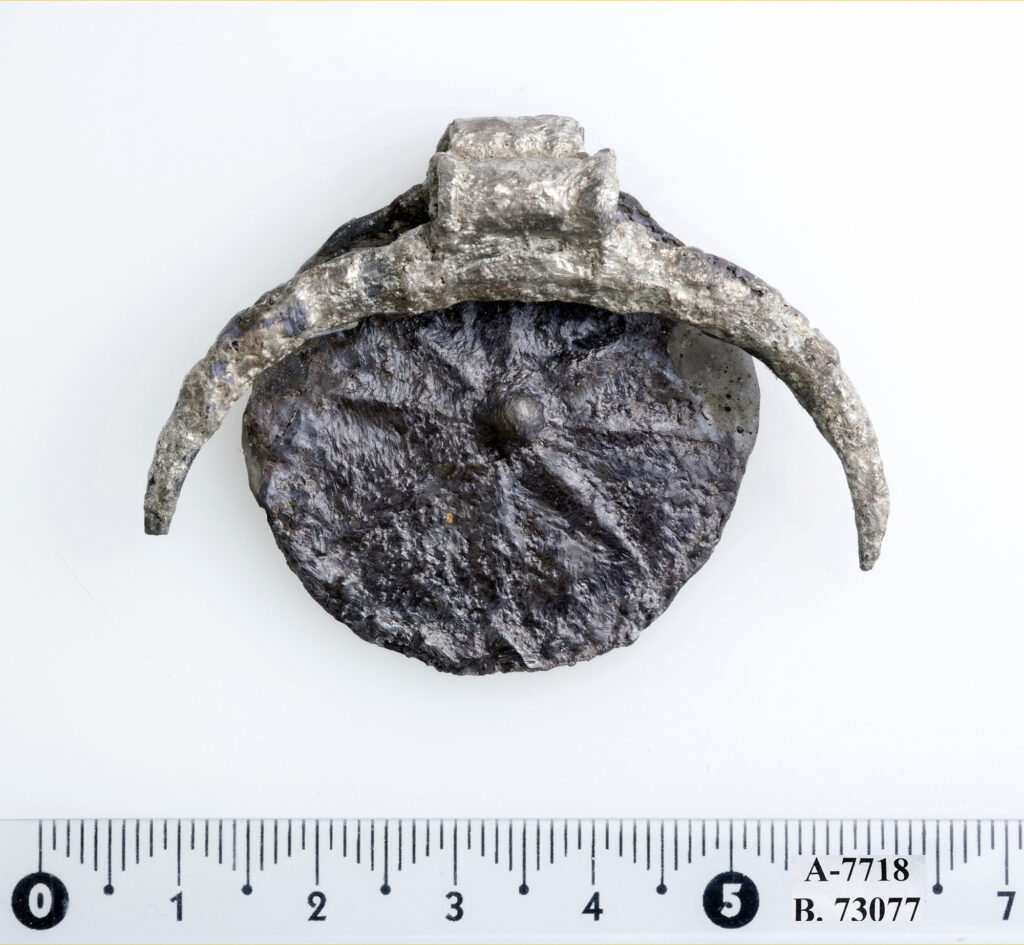
Chiefly, the project sought to:
- Gain a better understanding of the water system’s design and function. Evidence suggests Gezer might have been a destination for cult worship, as the water system did not produce enough water to serve as the main water supply for a large community.
“Analysis showed that the water was of spring-water quality, which was proof positive that the system functioned in antiquity,” authors wrote.
 [2]
[2]- Compare the system to others found in Israel and the Ancient Near East, and while there were no water systems identical to the one studied, the team examined relevant and similar water systems from the same time period.
- Archeologically date the water system. The team managed to excavate closer to the bottom of the system than previous teams, dating the fill from previous excavations to the Late Bronze Age 2, and the tunnel itself to the Middle Bronze Age 2B. Based on findings, scholars assume the water system functioned 150-200 years, from 1750-1550 B.C.
- Find an exit from the system. Findings indicate there is no exit from the water system.
“Even though we did not reach the bottom of the system, and we did not excavate the whole cavern,” authors wrote, “we are reasonably sure that there was no exit from it.”
- Open the system to public. In November 2021, the Israel Nature and Parks Authority (INPA) opened Tel Gezer as a national park for public access, with plans to further develop the site to perhaps include a parking lot, trails, shade structures and other elements. INPA built a metal staircase over the original steps in the center of the tunnel, descending to a platform large enough to accommodate 20 people, and suspended above the pool’s bottom.
In addition to the main authors, the book includes contributions from Etan Ayalon, Guy Bar-Oz, Tzilla Eshel, Ido Koch, Uri Malik, Madadh Richey, Chet Roden, Marcelo Rosensaft, Anton Vaks, Lyndelle Webster, Yoseph Yechieli, Irit Ziffer, Michael Zilberbrand and Roni Zuckerman-Cooper.
“It’s just my great life’s pleasure to be involved in something like this,” Parker said. “And some of it is just going to take more work. The next generation is going to have to come and delve into this and push it to the next level.”
The final report of the project was completed in May. All of the excavations were conducted for three weeks in May and June annually under an Israel Antiquities Authorities license and an INPA permit. Many volunteers who participated the project covered their own expenses, according to the book, and funds from the NOBTS Moskau archeological institute covered the majority of the $2 million budget.
The book is on file at the NOBTS Museum of the Bible and Archaeology and in other academic settings. Copies may be purchased by contacting Parker at [email protected] [3]. A broader distribution is planned, he said.
 [4]
[4]Related posts:
 Trump urges leaders to put ‘old feuds’ aside as he calls for a new era of harmony in the Middle East
  Ukrainian evangelicals call on U.S., global community for prayer Aug. 24
  Boko Haram commander said to be among dozens of terrorists killed by Nigerian Army
  After hostages and prisoners freed, complex issues remain