[1]
[1]
Editor’s note: Cody Watson is pastor of Lake Mystic Baptist Church in Bristol, Fla., and was a member of the SBC’s Disability Ministry Task Force.
“Do it then.”
Those three words from my wife changed the direction of my ministry.
We were seated among thousands of messengers at the Southern Baptist Convention Annual Meeting when I looked over and said, “I want to find that man and shake his hand.”
The man was Benjamin Hankins. For two consecutive years [2], he had made a motion asking the SBC Executive Committee to form a task force to study disability ministry among Southern Baptists. Both years, I nearly jumped out of my chair to shout, “Second!”
When the motion came to the floor again, I decided I was finally going to thank him personally. My wife listened to me talk about it for a moment and then responded with three simple words: “Do it then.”
I hurried over to where I thought he was seated, but he was no longer there. Instead, I met Shannon Diehl, who had made a similar motion, and I also had the opportunity to meet Sandra Peoples, who made the motion to add Disability Ministry Sunday to the national calendar. Later, through a mutual friend, Benjamin and I connected over coffee and began discussing ways to advance disability ministry within Southern Baptist life.
Looking back now, that brief conversation reiterated something I had been learning for years: it is important to be in the room.
Several years earlier, while working on my Doctor of Ministry degree at New Orleans Baptist Theological Seminary, I took a class connected to the 2021 SBC Annual Meeting. My biggest takeaway was the importance of Southern Baptists showing up. As it relates to cooperation, it is vital to be invested not only through our giving but also through our service, voting and attendance.
I have served in ministry for more than a decade as a pastor and have had opportunities to serve on the associational, state and national levels. During my first few years attending the SBC, I will admit it was tempting to feel as though my vote, voice and actions did not really matter. This past year, however, I realized how wrong I was.
My heart was deeply stirred by these conversations because disability ministry is not merely a ministry interest for me. It is deeply personal. My wife and I are raising two sons with disabilities. Judah, our 7-year-old son, has Level 3 autism and requires significant support. Knox has Williams syndrome, a rare genetic condition that can cause intellectual disabilities, cardiovascular issues, developmental delays and a variety of medical challenges.
For years, I have watched families affected by disability struggle to find churches where they feel welcomed, supported and equipped to grow in their faith. I have also seen faithful pastors who genuinely want to help but simply do not know where to begin. Those experiences fueled a passion to help churches better reach and serve individuals and families affected by disability.
The conversations that began at the convention showed me I was not alone. They encouraged me to keep pressing forward in disability ministry at my own church and beyond. I started a Facebook group to help Southern Baptists disability advocates from across the nation connect with one another and share ideas and resources.
A few months later, I received a call from Jeff Iorg’s office at the SBC Executive Committee asking whether I would be willing to serve on the newly formed Disability Ministry Task Force. The task force existed because Southern Baptists had shown up, made motions, voted and participated in the cooperative process.
When the call came, it did not require much prayer. I had been praying for opportunities like this for years.
As I met the members of the task force, I will admit I felt overwhelmed. The group included some of the most knowledgeable disability ministry advocates I have ever met. Leaders such as Tom Stolle and Sandra Peoples brought years of experience and expertise to the table. Representatives from SBC entities, seminaries and disability ministry organizations were also involved.
Surrounded by such gifted leaders, I struggled with a sense of impostor syndrome. After all, I am simply a small-town pastor serving a rural church in North Florida.
Yet as our work continued, I began to understand why God had placed me there.
I was there to represent the thousands of Southern Baptist churches that look a lot like mine. Churches in small towns. Churches with limited budgets. Churches that may never hire a disability ministry specialist. Churches that often assume disability ministry is something reserved for larger congregations with greater resources.
The truth is that disability ministry is not a large-church issue. It is a Gospel issue.
Every person is created in the image of God and possesses inherent dignity and value. Every person needs the hope of the gospel. Every person needs opportunities for discipleship, fellowship and service within the body of Christ. Families affected by disability live in every community, attend churches of every size and deserve to know they belong in our congregations.
As our task force discussed recommendations, I often thought about my own sons. I wasn’t simply thinking about policies, resources or convention actions. I was thinking about children like Judah and Knox and families like ours who need churches where they can hear the gospel, grow in faith and discover that they belong.
Over the following months, our task force met regularly to pray, study and develop recommendations that could help Southern Baptists better serve individuals and families affected by disability. Guided by Executive Committee staff and informed by disability ministry leaders from across Southern Baptist life, we carefully worked through each recommendation.
Our task was not to direct SBC entities or local churches. Instead, our responsibility was to make recommendations that could help Southern Baptists become more effective in reaching and serving people affected by disability.
Each recommendation was discussed thoroughly and considered prayerfully. Some focused on increasing awareness and improving access to existing resources. Others addressed larger issues involving training, accessibility and opportunities for service.
Because Southern Baptists are a bottom-up convention, our recommendations intentionally focused on helping local churches. We encouraged churches to recognize that people with disabilities are often underrepresented in our congregations despite representing a significant portion of the population. We encouraged churches to identify barriers that may be preventing families from participating and to develop pathways for evangelism, discipleship, fellowship and service.
When the recommendations were presented [3], they received overwhelming support. (You can read them here [4].)
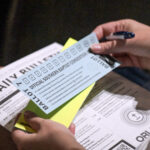
I cannot adequately express the joy of watching thousands of messengers raise their ballots in approval. It was a reminder that Southern Baptists care deeply about reaching every person with the gospel.
Yet the greatest work is still ahead of us.
Since the recommendations were adopted, I have heard from pastors, associational leaders, state convention leaders, parents and disability advocates who are eager to put these ideas into practice. The momentum is encouraging, but lasting change will happen one church at a time.
So what can your church do?
Start by praying. Ask God to open your eyes to the needs around you. People with disabilities are everywhere. They are in our neighborhoods, our schools, our workplaces and our churches.
Then begin listening. Talk with families affected by disability. Ask what barriers they face. Learn what resources are available. Take small steps toward becoming a church where every person can hear the Gospel, grow as a disciple and use their gifts to serve Christ.
Research consistently shows that people with disabilities are less likely to attend church than their peers. Some estimates suggest that millions of individuals affected by disability are absent from churches across America. Rather than seeing that reality as discouraging, I believe Southern Baptists should see it as a missional opportunity.
The same God who used a simple motion on a convention floor, a brief conversation and three words from my wife can use ordinary churches to reach people who have too often been overlooked.
Let us see this opportunity for what it is: a chance to take the gospel to an unreached mission field that exists in every community across our nation.
Be in the room. Speak up. God may use your faithfulness to change far more than you ever imagined.
This article originally appeared at flbaptist.org [5].
 [6]
[6]