[1]
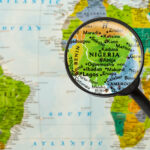
[1]WASHINGTON (BP) –- Militant Fulani killed more Christians in Nigeria over the past year than any other aggressor, the U.S. Commission on International Religious Freedom (USCIRF) said May 8 in naming the militants a nonstate violator of religious freedom.
But USCIRF fell short of recommending the U.S. State Department designate the Miyetti Allah Cattle Breeders Association of Nigeria (MACBAN)as an Entity of Particular Concern (EPC). The MACBAN represents Fulani herdsmen in general, but not militants specifically. USCIRF referenced U.S. House Bill H.R. 7457, introduced in February and still in committee, which calls for the designation of MACBAN as an EPC.
“Violence by Fulani militants caused the highest number of deaths among all religious communities in Nigeria over the last year as compared to attacks by organized insurgent groups and criminal gangs,” USCIRF said, although it did not specify a total number of deaths. “Fulani assailants have not spared Muslims, raiding herders’ cattle and violently attacking non-Fulani Muslim communities. Furthermore, many militants have targeted Christian communities in the Middle Belt and, increasingly, the South, burning homes and churches as well as kidnapping, raping, and murdering.”
USCIRF’s update [2], “Nonstate Violators of Religious Freedom in Nigeria: Fulani Militants” referenced several coordinated militant Fulani attacks claiming casualties spanning the teens to the hundreds in 2025, as well as kidnappings demanding financial ransoms.
“Militants often coordinate via radio and utilize motorcycles and automatic weapons, rapidly hitting several targets at once in rural, isolated areas,” USCIRF said. “They often wield machetes and descend on vulnerable communities during the night, eliciting terror as a way to force victims to quickly leave and to achieve greater control of desired land.”
While militant Fulani have increased their attacks mainly on Christians but also on Muslims, militant Fulani have not been termed a terrorist organization by a watchdog group since the 2015 Global Terrorism Index labeled militant Fulani [3] the fourth deadliest terror organization in the world in 2014.
USCIRF recommends the U.S. State Department continue to designate Nigeria a County of Particular Concern (CPC) for egregious religious freedom violations according to the International Religious Freedom Act, limiting EPC designations to nonstate violators Boko Haram, Islamic State in West Africa Province (ISWAP) and Islamic State-Sahel Province (ISSP).
Open Doors, an international religious freedom watchdog group, blame Fulani militants and the terrorist groups for killing 3,490 Christians in Nigeria in 2025. Nigeria remains the deadliest country for Christians.
“Since the United States’ CPC designation in October 2025 and attendant bilateral security discussions with Nigeria, armed Fulani actors have continued to carry out largescale incursions onto Christian farmers’ agricultural lands, violent raids on Christian and Muslim religious sites, and kidnappings of laity and leaders from both religions,” USCIRF said. “As a result, central Nigeria remains entrenched in an intense, daily, and seemingly perpetual crisis of insecurity – a crisis that is likely to persist until the federal and several state governments create broader underlying conditions that are more conducive to the safe practice of religious freedom.”
USCIRF also referenced a February congressional report [4] recommending responses by the U.S. and Nigerian government to fight the violence.
 [5]
[5]An estimated 30,000 militant Fulani are active across Nigeria, USCIRF said, out of a total Fulani population of 14.5 million among Nigeria’s 242.2 million people. Militant Fulani have traditionally concentrated their violence in Nigeria’s northwest, but have migrated to the Middle Belt and are increasingly active in the South.
“Each group consists of anywhere from 10 to 1,000 members,” USCIRF estimated. “While these militants do not share a centralized leadership, some collaborate on attacks.”
Herding remains an important Fulani livelihood, but faces stigma, USCIRF said.
“A violent religious ideology, growing resource limitation and competition, population growth, poverty, and other factors have further embroiled the Fulani people in Nigeria’s social instability challenges and its increasingly volatile security landscape,” USCIRF said, noting a societal stigma attached to herding as a livelihood.
 [6]
[6]