
PLANO, Texas – When Jack Tai was a pastor in China, he thought the U.S. had so many Christian churches that surely most Chinese immigrants would be reached with the Gospel.
“To my astonishment, in the state of Texas, the Chinese population is still largely unreached,” Tai said. He estimates 100,000 Chinese live in the Dallas-Fort Worth Metroplex, and 90 percent of them are nonbelievers.
In China, hearts are hungry for hope, making people desperate for the Gospel message, Tai said. But in the U.S., many Chinese immigrants are wealthy and their focus is on the American dream.
“When they become believers here, it’s hard for them to commit to live for God,” he said. “Definitely, the challenge is a comfortable life.”
Tai grew up in northeast China and studied English at a university where he befriended a couple that turned out to be Christian workers. God saved him through their witness and then opened doors for him to study at Southwestern Baptist Theological Seminary.
After earning an M.Div., Tai moved back to China in 2012 as a church planter. In 2023, he moved with his family to start Joy Church in Plano.
“Our strategy is very simple. It’s basically biblical hospitality. We meet new friends and then invite them to our home for a meal,” Tai said.
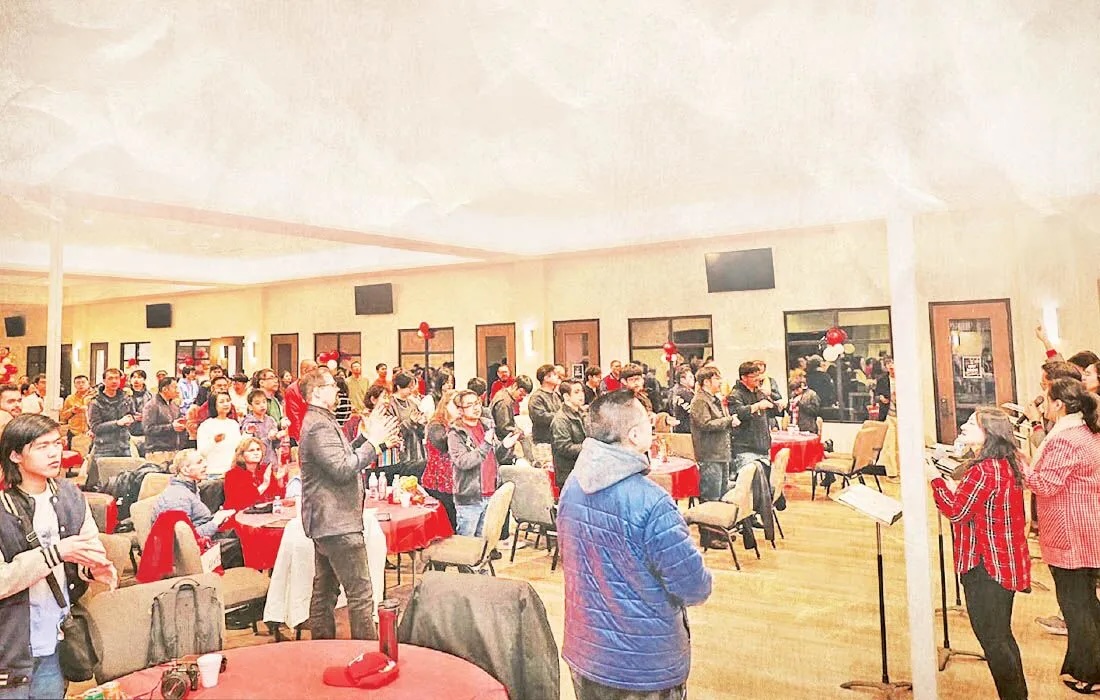
Because of the unique cultural background they share with Chinese immigrants, Joy Church leverages holidays to meet people. They hosted a Chinese New Year party this year and saw 200 people attend in space borrowed from a nearby church.
“We had a big Chinese meal, and kids and families sang songs,” Tai said. They had games and a raffle with prizes, as well as a Gospel presentation. “It was basically a night of fun,” but it fostered new connections.
Other Chinese holidays used as outreach include the Dragon Boat Festival in May and the Mid-Autumn Festival around Thanksgiving.
Joy Church has about 20 people meeting in Tai’s home each week for two main gatherings. On Friday nights, they’re going through an 11-week series covering the basics of the Gospel. “That’s geared toward nonbelievers,” Tai said.
On Saturdays, Joy Church hosts a worship service with a sermon, songs, prayer and giving. In two years, God has used the church to help 10 people receive Christ as Savior. Their congregation has baptized eight people.
Another way the church forms connections is through the school community. “I have four boys, and they all attend public schools. That allows us to meet parents, friends and classmates,” Tai said. They meet people at parks and are intentional about creating a community of possible disciples.
“My wife is leading a book club. She gathered a group of Chinese ladies, and they all have kids of different ages,” Tai said. “They read a Christian parenting book together. The majority of the group is nonbelievers, but they have a felt need, and we are able to create a community that way.”
The immigrant community in general is very lonely and kind of a closed group, Tai said. Since some of them struggle with learning the local language, English as a Second Language classes at churches are an excellent outreach.
“For any American believer who is willing to stop to talk to them, to open up their home for a meal or to invite them to coffee or tea, the intentional friendship is very much needed,” Tai said. “We come here as strangers in a strange land, so local Christians can really welcome the immigrant community just by extending friendship – a helping hand, a smile.”
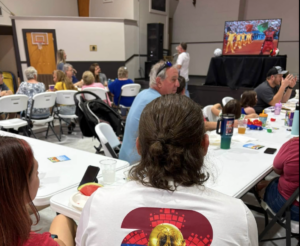
Joy Church recently launched a new youth outreach by renting a local elementary school gym on Friday nights and inviting middle school and high school students. “Mostly they are nonbelievers and have had very little exposure to the Gospel. Some are from Hindu backgrounds, even Muslims,” Tai said.
The students speak English well, and Tai hopes local churches will volunteer to help lead Bible studies to keep the effort going long term. Joy Church also could use volunteers to serve meals or help children with crafts during their holiday parties.
The Vietnamese population in DFW exceeds that of the Chinese, Tai said, mostly because of refugees resettled during the Vietnam War. Much of that population is second or third generation by now and very much Americanized, he said. The Korean community is more broadly reached with the Gospel because of many Korean churches in the area.
An Asian community still largely unreached, in addition to the Chinese, he said, is the Indian population. Many have moved to DFW for the IT industry. If Southern Baptists notice immigrants have moved to their neighborhood, Tai recommends sending them a note or a gift.
“In the Chinese culture, gifts are a huge thing. My family moved to a new home recently, and some neighbors sent us cookies,” he said. “Try to intentionally welcome them, and then talk to them. They may not speak good English, but be patient and try to understand even using Google Translate.”
Tai is able to serve in the U.S. because he is sponsored by Glen Meadows Baptist Church in San Angelo.
“While reaching the Chinese people in China remains critically important to us as we have adopted a Chinese [unengaged unreached people group], we also recognize that God, in His sovereignty, has brought many from the nations into our own communities,” Glen Meadows Senior Pastor Mack Roller said. “When the nations are in our backyard, we believe we have a clear responsibility to engage them with the Gospel.”