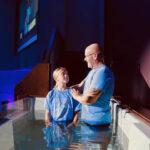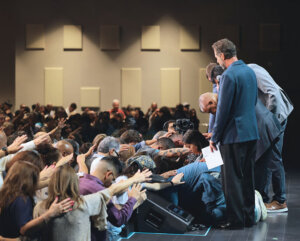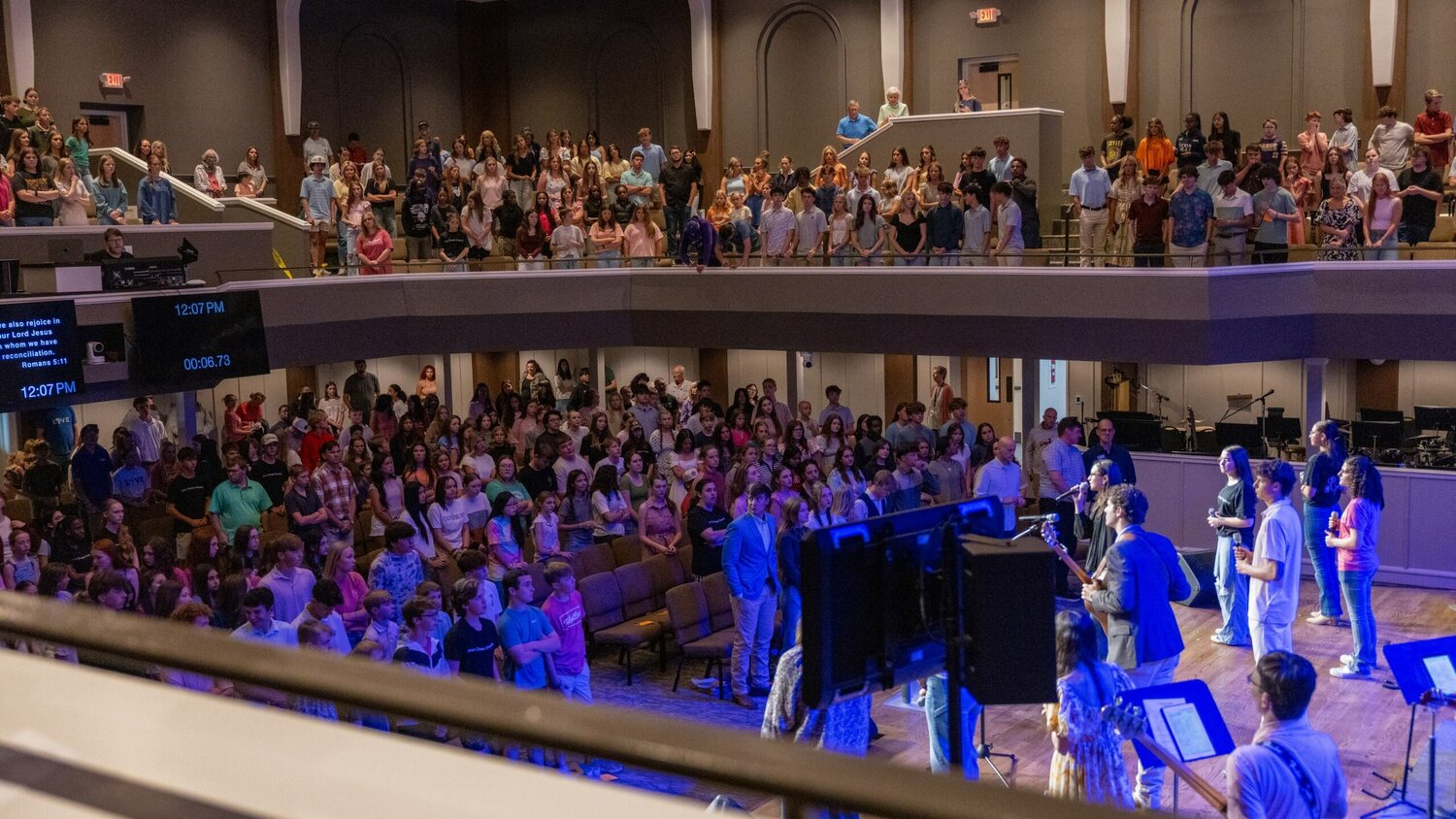

CARTERSVILLE, Ga. — What began as a simple question after attending a service in another city turned into a community-wide movement for students in Cartersville. For the first time, Tabernacle Baptist Church hosted a student-focused Good Friday service during the school day – an event designed to give teenagers a clear, accessible opportunity to engage the Gospel in the middle of their normal routine. Nearly 900 students gathered in worship; 63 made first-time decisions to follow Jesus; 81 made decisions to move forward with baptism, and 71 recommitted their lives to Christ.
The idea emerged after Kyle Ruff, student pastor at Tabernacle Baptist Church, attended a similar gathering at Johnson Ferry Baptist Church in Marietta and began exploring whether the idea could work in his community. Conversations with school leaders confirmed that students are permitted an excused absence for attending a religious service put on by a religious institution on a religious holiday, a protection that applies across faith traditions at both the state and federal levels.
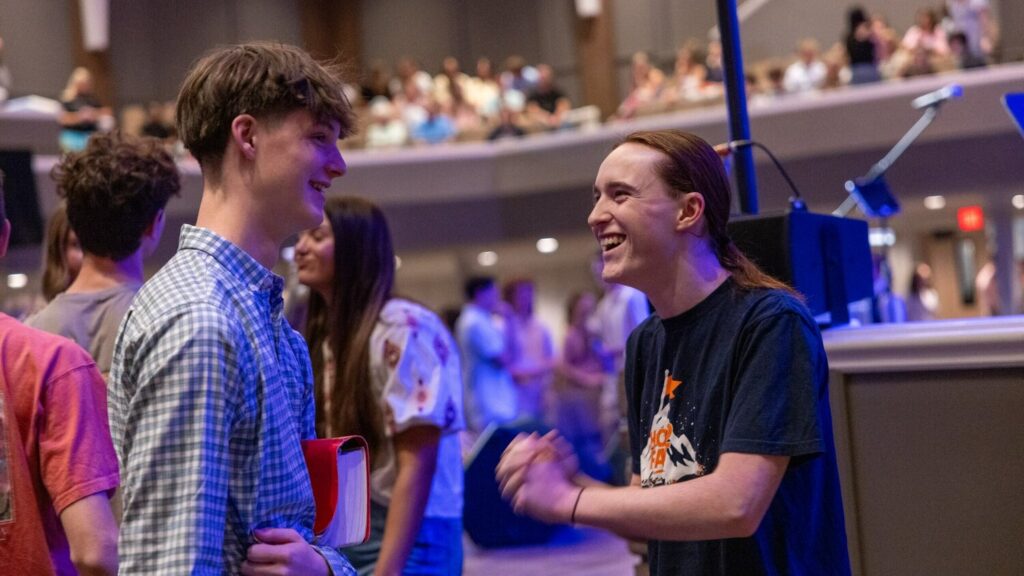
But the service itself was built on more than legal clarity. It was the product of years of intentional relationship-building between local churches, student pastors and school leaders. “These weren’t cold conversations,” Ruff explained. “There was already trust, mutual respect, and a shared desire to support students.”
That foundation allowed the community to build something spiritually significant. In some of the most formative years of their lives, “Many students are familiar with Easter as a celebration, but fewer have taken time to sit in the seriousness of the cross. Good Friday creates space for them to consider the cost of salvation and the love of Christ in a focused way.”
What made the gathering distinct, however, was not just its timing but its leadership. The impact extended beyond a single church. Student pastors, FCA student leaders and ministries across the community collaborated to create a shared effort, emphasizing unity over individual recognition. “It felt less like a single event and more like the community coming together around a shared desire to make Jesus known to students,” Ruff said.
The service also reflected a broader vision: not just reaching students but equipping them to lead, and the response affirmed that vision. Students showed up, invited friends and engaged seriously with the message. Many came prepared – not just to attend, but to respond. “In the weeks leading up, students were listing their friends by name and asking for prayer,” Ruff said. That level of ownership revealed something deeper. “This generation is spiritually hungry and willing to step into both evangelism and leadership when given the opportunity,” he added.
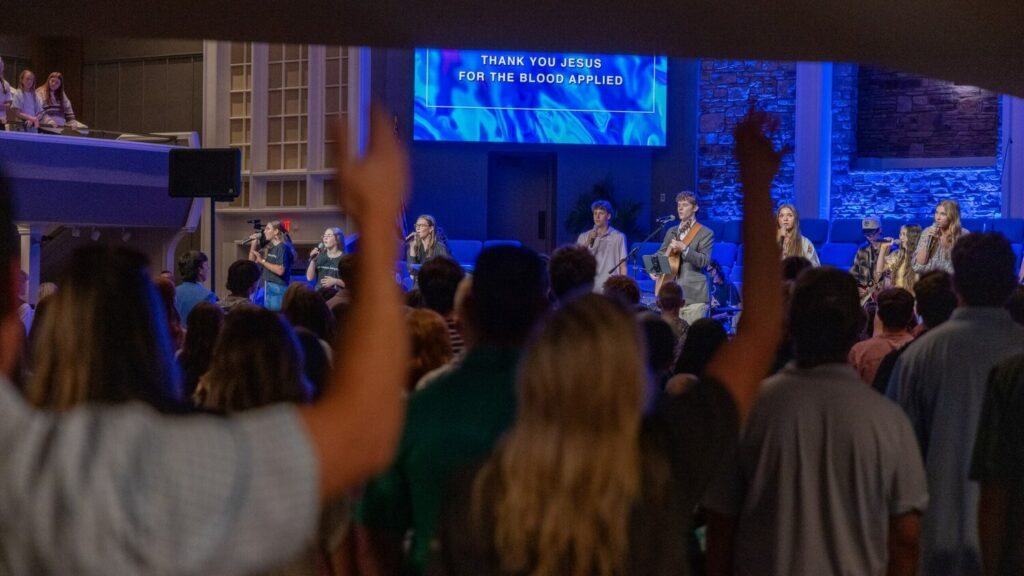
Follow-up efforts were immediate and intentional. Students who indicated next steps were contacted quickly and connected back into existing relationships – local churches, FCA groups and trusted leaders – ensuring the moment led to ongoing discipleship.
For churches interested in organizing their own Good Friday service next year, Kyle Ruff learned several things this year: 1) Start earlier than you need to and invest in relationships long before you need something. “If a church wants to do something similar, they need to be present, serve well and build relationships with their community over time – not just show up with an idea.” 2) Collaborate. “When churches unify around reaching students, the impact grows quickly.” 3) Empower students. “Give students meaningful responsibility in inviting, leading, speaking and shaping the service.”
At its heart, the service was more than a moment on the calendar. It was a reminder that the message of Jesus’ sacrifice still carries weight – and that students are not only ready to hear it, but to respond.
This article originally appeared in The Christian Index.