WEEK OF PRAYER: Nepalese believer ‘ready’ for God’s call
KATHMANDU, Nepal (BP) -- No one wanted to hear his words, Agni Amrit* says, hanging his head so low it almost rests on his checkered tie.
Amrit asked 10 people in Kathmandu, Nepal, if he could share a story about his God. Everyone he approached told him to scat. No one wanted to hear about another God -- they already have plenty in Hinduism. Drew Neely*, an IMB representative and church planting trainer, repeats what Amrit has told him. Amrit nods."I hope that gives you joy," Neely says, pausing for Amrit to meet his gaze. "Brother, when those 10 people rejected you, you shared in the suffering of Christ and that should be cause for rejoicing."Tibetan believers find God in music
KATHMANDU, Nepal (BP) -- The Tibetan men and women begin to weep as the believer's hands slide over the guitar strings. It's their hearts' melody -- put to music in their own language.
In Nepal’s Himalayas, 7 students engage Tibetans in conversation
KATHMANDU, Nepal (BP) -- Elderly women walk clockwise around a Tibetan Buddhist temple in Kathmandu, Nepal. Their hands bear sculpted calluses earned from years of rolling prayer beads between their thumbs and index fingers. 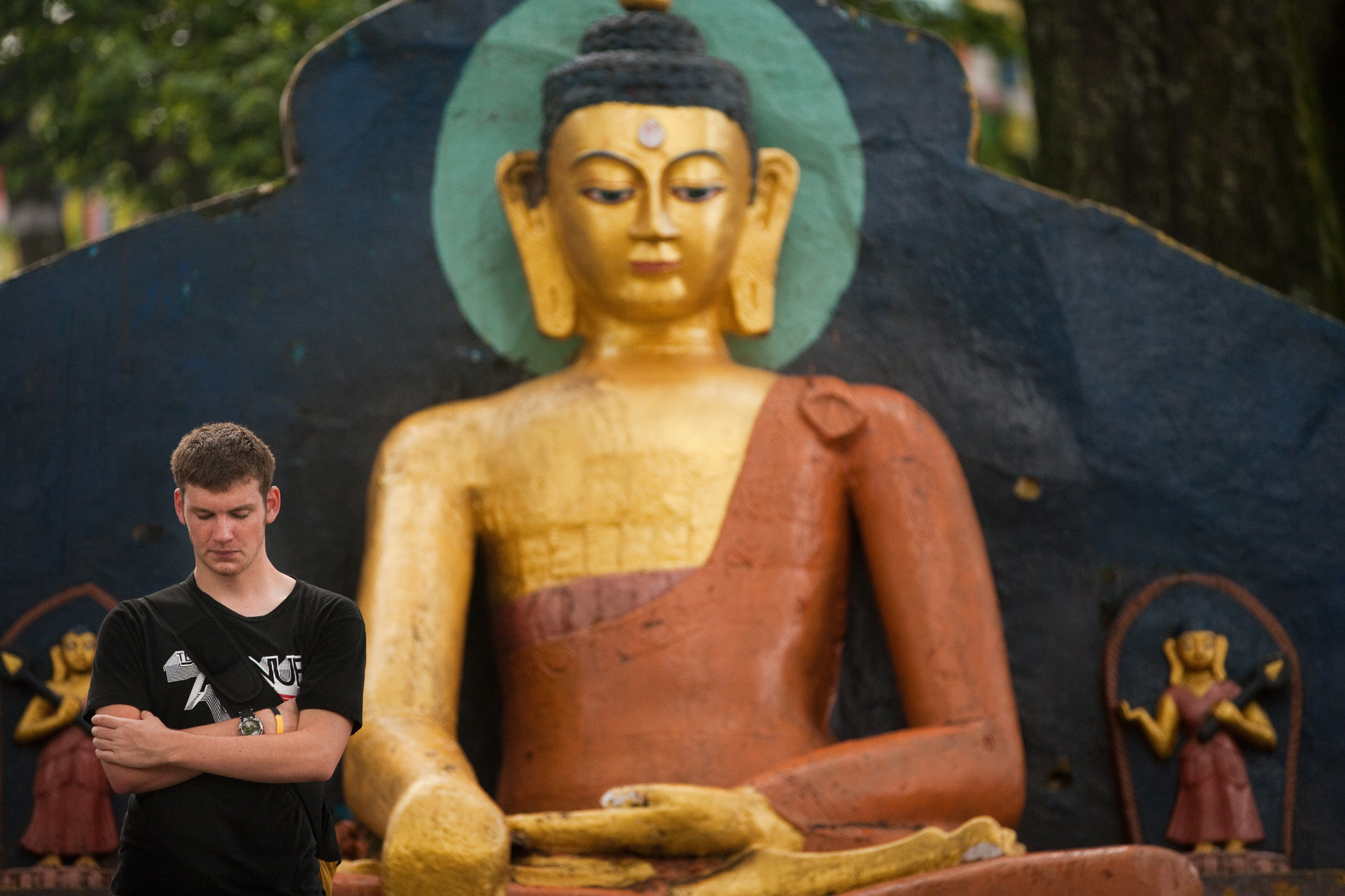 Tibetans are known for their resistance to the Gospel, International Mission Board representative Tal Bratcher* tells those who've come to work with him. Before they return home, seven recent high school graduates will see some of the spiritual calluses soften when they tell how God softened hard spots in their own hearts. The students came from Concord Baptist Church in Jefferson City, Mo., to help Bratcher and his wife Janice* start churches in two Tibetan areas of Kathmandu. The Bratchers are responsible for planting churches among 10 Tibetan unengaged and unreached people groups in Nepal. Unreached and unengaged people groups have never heard the Gospel, have no one actively spreading the Good News and have no known believers. Many of these people groups in Nepal live tucked away in the Himalayas. It's a daunting task, and that's why the Bratchers are investing in national believers and short-term teams like Concord to help them fulfill the Great Commission among the Tibetans of Nepal. English, Jesus & Coffee Though the students had just graduated from high school, the Bratchers had big plans for their venture to Nepal. "Really try not to put God in a box and feel like He won't be able to use you because you're young, or because you don't have any missions experience or don't know the language," Bratcher told the students during their orientation. Their ministry time centered on English clubs, scheduled times where anyone could come practice English for free. Tibetan and Nepalese children learn English in school but rarely have the chance to practice. Concord students spent time walking and prayerwalking through neighborhoods trying to start conversations. Everyone the students met received an invitation to come practice English for an hour in a local coffee shop. This allowed the students to meet one-on-one with Tibetans and build relationships in order to share the Gospel. In the afternoons, they hosted sports camps and shared the Gospel at the end of the camps.
Tibetan believers find God in music
KATHMANDU, Nepal (BP) -- The Tibetan men and women begin to weep as the believer's hands slide over the guitar strings. It's their hearts' melody -- put to music in their own language.
In Nepal’s Himalayas, 7 students engage Tibetans in conversation
KATHMANDU, Nepal (BP) -- Elderly women walk clockwise around a Tibetan Buddhist temple in Kathmandu, Nepal. Their hands bear sculpted calluses earned from years of rolling prayer beads between their thumbs and index fingers. Tibetans are known for their resistance to the Gospel, International Mission Board representative Tal Bratcher* tells those who've come to work with him. Before they return home, seven recent high school graduates will see some of the spiritual calluses soften when they tell how God softened hard spots in their own hearts. The students came from Concord Baptist Church in Jefferson City, Mo., to help Bratcher and his wife Janice* start churches in two Tibetan areas of Kathmandu. The Bratchers are responsible for planting churches among 10 Tibetan unengaged and unreached people groups in Nepal. Unreached and unengaged people groups have never heard the Gospel, have no one actively spreading the Good News and have no known believers. Many of these people groups in Nepal live tucked away in the Himalayas. It's a daunting task, and that's why the Bratchers are investing in national believers and short-term teams like Concord to help them fulfill the Great Commission among the Tibetans of Nepal. English, Jesus & Coffee Though the students had just graduated from high school, the Bratchers had big plans for their venture to Nepal. "Really try not to put God in a box and feel like He won't be able to use you because you're young, or because you don't have any missions experience or don't know the language," Bratcher told the students during their orientation. Their ministry time centered on English clubs, scheduled times where anyone could come practice English for free. Tibetan and Nepalese children learn English in school but rarely have the chance to practice. Concord students spent time walking and prayerwalking through neighborhoods trying to start conversations. Everyone the students met received an invitation to come practice English for an hour in a local coffee shop. This allowed the students to meet one-on-one with Tibetans and build relationships in order to share the Gospel. In the afternoons, they hosted sports camps and shared the Gospel at the end of the camps.
What do Sikhs believe?
DELHI (BP) -- His untrimmed beard and carefully wrapped turban set him apart in a crowd. He isn't Muslim, though many of his brothers in the faith are mistaken for followers of Allah.
Heartbroken: Students, IMB workers reach out to Sikhs
BANGKOK (BP) -- He wept for them. His heart broke for them. He now feels called to serve them. Chris McKean, a senior at Truett-McConnell Christian [QUOTE@left@180="Americans have a huge need to become educated in other religions."]College in Cleveland, Ga., knows God has placed Sikhs on his heart. McKean says he was heartbroken when he read about the Aug. 5 shooting in a Sikh temple in Milwaukee, Wis. The shooting left six Sikhs dead, plus the shooter, and four wounded. "Many people in the Christian faith don't know about Sikh people," McKean says. "A year ago, I didn't know who Sikhs were. I thought they were a branch of Islam." There are 25 million Sikhs globally. The majority live in India's Punjab state, but there are large populations in Great Britain, Malaysia, Canada and the U.S. There are roughly 700,000 Sikhs living in the U.S., according to the Sikh American Legal Defense and Education Fund (SALDEF). The largest populations live in California and New York. "I'm praying God would use this event to open the eyes of the church," McKean says. "[I'm praying] that the church would be awoken ... to pray for them." McKean and 13 students majoring in world missions from Truett-McConnell recently visited Bangkok as part of their senior capstone to learn about what Sikhs believe. They spent time with IMB workers Bryan and Anne Evans,* whose ministry focuses on the people group. Bryan, who is preparing to start doctoral studies in Sikhism, has spent hours reading and learning about the people and their culture; his passion is to see Sikhs come to know Christ as their Savior. Growing up in New York, Bryan says his friends were two Sikh brothers. Every Saturday, the three would hang out and eat Punjabi food. "From a young age, He's [God] given me a heart for Sikh people," Bryan says. "God's put Sikhs in our lives. Our heart is to share with them." He was devastated and furious when he heard about the shootings in Wisconsin. "This is not only heartbreaking but also embarrassing as an American," he says. "I have many Sikh friends around the world. I appreciate the contribution of Sikhs to their communities around the world." Says Anne of their close Sikh friends in Asia, "They are really lovable people. They go out of their way to be friendly. They put other people before themselves." Bryan says he knows of Sikhs who were beaten after the terrorist attacks of Sept. 11, 2001, because they were mistaken for Muslims. A Sikh tailor in Bangkok told Truett-McConnell students about one of his friends who was strip-searched in an airport because of his turban. The tailor says he's been mistaken for being Muslim many times.
What do Sikhs believe?
DELHI (BP) -- His untrimmed beard and carefully wrapped turban set him apart in a crowd. He isn't Muslim, though many of his brothers in the faith are mistaken for followers of Allah.
FIRST PERSON: Sun sets on a Sikh massacre
DELHI (BP) -- It's sunset on the day after a massacre. I'm standing in a Sikh temple in Delhi, India, wanting so badly to tell the Sikh men and women here that I'm sorry, that I'm ashamed at what happened to their Sikh brothers and sisters in the U.S.
Heartbroken: Students, IMB workers reach out to Sikhs
BANGKOK (BP) -- He wept for them. His heart broke for them. He now feels called to serve them. Chris McKean, a senior at Truett-McConnell Christian [QUOTE@left@180="Americans have a huge need to become educated in other religions."]College in Cleveland, Ga., knows God has placed Sikhs on his heart. McKean says he was heartbroken when he read about the Aug. 5 shooting in a Sikh temple in Milwaukee, Wis. The shooting left six Sikhs dead, plus the shooter, and four wounded. "Many people in the Christian faith don't know about Sikh people," McKean says. "A year ago, I didn't know who Sikhs were. I thought they were a branch of Islam." There are 25 million Sikhs globally. The majority live in India's Punjab state, but there are large populations in Great Britain, Malaysia, Canada and the U.S. There are roughly 700,000 Sikhs living in the U.S., according to the Sikh American Legal Defense and Education Fund (SALDEF). The largest populations live in California and New York. "I'm praying God would use this event to open the eyes of the church," McKean says. "[I'm praying] that the church would be awoken ... to pray for them." McKean and 13 students majoring in world missions from Truett-McConnell recently visited Bangkok as part of their senior capstone to learn about what Sikhs believe. They spent time with IMB workers Bryan and Anne Evans,* whose ministry focuses on the people group. Bryan, who is preparing to start doctoral studies in Sikhism, has spent hours reading and learning about the people and their culture; his passion is to see Sikhs come to know Christ as their Savior. Growing up in New York, Bryan says his friends were two Sikh brothers. Every Saturday, the three would hang out and eat Punjabi food. "From a young age, He's [God] given me a heart for Sikh people," Bryan says. "God's put Sikhs in our lives. Our heart is to share with them." He was devastated and furious when he heard about the shootings in Wisconsin. "This is not only heartbreaking but also embarrassing as an American," he says. "I have many Sikh friends around the world. I appreciate the contribution of Sikhs to their communities around the world." Says Anne of their close Sikh friends in Asia, "They are really lovable people. They go out of their way to be friendly. They put other people before themselves." Bryan says he knows of Sikhs who were beaten after the terrorist attacks of Sept. 11, 2001, because they were mistaken for Muslims. A Sikh tailor in Bangkok told Truett-McConnell students about one of his friends who was strip-searched in an airport because of his turban. The tailor says he's been mistaken for being Muslim many times.