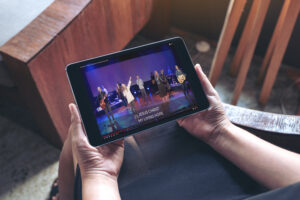
How the church can help calm an anxious generation
You have probably heard some of the troubling statistics about teens and young adults. The data points are piling up like symptoms for a very ill patient.

You have probably heard some of the troubling statistics about teens and young adults. The data points are piling up like symptoms for a very ill patient.

Adobe Stock Photo. Do not publish.
The familiar car pulled into the church parking lot. As the driver stepped out, my stomach tightened and my heart raced. This churchgoer had a history of sharp words toward me, and I knew he had been involved in conflicts I’d mediated for others. My mind spiraled: “What is he going to say today? What problems will I have to fix afterward?”

iStock
A quiet shift is taking place among senior adults.

iStock
The bustle of the Easter season is upon us.

In 1989, I was called to my first church, beginning a full-time pastoral ministry lasting just over twenty years. But, since resigning a dearly-loved church in 2009, I haven’t held a full-time pastorate or staff position. Here are a few things I’ve learned since then.
For reasons beyond the scope of this post, my younger self went many years without reading anything not at least indirectly related to pastoral ministry or my Christian growth. Commentaries, works of theology, homiletics, and church leadership comprised the bulk of my reading. Biographies had to be missionary biographies…unless they were biographies of Christian athletes.
Artificial intelligence (AI) refers to the ability of a computer or machine to perform tasks that would normally require human intelligence, such as learning, decision-making, problem-solving, and language understanding. AI systems can be trained to perform these tasks using data, algorithms, and machine learning techniques. There are several different types of AI, including narrow or weak AI, which is designed to perform a specific task, and general or strong AI, which has the ability to perform any intellectual task that a human can.