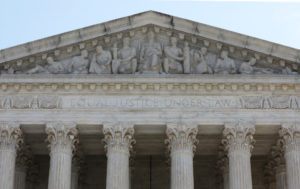

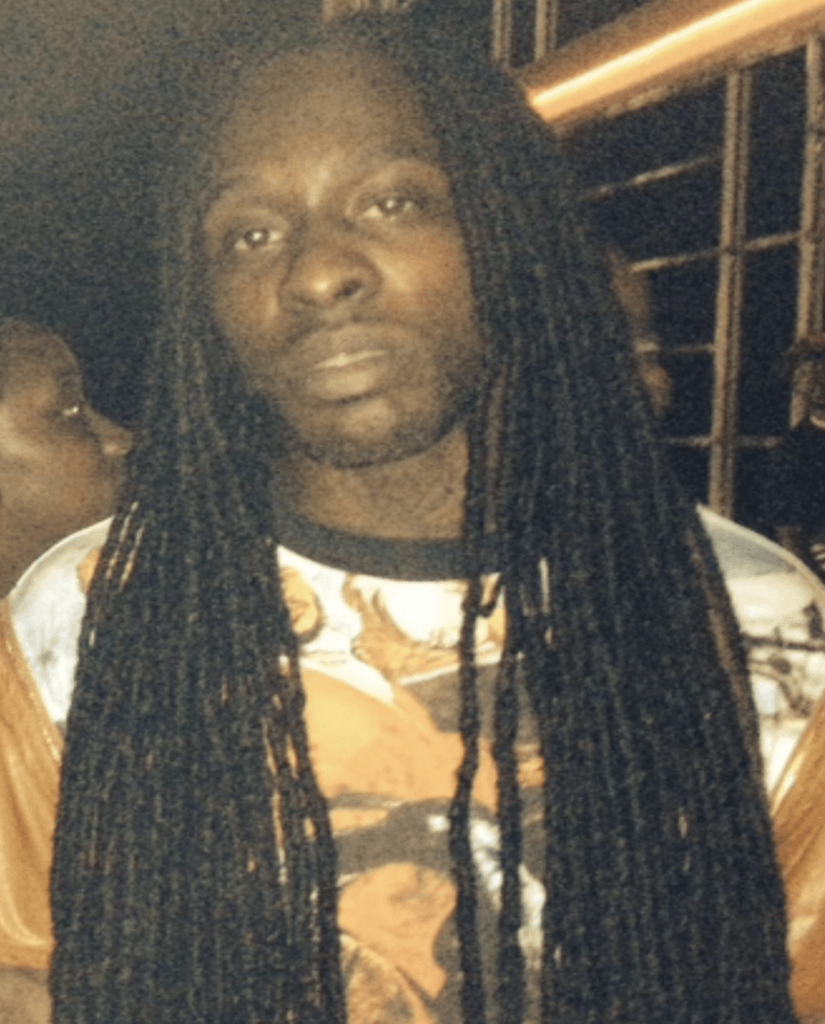
WASHINGTON (BP) – A Rastafarian lost his challenge before the U.S. Supreme Court today (June 23) to seek monetary damages against Louisiana prison guards who forcibly shaved his head, in a case that saw the trio of liberal justices upholding religious liberty.
But in the 6-3 ruling, justices deemed conservative said the plaintiff could not sue the guards who restrained him while shaving dreadlocks he had grown at least 20 years in compliance with a biblical Nazirite vow. Instead, under the Religious Land Use and Institutionalized Persons Act of 2000 (RLUIPA), the officers were not liable for monetary damages, the court ruled, because the officers never agreed to be sued.
The Ethics & Religious Liberty Commission (ERLC), among dozens of religious and legal groups and individuals that filed amici briefs on behalf of the plaintiff, compared RLUIPA to the Religious Freedom Restoration Act (RFRA) in promoting RLUIPA as a clear avenue for the plaintiff to seek redress.
ERLC President Evan Lenow said the ruling “leaves a gap in religious liberty protections” for incarcerated individuals.
“Whether it is burning a Christian’s family Bible, destroying a Jewish person’s yarmulke, or shaving a Rastafarian’s hair, our justice system should ensure there are appropriate methods of relief to right unjust wrongs,” Lenow told Baptist Press. “The ERLC will continue advocating for religious liberty as we pray for true restoration and healing that only comes through faith in Jesus Christ.”
He affirmed religious liberty as a long-standing Baptist distinctive, referencing “numerous Southern Baptist resolutions throughout our history which reject government restriction of religious opinion and limit government infringement of religious expression.”
Most recently, messengers to the 2026 Southern Baptist Convention Annual Meeting passed the resolution “On the 250th Anniversary of the United States and the Baptist Contribution to Religious Liberty,” which Lenow said “reminds us of ‘our historic Baptist commitment to religious liberty for all people,’ recognizing it as a God-given right grounded in the dignity of every human being made in the image of God.”
In the case at hand, Landor v. Louisiana Department of Corrections and Public Safety et al, Damon Landor originally sued the Louisiana Department of Corrections (LDOC) and select individual officers for monetary damages. Landor claimed the defendants violated his religious freedom guaranteed under RLUIPA when they shaved his head while knowing it violated his Nazarite vow as a Rastafarian. After lower court hearings, the case against the LDOC was dropped, while Landor continued to pursue the case against the officers. The state officers shaved Landor’s head near the end of a five-month prison stay in 2020 when he was transferred to the Raymond Laborde Correctional Center in Cottonport.
“Individuals may not be held liable in their personal capacities under a spending clause statute unless those individuals have voluntarily and knowingly consented to answer lawsuits under the statute,” Associate Justice Neil Gorsuch wrote in the majority opinion. Because the individual defendants in this case did not voluntarily and knowingly consent to face RLUIPA liability in an agreement with the federal government, Mr. Landor’s case cannot proceed against them.”
The case is not one of religious liberty, Gorsuch contends, but one regarding congressional spending.

“Adopting Mr. Landor’s proposed cause of action would allow Congress to evade the consent requirement inherent in its spending clause authority and regulate directly the conduct of countless nonconsenting individuals in spheres traditionally reserved to the states,” Gorsuch wrote. “Such a result would be inconsistent with principles of state sovereignty and a federal government of limited and enumerated regulatory powers.”
But Gorsuch offered no recourse for the violation of Landor’s religious rights.
In a dissent joined by associate justices Elena Kagan and Sonya Sotomayor, Associate Justice Ketanji Brown Jackson said the case revolved around the protection of religious liberty, which RLUIPA upholds.
Congress enacted RLUIPA “to ensure that state and local prisons respect prisoners’ right to religious exercise. Congress might have opted to accomplish this through contracts with the prisons it funds. Instead, it passed a law,” Jackson wrote in the dissent. “RLUIPA requires state and local prisons that accept federal funding to accommodate prisoners’ religious exercise more generously than the Constitution mandates. Like many, this law comes with an enforcement mechanism: To ensure compliance, RLUIPA authorizes an impacted prisoner to sue any prison employee who violates the statute. Such suits, the statute provides, may proceed against the employee in the employee’s individual capacity and may yield ‘appropriate relief.’”
But the majority opinion, Jackson said, “nevertheless adopts the peculiar position that Congress is powerless to create, and a state is powerless to accept, the natural next step: a damages remedy against officials who violate that directive.”
Louisiana has since enacted policies to prevent such religious liberty infractions in the future, Louisiana Attorney General Liz Murrill said in a statement hailing the Supreme Court’s ruling.
“Religious liberty is deeply important, and Louisiana has laws on the books protecting it,” she said on her official website. “Ten federal courts of appeals held that the federal Religious Land Use and Institutionalized Persons Act does not allow prisoners to sue prison officials in their personal capacities for damages, and now the Supreme Court has agreed.
“We condemn the conduct as alleged in this case and have taken steps to prevent this problem from recurring, but we are grateful the court agreed with the state in this matter.”
Jackson quoted Scripture in her dissent, writing, “Landor’s Rastafarian faith requires him to ‘let the locks of the hair of his head grow.’ The Holy Bible, Numbers 6:5 (King James Version). For a Rastafari like Landor, locks are ‘the physical embodiment of … spiritual identity and connection to God.’”
Landor’s attorney Zack Tripp said the case at least brought to the forefront the violation of Landor’s freedom violation.
“The awareness this case has raised about this important issue,” is encouraging, Tripp told The Hill, pointing out Louisiana’s change in its regulations to prevent future violations. as shown by Louisiana’s move to change its regulations.
“Congress could also take action to amend the law to ensure that prisoners whose religious rights are violated are able to obtain damages,” The Hill quoted Tripp.