
NASHVILLE (BP) – Most people subscribe to one of two stories about the nature and origin of life and of humanity’s place in the universe, says author and philosopher of science Stephen C. Meyer.
The first one, he says, is “the idea that life is the result of an undirected, unguided, strictly materialistic process, and there’s no evidence for a designing mind behind life or the universe.” The other story is “the idea that there is evidence of a mind behind the universe, a creative intelligence.”
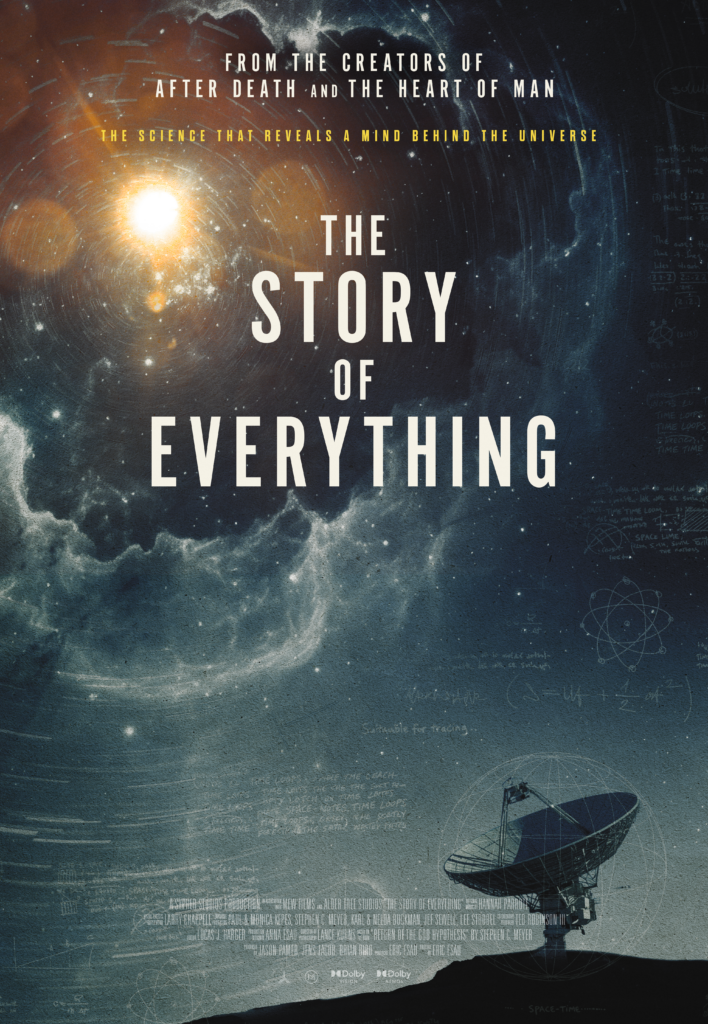
Whichever one is right would determine “The Story of Everything” – the title of a new documentary releasing in theaters Thursday, April 30.
The documentary is based on Meyer’s 2020 book “Return of the God Hypothesis,” which explores modern findings in several scientific disciplines that point to a higher intelligence.
Meyer, who holds a Ph.D. in the philosophy of science from Cambridge and now directs the Discovery Institute’s Center for Science and Culture, argues that the very foundation of modern science rests on the reality of design in the universe.
“It was crucially important during the period of the scientific revolution with figures like Sir Isaac Newton and Robert Boyle and Johannes Kepler, and others, who were almost entirely really devout Christians,” Meyer said in an interview with Baptist Press.
Those early scientists believed, like the apostle Paul says in Romans 1, that nature displays the “unseen qualities of the creator,” and “His eternal power and divine nature are clearly seen,” Meyer said.
“And because they believed that there was a mind behind the universe, namely the mind of God, and because our minds had been made in the image of God, that we were capable of understanding the order and the design and the rationality that God had built into nature. And for that reason, they set out to do science.”
A big shift
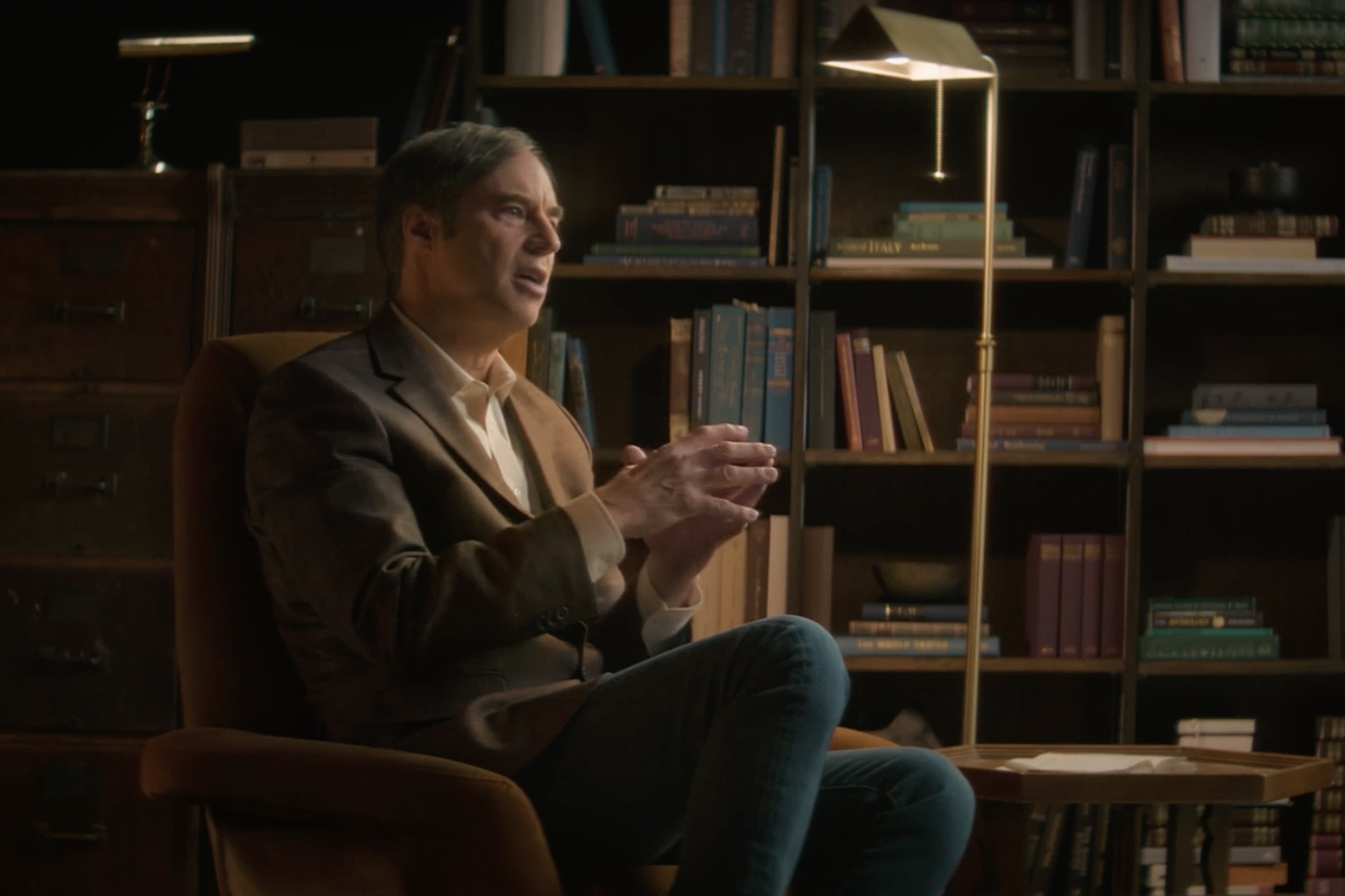
The film is laid out in chapters, each one focused on a different set of evidence for design. Around two dozen scientists and mathematicians address different facets of implied design in the universe.
Meyer himself appears the most, talking about major scientific discoveries over the last several decades that have caused more and more scientists to question the materialistic worldview that has long dominated their fields.
One of those is the now widely accepted fact that the universe had a beginning, i.e. the Big Bang.
Albert Einstein was so opposed to this idea that he artificially constrained variables in his own equations until physicist Georges Lemaître used a serendipitous taxi ride with Einstein in 1927 to talk to him about “redshift.” Redshift is the principle that light appears red as it moves farther away. Within two years, telescopes had confirmed redshift in distant stars and thus, an expanding universe.
Einstein later called his stubborn commitment to a static universe the greatest blunder of his career. His conversion to the idea that the universe must have had a beginning is one of many such stories in The Story of Everything. Over the last 100 years, multiple leading scientists have become convinced, through their own work, of the inevitability of design.
Goldilocks and the engineer
“We have discovered that the basic parameters of physics are exquisitely, finely tuned, is the term that the physicists use,” Meyer said. “They fall within very narrow tolerances outside of which life would be impossible. And yet, there they are time and time again in that sweet spot.
“Some physicists say we live in a Goldilocks universe that has made life possible.
“And then perhaps most exciting to me is the discoveries in modern biology where inside living cells, we’ve discovered an exquisite realm of digital technology, that is to say information, stored in the molecule, DNA and also nanotechnology – little tiny miniature machines that look for all the world like they were designed by very, very smart engineers.
“So we’ve got digital code pointing to a master programmer for life and machinery pointing to a master engineer.”
The Story of Everything uses animation to show the code that directs DNA, the tiny factories inside the cell and much more.
“Sometimes just seeing what we’re talking about makes the case by itself,” Meyer said. “… You can argue about why these exquisite, intricately put together machines couldn’t have arisen by undirected, unguided processes, but when you just see them. … All of those things are beautifully animated in the film. For a documentary, there was a fairly high production budget, and it shows on the screen. It really does.”
Out in left field
Meyer’s journey to become one of the best-known apologists for intelligent design began when he was a troubled teenager, laid up for six months after a skiing accident.
“When I was in the hospital, my dad gave me a book about the history of baseball,” Meyer said. “I was massively into baseball, but it was oddly deflating. I’d read the stories of the great heroes of the sport, and they all ended the same way. They amassed these various records, and then by 35 or 38, they would retire from the sport, and they would live out the rest of their lives, maybe as celebrities of some kind, but then they would die. And then what was left of all their achievements were a bunch of numbers on a paper that I was now reading about. They were great stories, but what did any of that amount to?”
Meyer’s thoughts about the futility of life became more intrusive and overwhelming over the next few years.
“One day I had this thought, maybe this is what it means to be insane,” he said. “And worrying about what was going on in my own head, and I had this surge that I can remember. It was kind of like a panic attack. And then after that, I became afraid of the questions that were bubbling up in my head because it made me fear that I was insane.”
His search for ultimate meaning continued, until one day, in the pages of an old family Bible, he encountered Matthew 11:28 – “Come to me, all who are weary and heavy laden and I will give you rest.”
“And I thought that sounded awfully good,” Meyer said. “So I started reading.”
He began reading the Bible daily, and it “settled my anxious mind,” he said. “The Bible began to address philosophical questions I was having that gave my mind structure and stopped it from spinning.”
His first semester of college was the first time he heard someone else express the thoughts and feelings he’d been having for years.
“I talked to my professor afterwards and said, ‘I wasn’t insane. I was a philosopher!’” Meyer recalled, laughing. “And he said, ‘Well, there’s a fine line between insanity and philosophy, so you need to be careful.’”
It wasn’t long before Meyer’s future came into focus.
“The biblical worldview began to answer some of the philosophical questions that were bothering me and gave structure for my mind,” he said. “And eventually I became quite convinced that Christianity was true, but still didn’t quite want it to be true. And it was my first year out of college where I really settled in my faith.”
A conference he attended during that time introduced him to the evidences for design in the universe and set him on the course he still treks today.
Worldview inoculation
Meyer’s work – from his books to his many media appearances to now, a documentary – seems designed to help people like he once was.
“There’s a Harvard study in which 56 percent of the young people surveyed between the ages of 18 and 30 admit to having persistent doubts about whether their own lives have any ultimate meaning or significance,” he said.
Add to that professors who “aggressively proselytize students to adopt a scientific materialist worldview,” and the environment is right for a film like The Story of Everything.
“[The film] is an opportunity to inoculate believing young people against the propaganda that they may encounter when they get to university,” Meyer said. “It’s also a film to which you can bring skeptics. … This is a film you can bring people to without being embarrassed. The production values are extremely high. The argumentation is tight. The storytelling is good.”