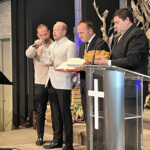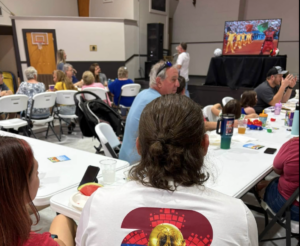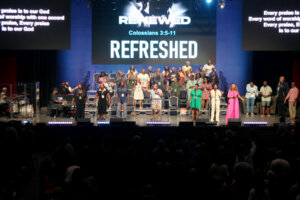

ATLANTA (BP) – Battling rising antisemitism, Messianic leaders at the 2026 North American Lausanne Consultation on Jewish Evangelism (LCJE-NA) called on Christians to demonstrate courageous love in speech and action.
Embracing Christ as the Messiah, attendees at the consultation Feb. 23-25 in Atlanta also affirmed the Church as God’s covenant people of Jews and Gentiles, embracing tenets including the Great Commission and certain hope in the coming kingdom.
“In our generation, we face both enduring and emerging challenges as well as significant opportunities. Antisemitism has reached record levels in North America and globally,” the statement reads. “The Jewish community faces hostility on campuses, in media, in public discourse, and in acts of violence.
“Media platforms have seen sharp increases in antisemitic content, including Holocaust denial and conspiracy theories. Hatred is emanating from both the far-right (white supremacist groups) and the far-left (radicalized rhetoric at protests). The horrors of terrorism – including the atrocities committed by Hamas – have intensified fear, polarization, and suffering among Jewish people throughout the world.”
The six-point call to action exhorts Christians to:
- repent of whatever antisemitism is among church bodies and stand clearly and publicly against antisemitism in society.
- stand against evil and terror such as the Oct. 7, 2023, Hamas attack on Israel.
- pray for the peace of Jerusalem.
- courageously love Jewish communities in line with the compassion demonstrated by Yeshua Jesus.
- uphold theological integrity
- and equip younger generations with biblical literacy, historical awareness and moral courage.
Ric Worshill, executive director of the Southern Baptist Messianic Fellowship, encouraged Southern Baptists and other Christians to read the entire statement and respond accordingly.
Specifically, the fellowship is encouraging Southern Baptist churches to “adopt” local synagogues to establish supportive relationships.
“Reach out to the synagogue, have their leadership reach out to the local synagogue in their area or the Jewish Community Center that’s in their area,” Worshill recommended, “and let them know that they’re in support. And if the synagogue or the Jewish Community Center needs help with anything, they’re there.
“That’s one of the biggest things. It’s working in some places. I’ve seen it and I’ve heard about it and I’ve had some pastors contact me and ask me how they can do it.”
To date, Baptist churches are loaning their security teams for Saturday worship at synagogues, or sending church members to stand guard at entry doors during worship.
“It’s really kind of nice” Worshill said. “It is happening in some places, but we’d like to encourage that to happen more.”
LCJE-NA attendees themselves pledged to proclaim boldly that Yeshua is the promised Messiah of Israel and Savior of the world; love the Jewish people with sincerity and humility; fight antisemitism wherever it appears; stand against evil with moral clarity; voice opposition to terror and injustice and pray faithfully for the peace of Jerusalem.
The LCJE grew out of a call to reach the Jewish community during the 1980 Consultation on World Evangelization in Pattaya, Thailand. A committee formed to answer the call led to what is now the LCJE, with chapters in North America, Australia, Europe, Israel, Japan, Korea, Latin America and South Africa, as well as a Chinese Heritage chapter.
More than 100 Christians and Messianics attended the Atlanta event, Worshill said, with representatives from Southern Baptist, American Baptists and nondenominational evangelical churches. Clay Smith, senior pastor of Johnson Ferry Baptist Church in Marietta, Ga., was among speakers.
The full conference statement is below:
LCJE- North America 2026 Conference Statement
Atlanta, Georgia| February 23-25, 2026
Theme: “The Church and Jewish Evangelism from the 1st Century Until Today: Theological, Historical, and Practical Implications”
Preamble
We, the participants at the 42nd Lausanne Consultation on Jewish Evangelism–North America (LCJE–NA) conference, have gathered in Atlanta, Georgia, to affirm our shared commitment to the gospel of Jesus the Messiah and to God’s enduring purposes for the Jewish people. Rooted in Scripture and informed by two millennia of theological reflection, historical experience, and practical ministry, we have come together to examine afresh the relationship between the Church and Jewish evangelism—from the first century until today—and to discern our responsibility in this critical hour.
From the earliest days of the apostolic community, the proclamation of the good news has included a burden for the Jewish people. The Apostle Paul declared his deep love for his people and his unceasing desire for their salvation (Romans 9:1–5; 10:1). The gospel is “the power of God for salvation to everyone who believes [and as is oft omitted] to the Jew first and also to the Greek” (Romans 1:16). The first-century Jewish apostles faithfully proclaimed Yeshua as Messiah within their own people, even amid opposition and misunderstanding.
Yet history also compels us to confess with sorrow that the Church has not always reflected the character of the Messiah nor the example of the apostles in its posture toward the Jewish people. Across the centuries, theological error, triumphalism, coercion, and violence too often replaced humility, love, and faithful witness, staining Christian history with the sin of antisemitism in its religious, racial, and political forms. At the same time, history also bears witness to countless Christians who, motivated by their faith and love for the Jewish people, resisted such evil—often at great personal cost. Many risked their reputations, freedom, and even their lives to shelter, defend, and stand in solidarity with Jews in times of persecution. Their courage does not erase the Church’s failures, but it reminds us that even in the darkest eras, the light of Christ-inspired love has never been extinguished.
In our generation, we face both enduring and emerging challenges as well as significant opportunities. Antisemitism has reached record levels in North America and globally. The Jewish community faces hostility on campuses, in media, in public discourse, and in acts of violence. Media platforms have seen sharp increases in antisemitic content, including Holocaust denial and conspiracy theories. Hatred is emanating from both the far-right (white supremacist groups) and the far-left (radicalized rhetoric at protests). The horrors of terrorism—including the atrocities committed by Hamas—have intensified fear, polarization, and suffering among Jewish people throughout the world.
Therefore, as participants in LCJE-NA 2026, we offer the following affirmations and calls to action.
Our Affirmations for the Church
1. We affirm the Church as God’s Covenant People.
We believe the Church—composed of Jews and Gentiles in Messiah—is the community of the new covenant, called out by God to be His witnesses in the world. As the family of God, we celebrate His faithfulness in uniting people from every tribe and nation into one body through the work of Christ.
2. We affirm the Great Commission.
The Church exists to proclaim the Gospel of Messiah Jesus. We are committed to making disciples, baptizing them in the name of the Father, Son, and Holy Spirit, and teaching them to obey everything Christ commanded. Our mission is to share His love and truth with all people.
3. We affirm the Authority of Scripture.
The Church is founded on the Word of God and the faithful witness of the apostles.
4. We affirm the Unity and Dignity of the Body.
We believe every member of the Church is a vital part of Christ’s body, endowed with spiritual gifts for the common good. We stand against all forms of division and hatred, seeking to reflect the character of Christ through mutual love, service, and reconciliation.
5. We affirm our Hope in the Coming Kingdom.
The Church lives in anticipation of the return of Jesus the Messiah and the fulfillment of God’s kingdom. We pray for peace in our world and commit ourselves to being agents of that peace, looking forward to the day when God’s reign is fully realized in a new heaven and a new earth.
Our Call to Action
1. A Call to Repentance and Moral Clarity
We call upon the Church in North America to repent wherever antisemitic attitudes, teachings, or indifference have taken root. Silence in the face of hatred is not neutrality—it is complicity. We urge pastors, theologians, and ministry leaders to examine their preaching, teaching, and discipleship to ensure that no distortions of Scripture foster contempt toward the Jewish people.
We further call the Church to stand clearly and publicly against antisemitism in society—whether expressed through conspiracy theories, vandalism, intimidation, academic hostility, or violence.
2. A Call to Stand Against Evil and Terror
We unequivocally condemn acts of terror and violence directed against Jewish people. The atrocities committed by Hamas represent moral evil and bring devastation to Jewish and Arab communities alike. We call upon Christian leaders to speak truthfully about such evil, to reject baseless accusations, to courageously speak the truth and oppose false moral equivalencies, and to advocate for justice, accountability, and the protection of innocent life.
Standing against terror does not diminish our compassion for all who suffer; rather, it affirms the biblical conviction that evil must be named and opposed. We urge believers to pray for grieving families, for the wounded, and for all caught in cycles of violence.
3. A Call to Pray for the Peace of Jerusalem
We renew the biblical exhortation: “Pray for the peace of Jerusalem” (Psalm 122:6). This prayer is not a slogan but a spiritual discipline rooted in God’s redemptive purposes. We call churches to incorporate regular, informed intercession for Israel and the broader Middle East into corporate worship and private devotion.
To pray for Jerusalem’s peace is to pray for a reconciliation that will point Jews and Arabs, Israelis and Palestinians to the Prince of Peace who is the hope of salvation to all who believe. This prayer longs for a peace grounded not merely in ceasefires but in justice, truth, and the transforming reign of Messiah.
4. A Call to Courageous Love
We call upon the Church to demonstrate tangible love toward Jewish communities. This includes building authentic relationships, opposing harassment and discrimination, and showing up in times of crisis. Love must be visible and costly, reflecting the compassion of Yeshua.
At the same time, we recommit ourselves to sensitive and faithful Jewish evangelism. Love does not withhold the good news. We reject both coercion and indifference. Instead, we pursue honest discourse, Scripture-saturated witness, and lives that embody the character of the Messiah.
5. A Call to Theological Integrity
We urge seminaries, Bible colleges, and church training programs to teach clearly on:
• The Jewish context of the New Testament
• The ongoing significance of Israel in God’s redemptive plan
• The historical roots and dangers of Christian antisemitism
• The biblical mandate for Jewish evangelism
Sound theology fuels faithful mission. Without it, the Church drifts either into triumphalism or neglect.
6. A Call to the Next Generation
We recognize that younger believers are navigating a cultural moment marked by misinformation, social media polarization, and intense pressure regarding Israel and Jewish issues. We call churches and ministries to equip the next generation with biblical literacy, historical awareness, and moral courage.
Young leaders must be prepared to articulate why antisemitism is sin, why terrorism is evil, why Jewish evangelism matters, and why love for the Jewish people is inseparable from fidelity to the gospel.
Conclusion
Murray Tilles, coordinator for the North American chapter and executive director of Light of Messiah Ministries, commented, “As we conclude our gathering in Atlanta, we do so with sober awareness and hopeful confidence. The challenges before us are real. Antisemitism persists. Violence wounds. Misunderstanding abounds. Yet the gospel remains the power of God for salvation. The God of Abraham, Isaac, and Jacob still reigns. His purposes will stand.”
The final banquet speaker was Dr. Lon Solomon, former pastor of Maclean Bible Church, in the suburbs of Washington, DC, from 1980–2017. Lon’s 30-minute broadcast “So What” can be heard on hundreds of radio stations across the US. As a Jewish believer in Jesus and as an influential pastor, Lon strongly encourages those in the evangelical church to be advocates for Jewish evangelism. Lon rallied, “We leave this consultation not merely to be informed, but to be commissioned.”
• To proclaim boldly that Yeshua is the promised Messiah of Israel and Savior of the world
• To love the Jewish people with sincerity and humility
• To fight antisemitism wherever it appears
• To stand against evil with moral clarity
• To voice opposition to terror and injustice
• To pray faithfully for the peace of Jerusalem
May the Church in our generation reflect the heart of the Apostle Paul, who declared both anguish and hope for his people. May we embody the humility of the early Jewish apostles, the courage of faithful witnesses across history, and the compassion of our Messiah Himself.
“Now to Him who is able to establish you by my gospel and the proclamation of Jesus the Messiah… to the only wise God be glory forever through Jesus the Messiah. Amen” (Romans 16:25–27).
The Lausanne Consultation on Jewish Evangelism (LCJE), founded in 1980, is a specialized network within the broader Lausanne Movement that brings together agencies, congregations, and individuals dedicated to sharing the gospel with Jewish people. To learn more, access the website at lcjena.org (https://www.lcjena.org/).