
EDITOR’S NOTE: This story has been updated.
NASHVILLE (BP) – An era of heightened missionary security is upon us. This year’s SBC Annual Meeting in Orlando made that evident.
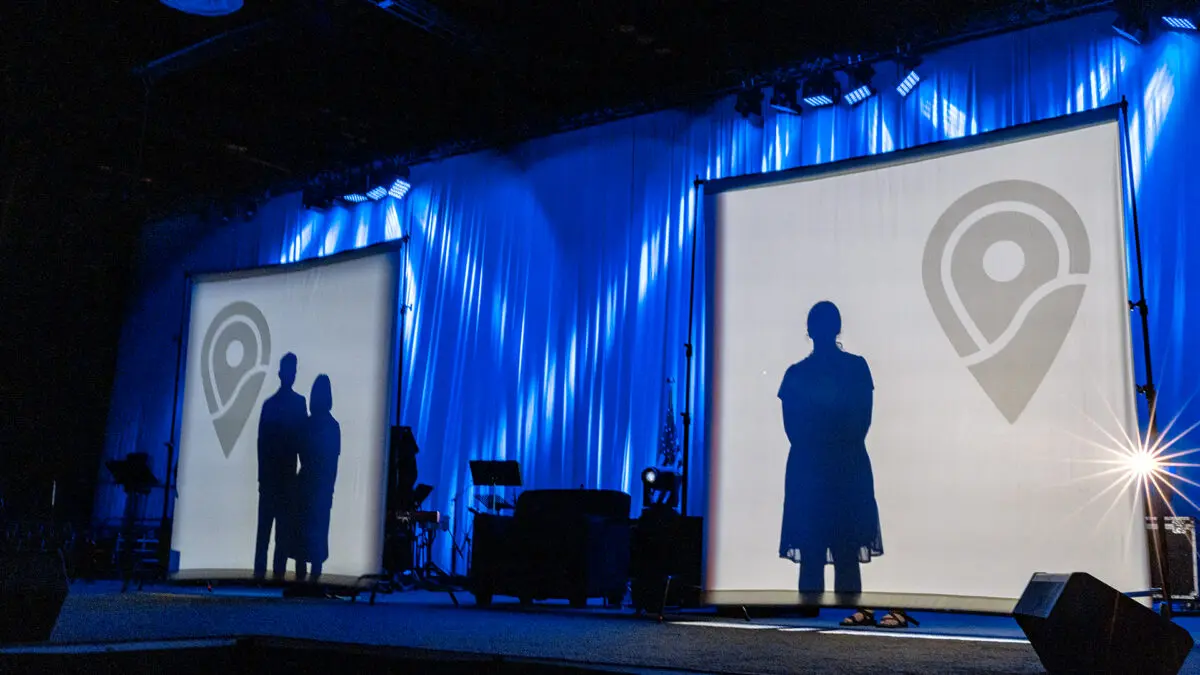
A missionary commissioning service, as usual, did not show the faces of missionaries headed to high-security areas. But for the first time at an Annual Meeting, the service did not feature their voices either. Instead, voice actors told their stories.
Then during the International Mission Board report, IMB President Paul Chitwood told messengers about a security system in Richmond, Va., “that detects real-time threats anywhere in the world” and steers missionaries away from danger.
An IMB missionary in a European city was a quarter mile away from an active shooter, he said. The security team in Richmond located her through her cell phone, called her and told her which direction to go to remain safe. In a separate incident, a team of Texas pastors in Europe was able to avoid an area where a man weaponized his car.
“Your CP dollars,” Chitwood said, give “us unique opportunities at the IMB to provide overwatch for those who have gone out from our churches.”
Enhanced security is needed, IMB chief risk officer Stephen Haber told Baptist Press, because missionary security risks have increased. Due to “advancements in AI,” even “things that used to be benign like benign photos or people’s voices” now can be used to determine someone’s identity “with almost basic AI tools.”
The IMB is not aware of any Southern Baptist missionaries who have been compromised through AI technology, but they are taking the risk seriously. At missions agencies worldwide, advancements in AI and data sharing have heightened security and forced Christians to consider anew the Bible’s teaching on risk.
‘Operational security’
Threats to missionaries are nothing new. Believers in the Roman Empire were martyred for sharing their faith, as were Christians during the Protestant Reformation. In 1956, Life magazine published a cover story on the deaths of five American missionaries in Ecuador, including Jim Elliot.
Some 60 missionaries and their children have died due to violent circumstances while serving with the IMB. They include three medical workers gunned down by Islamic militants in Yemen in 2002 and a team of workers ambushed in Iraq in 2004.
But today’s risk is different, said Scott Brawner, a former IMB director of risk management who now leads the Christian security risk management organization Concilium.
“A photo, a video clip, a voice recording a social media post can now be identified, translated, analyzed and shared worldwide within just a few minutes,” Brawner said. AI, “mixed with biometric technologies, has made voice recognition and facial recognition much more accessible than they were even five years ago.”
In the early 2000s, one of the greatest missionary security risks was the discovery by hostile countries of Christian messages written by missionaries online, Brawner said. Eventually, non-state allies began trolling suspected missionaries to help hostile governments. Now AI can do the trolling and identify individuals as missionaries with a single image or voice recording, linking that photo to a host of online data.
What’s worse, nations share entry visa data with each other and even publish some of it online. With one photo and a search conducted by ChatGPT, a hostile country in North Africa or East Asia can learn that a person applying for a business visa has entered the United Kingdom or France previously on a missionary visa. Combine that with online data showing the suspected missionary holds a theological degree, and some missionary endeavors can be shut down before they start.
“We just don’t think about those things very often,” Brawner said. “It’s typically not at the front of our minds when we think about operational security.”
So, what is a missions organization to do? Use the generous giving of Southern Baptists to mitigate the risk, said Haber.
‘Counting the cost’
All IMB missionaries receive a “well secured” phone to help protect key networks and data. On each of those phones is an emergency locator that pings every 10 minutes to transmit the missionary’s location to the security center in Richmond. The center is staffed around the clock by a team of security professionals who monitor news, social media and other open-source data—assisted by computer monitoring systems.
The team analyzes how events around the world affect IMB workers. They can send messages to missionaries within minutes of detecting a problem.
“If there’s a major earthquake somewhere in the Pacific Ocean that’s maybe off the coast of the Philippines or off the coast of Japan, we have units that work in those areas. We can quickly see where there is seismic activity then send out a blanket alert to all our units in a particular area,” Haber said. If “we are not hearing back from those units, we have standard, proactive protocols that we would then act on.”
Another key risk mitigation step is mobilizing people in the pews as missionaries rather than primarily pastors, said Brawner. The laity have no online history of religious vocations for AI to detect.
“The most important thing we can do in restricted-access [regions] today is to build the credibility of our witness on the legitimacy of our presence,” he said. “It’s becoming harder because you can’t cut corners anymore because of all this information sharing.”
With short-term mission projects, risk can be mitigated by not introducing short-term teams to key personnel.
Brawner recalled an instance in Asia when a 25-year-old was detained for leading a home Bible study. Under questioning, he gave the name of his supervisor and multiple local pastors. Within a week, American church planters were sent out of the country and local pastors began to disappear.
Security professionals like Brawner focus on preventing “high-impact events,” he said, even if they have a low likelihood of occurring. For instance, a missionary kidnapping, while unlikely, must be guarded against. One kidnapping could compromise an entire network of believers in a restricted-access country.
The ultimate answer to security concerns, however, is to view security as a matter of stewardship and calculate what risks are worth taking for Christ, Brawner said. He took issue with “blind faith” that fails to calculate risks associated with mission work, saying instead, “I’m just going to let the Lord handle it.”
“That’s actually sinful because you’re not counting the cost,” he said. “Jesus said you have to count the cost. You can’t count the cost of obedience if you don’t know what the cost is.”
The IMB is well aware of both its mission and the risk. While workers seek to avoid needless risks like using their own voice at an SBC Annual Meeting, IMB missionaries are ready to lay their lives down if that is required for faithfulness to Christ.
“The IMB is committed to operate based on our theology and philosophy of risk,” Haber said. “We are willing to operate in high-risk environments for the sake of advancing the Gospel and obeying the Great Commission’s command to go to all nations and peoples.
“At the same time, we will never engage in risky behavior for the sake of thrill-seeking. We value the human and logistical resources under our responsibility, and we will do all we can to ensure the security of our personnel, our national partners and the people who have yet to hear the Gospel.”