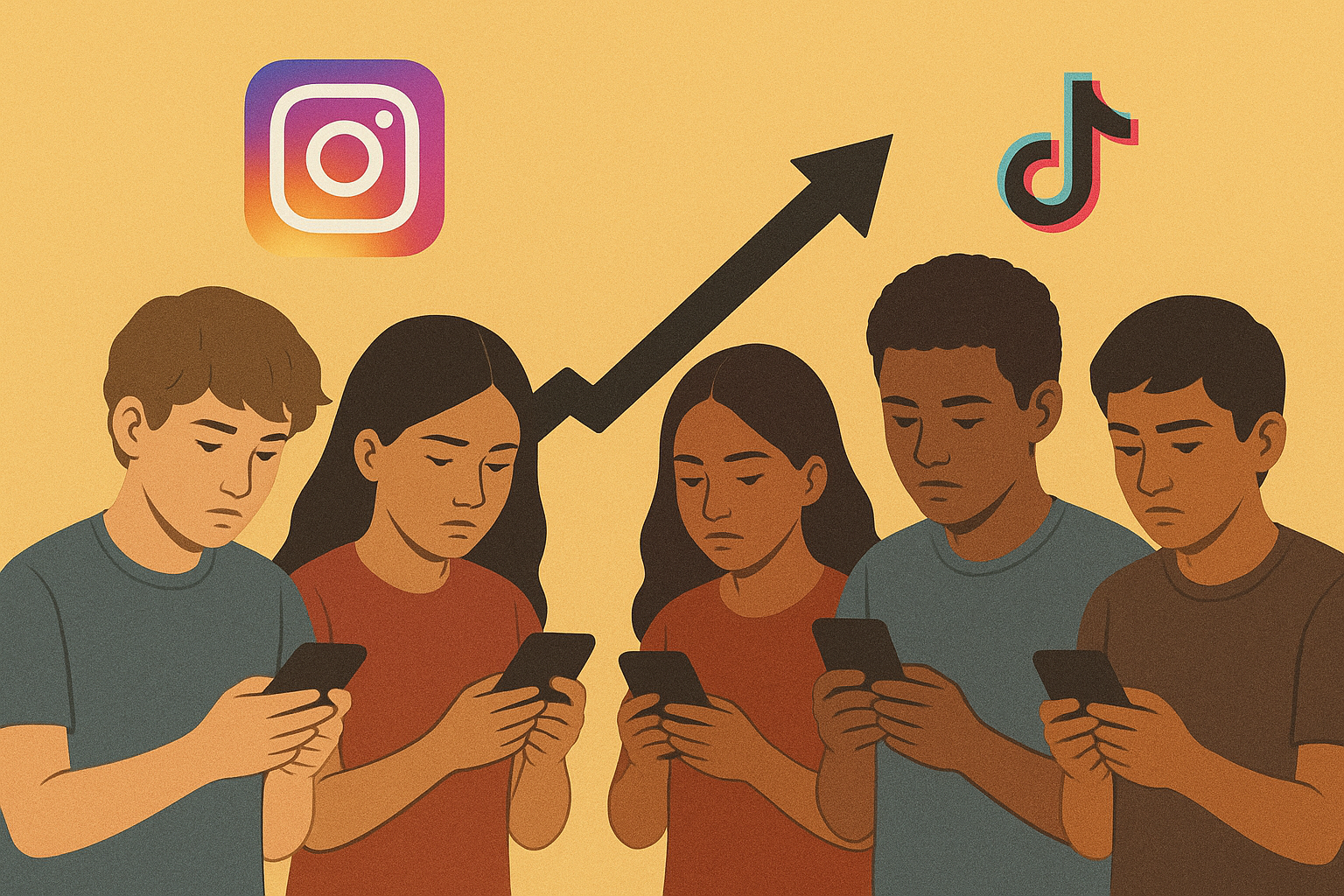

NASHVILLE (BP) – YouTube and Facebook are the top social media sites, regardless of demographics. Instagram and TikTok are the two gaining the most ground.
The latest Pew Research report on social media also notes that “the ‘gram” is where you’ll find the biggest age difference in users, with only 19 percent of users age 65 and over there versus 80 percent of 18-to-29-year-olds. (Also, if you call it “the ‘gram” you’re probably one of those on the older side.)
The study included results from several platforms, including WhatsApp, Reddit, Snapchat, X (formerly Twitter), Threads, Bluesky and Truth Social. Demographic breakdowns included gender, age, race, household income and education. Living location among urban, suburban and rural areas was also taken into consideration as well as Democrat and Republican party political leanings.
Unsurprisingly, the larger the social media outlet, the more likely it contains various communities that see the world differently.
Eighty-four percent of U.S. adults use YouTube, with at least 77 percent there regardless of income, education and location. Even Republicans and Democrats use it with equal measure (84 percent to 85 percent).
Smaller, newer platforms become more niche.
With progressives predominant on Twitter in early 2022, then-former President Donald Trump launched Truth Social as an option for conservatives. Elon Musk’s takeover of Twitter and subsequent rebranding to X led to those with Democrat leanings to Threads and Bluesky.
The Pew study reflects those changes, with 24 percent of Republicans using X versus 19 percent of Democrats. Threads and Bluesky remain progressive enclaves, with Truth Social serving that purpose for conservatives.

“It creates a lot of fragmentation,” said Benjamin Quinn, associate professor of Theology at Southeastern Baptist Theological Seminary, where he is also director of the L. Russ Bush Center for Faith and Culture. “People inevitably use those isolating platforms to reach out and connect with others. But it just doesn’t work that way.”
Such fragmentation doesn’t just speak to community, but also to how users internalize news. Three percent of U.S. adults used TikTok as a news source in 2020. That figure has since jumped to 20 percent, with 43 percent of 18-29-year-olds using the platform for newsgathering.
In the recent Pew study, TikTok was second to Instagram in terms of age difference among users, with 63 percent of 18-to-29-year-olds on it as opposed to 12 percent of those 65 and over. Those living in an urban or suburban areas are about 18 percent more likely to be on Instagram. Asians (54 percent) are about twice as likely to use WhatsApp as Whites (23 percent).
Social media as a news source also means competition to be first in reporting, with truth a distant second.
“You have news outlets and people giving real information that is helpful for communities, but others are just pushing forward whatever comes to mind,” said Quinn. “You have to sift through that and figure out who you listen to and what’s real. It only serves to deepen the loneliness pit.”
Platforms have different strengths and can serve different roles, explained Quinn. Though WhatsApp is designated as social media, it serves more for communications. Facebook is a cultural mainstay on the same level as people used to see phone books. YouTube’s presence was already strong before introducing clips called Shorts, which hook kids and adults alike.
“I’m not surprised at Instagram’s rise. In fact, I thought it would be higher,” said Quinn, who also hosts the podcast Christ and Culture. “It will be higher this time next year. In five years, it will be doing what Twitter has done.”
The most recent episode of the Christ and Culture podcast covers the Pew study, with Quinn joined by Nathin Finn, professor of Faith and Culture at North Greenville University, and Dan Darling, director of The Land Center at Southwestern Baptist Theological Seminary.
Social media isn’t going away. Quinn suggests churches have a presence on Facebook, Instagram and YouTube. But that doesn’t mean Christians should overlook the dangers of excessive use.
“I’m not an anti-technology guy who says you need to throw all of it into the garbage,” he said. “We have teenagers and talk to them about it. The bigger problem is how social media can exacerbate loneliness, because it lacks shared experience.”
Both active and passive social media usage coincides with a rise of reported loneliness. But, faith communities are helping with reconnection.
“Don’t confuse communication with community,” Quinn said. “A church’s social media is meant to complement the community we build in a congregation. We want to lean into embodiment and in-person relationships there.”
The connection between social media and mental health, especially among children and teens, is getting more attention. Following Australia’s lead, Denmark is planning to ban social media for those under 15. In the U.S., at least 35 states and Washington, D.C. have signed or already taken steps over cell phone usage in classrooms. At least 26 states have laws or policies in place to ban or limit their presence there.
Technology isn’t going to crawl under a rock. But such steps can introduce rebuilding other tools.
“Part of discipleship is putting the phone down, looking them in the eye, shaking their hand and having meaningful conversations,” Quinn said. “It’s not as though we’ve never had to teach kids those things, but it’s never been as challenging.”
Related posts:
 Franklin Graham announces national prayer march in Washington
  Karen Swallow Prior to join SEBTS faculty
  Vermont police chaplain loses position after outside pressure
  TRUSTEES: Southeastern adds 4 new faculty
  Americans most thankful for and to family this Thanksgiving FROM THE SEMINARIES: SEBTS announces three new position appointments; SBTS adds ‘promising young theologian’ to faculty
  Americans judge the Good Book more positively, but still often by its cover
  Bible among books temporarily removed from Keller, Texas, school libraries