
ORLANDO (BP) – The Credentials Committee gave messengers a behind-the-scenes look at the group’s work during a special report at the SBC Annual Meeting.
More than 800 churches have been considered by the Credentials Committee in the seven years since that group was repurposed from one that registered messengers at the annual meeting to one that works throughout the year, receiving inquiries and drawing fire whether Southern Baptists agree or disagree with the committee’s assessment.
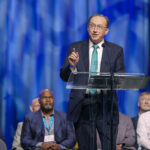
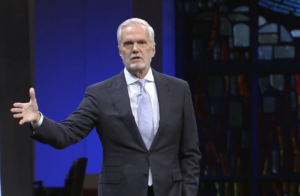
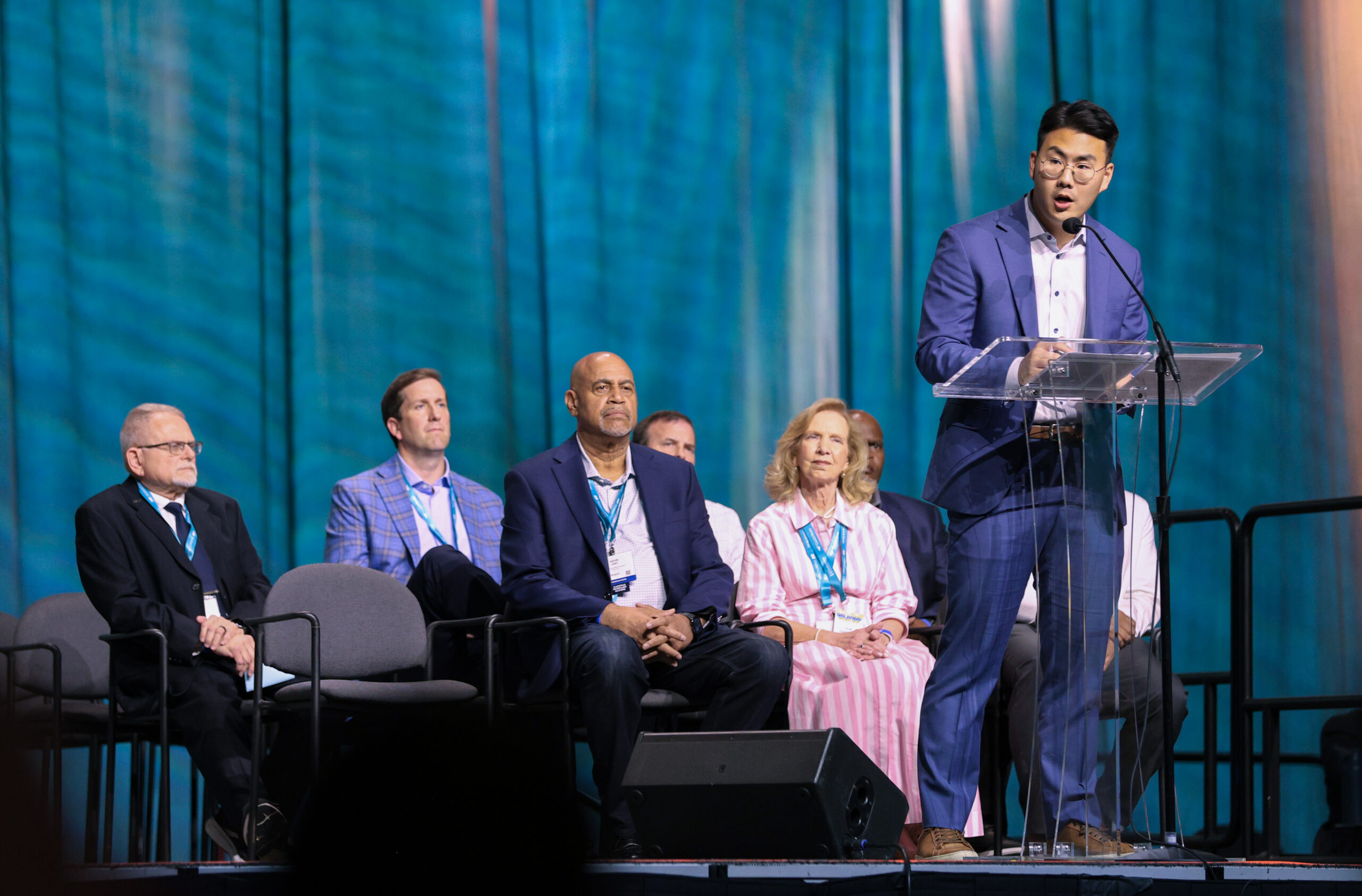
Credentials Committee Chair Jonathan Sams spoke at the Annual Meeting on June 9, providing a view into the process and urging messengers to understand that each inquiry requires “careful work.”
“Those matters often involved research, multiple phone calls, email exchanges, documentation review [and] Zoom meetings or other direct conversations with churches,” he said. “The work is not fast, but it is necessary.”
The committee of volunteers met over nine times in the past year, including for orientation. Meetings typically last around three hours. Some went longer.
Those meetings covered inquiries of nearly 200 churches, with 114 of them being new concerns received during the year. More than 100 completed inquiries resulted in three recommendations to the Executive Committee – one at the trustees’ fall gathering and two in February.
Ten inquiries led to those churches’ voluntary withdrawal from cooperation with the Convention. Sams added that the “vast majority” of inquiries led to a determination that churches were, in fact, in friendly cooperation with the SBC.
According to registration information, more than 100 churches with messengers at the Orlando meeting had been reviewed by the committee or had been a part of the inquiry process.
The nature of its work requires a stringent level of discretion from the group.
“Those who serve on this committee know the weight of the matters we review,” said Sams. “Many of these concerns involve sensitive details, painful situations, vulnerable people and churches walking through difficult circumstances.
“We recognize and share the desire of Southern Baptists for transparency from this committee. At the same time, many matters brought before us involve confidential, private, procedural and otherwise sensitive information. For that reason, while we seek to communicate with appropriate openness and clarity, we cannot – and should not – disclose every detail of every inquiry.”
Transparency, he pointed out, “does not require carelessness.”
Allegations related to sexual abuse and a church’s response make up the majority – 75 percent – of the committee’s work, with approximately 600 of the aforementioned 800 cases.
In that time, the committee also received 58 reports of churches with a woman serving in a pastoral role or using the title of pastor, Sams said. Forty-four of them were Southern Baptist churches. After contact, 20 voluntarily withdrew from the SBC. The committee recommended 10 others to be considered out of friendly cooperation.
The fact that three-quarters of the committee’s work relates to allegations of sexual abuse makes efforts “sobering, sensitive and often slow,” said Sams. But encouraging signs have emerged through churches seeking training and resources. There is an increasing intentionality from congregations about abuse prevention.
The committee does not look for reasons to remove churches, he added.
“But we also understand that cooperation has meaning,” he told messengers near the close of the Tuesday (June 9) afternoon session. “The Convention has adopted standard for friendly cooperation, and this committee has been tasked with helping the Convention apply those standards carefully, fairly and faithfully.”