
WASHINGTON (BP) – The Hamas attack on Israel and rioting against Ahmadi Muslims in Bangladesh were among rising social hostilities targeting religious groups globally in 2023, Pew Research Center said in releasing its latest numbers in the trend, while Russia’s war on Ukraine elevated such incidents in Europe.
The attacks placed Israel and Bangladesh among the six nations that suffered very high social hostilities involving religion in 2023, joining Nigeria, India, Syria and Pakistan that remained on the list from the previous year. An additional 49 countries suffered high levels of religion-driven social hostilities in 2023, Pew said, for a combined 55 countries – or 28 percent of countries – with elevated levels of religious driven social hostilities.
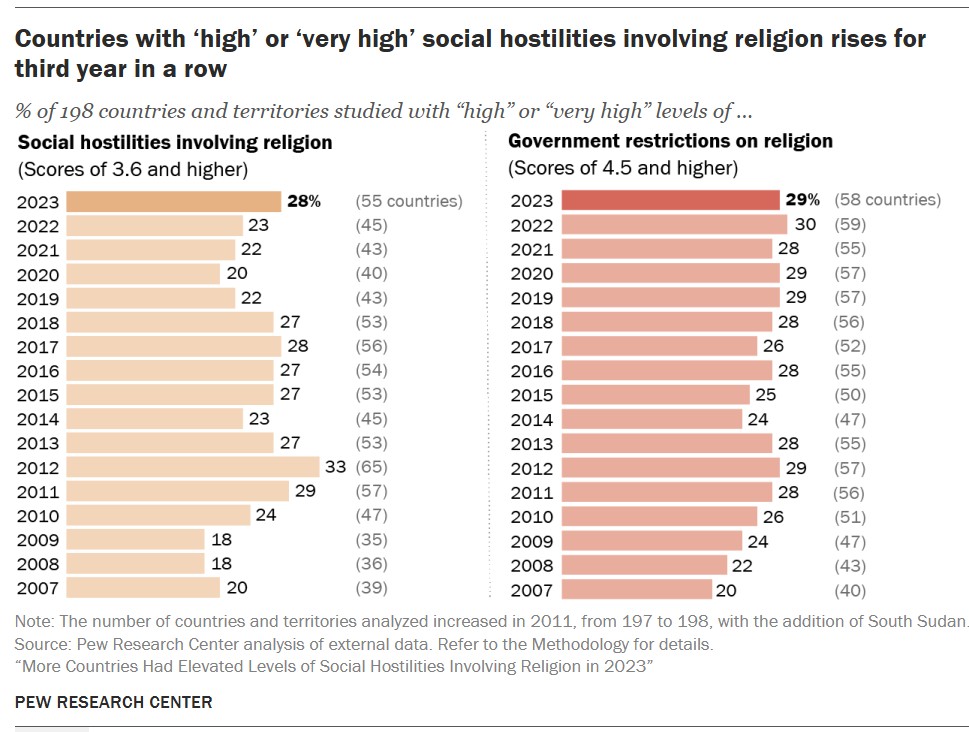
That’s an increase from the 45 countries or 22 percent of countries with elevated levels of religion-based social hostility the previous year, including harassment and violence by private individuals and nongovernmental organizations including terrorist groups, and judged on a scale of 0-10. Such harassment occurred in 175 countries, or 88 percent of those studied, up from 164, or 82 percent, the previous year.
Russia’s full-scale attack on Ukraine in 2022 led to many of the incidents included in the 2023 report, Pew said.
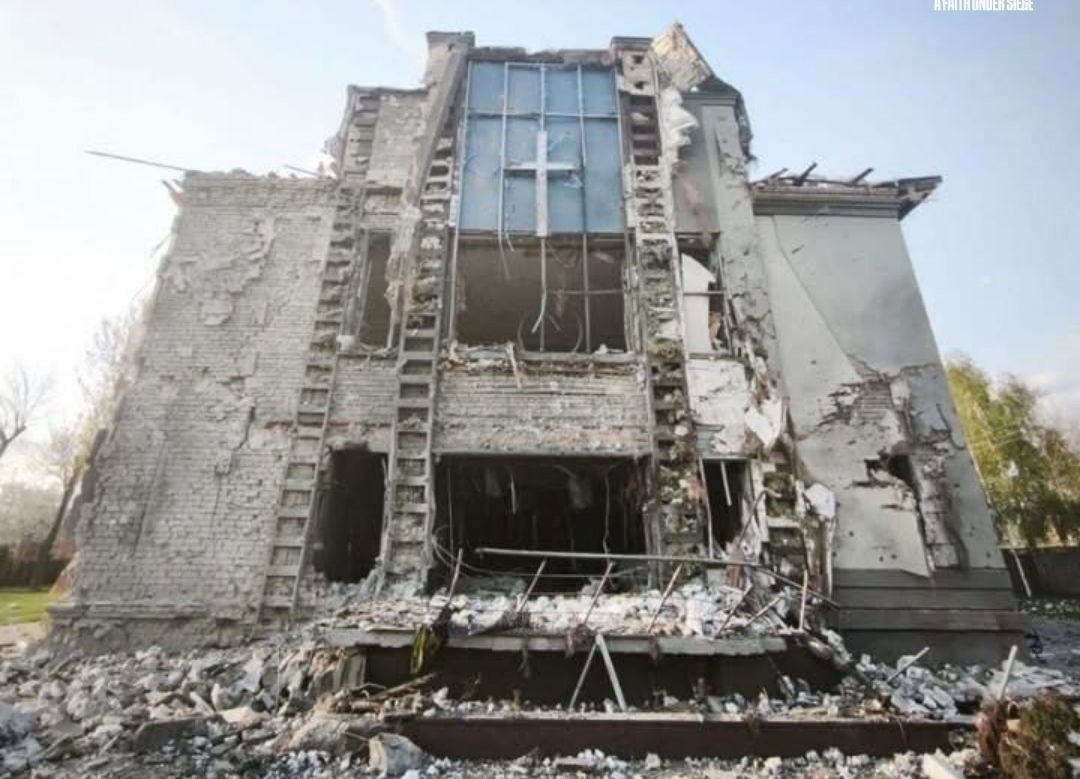
“The U.S. State Department cited figures from a research consortium called the Conflict Observatory which said that Russian forces attacked hundreds of cemeteries and religious sites starting with its full-scale invasion of Ukraine in early 2022,” Pew said. “In July 2023, a Russian missile damaged the largest Orthodox church in the Ukrainian city of Odessa, and in October another Russian missile hit a synagogue and rabbi’s house in the Ukrainian city of Kharkiv. In another October attack cited by the State Department, Russian shelling hit a cathedral in a monastery in the Ukrainian-controlled part of the disputed Donetsk region.”
Government-driven hostilities against religious groups remained about the same in the study period, Pew said in its annual study of religious freedom in 198 countries and territories, although government restrictions were more common than social hostilities. Government harassment occurred in 185 countries, 93 percent of countries and territories studies, about the same as the 186 countries impacted in 2022, Pew said.
In Europe, many incidents of property damage were reported in the conflict between Russia and Ukraine, where religious properties were attacked in warring or disputed areas.
The most severe persecution occurred in 48 countries that suffered religion-related killings, or 24 percent of countries studied; while people in 58 countries, or 29 percent of countries studied, were displaced from their homes because of their religion.
Property damage occurred most often, impacting residents of 120 countries or 61 percent of those studied, about the same as in 2022. In 96 countries, 48 percent of those studied, residents were physically assaulted because of their religion; while members of religious groups in 89 countries – 45 percent – were kidnapped or arrested.
Countries and territories analyzed “contain all but a tiny fraction of the global population,” Pew said of its study, with more than three-quarters (78 percent) living in places with high or very high levels of government restrictions and or/social hostilities. Still, most countries suffered low or moderate levels of government restrictions and social hostilities in 2023.
“This is possible because some of the countries with very high restrictions and/or hostilities are extremely populous, including China, India and Pakistan,” Pew said in its study. “Of course, not everyone living in countries with high levels of government restrictions or social hostilities is equally affected by them; in many cases, the brunt falls on religious minorities.”
A majority of the countries, 168 or 84.8 percent, suffered harassment at the hands of both the government and private groups, including terrorist organizations.
A dozen countries suffered such rising hostilities that they moved from moderate scores in 2022 to high scores in 2023, namely Belgium, the Democratic Republic of the Congo, Guatemala, Norway, Russia, Sierra Leone, Spain, Sudan, Sweden, Tanzania, Thailand and Turkey. Social hostilities decreased in two countries, Ethiopia and the Philippines, moving them from high to moderate levels.
In studying social hostilities and government harassment, Pew included include acts of a force against religious individuals or groups encompassing damage to property, detentions, assaults, displacements and killings, as well as verbal and nonphysical acts including spoken or written hate speech and government policies infringing on the practice of religion.
Read Pew’s findings here.