
ABOARD USS HARRY S. TRUMAN, EAST MEDITERANNEAN (BP)–The flight deck of an aircraft carrier is an amazing place of organized sights, sounds and motions.
Air department crews wear colorful jerseys (purple, green, blue, yellow, red, white, brown) to designate their many different functions in the orchestration of activity that surrounds the launch and recovery of aircraft (fueling; catapult and arresting, maintenance; ground handling; leadership and supervision; armament; safety, medical, final checks; inspection and servicing). Coordination is necessarily exacting in order to successfully prepare and execute each schedule of flights. Expectations are high because the stakes are high.
Every crewman involved in the process is critical, including some of the youngest enlisted personnel on the flight deck, the plane captains.
The plane captain, spotted by his brown jersey and protective headgear, is one of the last persons an aviator sees before a launch and one of the first he sees on deck when he returns. These maintenance personnel are generally 19-, 20- or 21-years old — and they hold the job of making planes ready for launch.
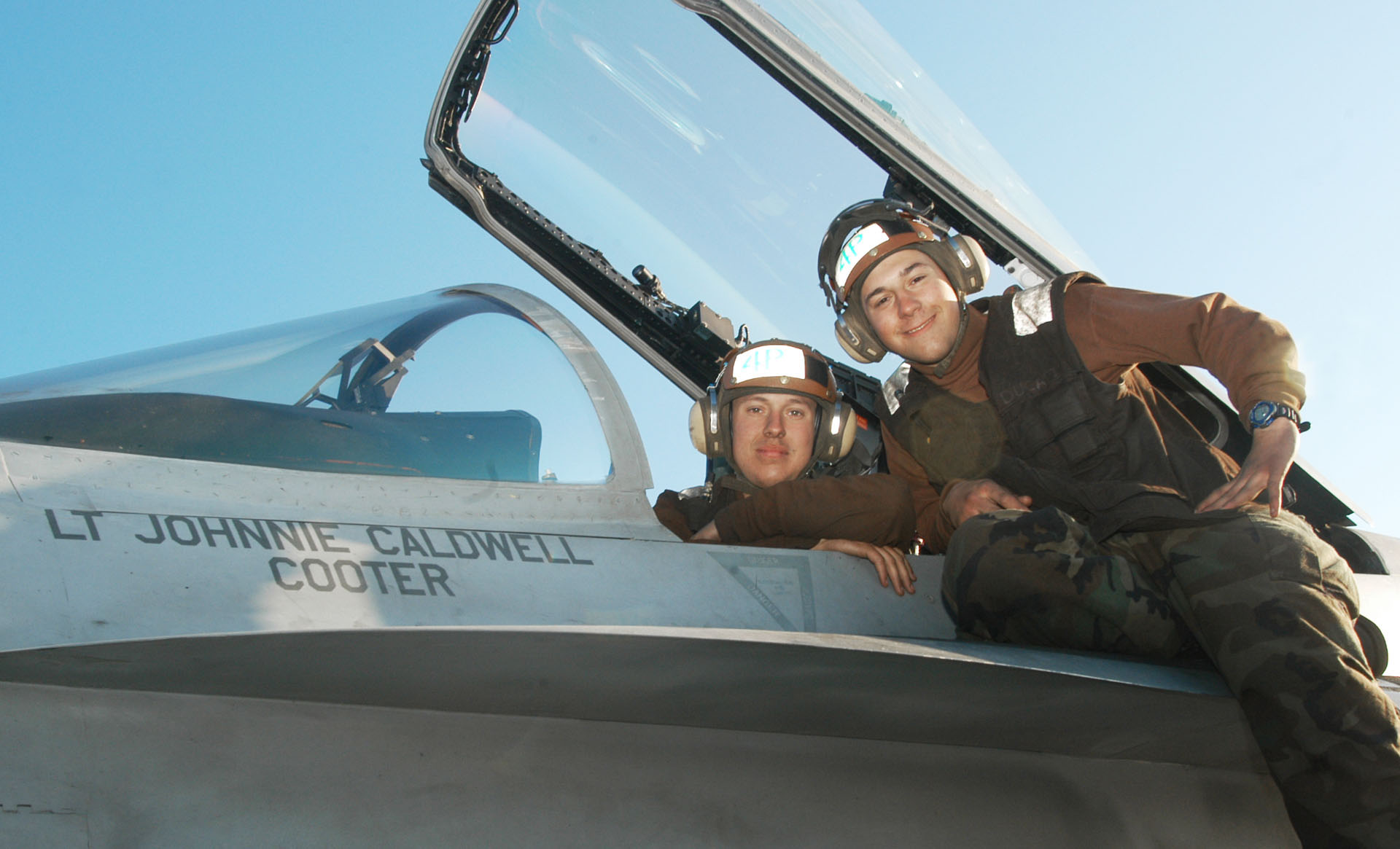
Dustin Ducatte and Raul Duarte are “brownshirts” for LT Johnnie “Cooter” Caldwell’s F/A-18. They take extreme pride in their duties because they know they make a difference.
“You feel an extreme amount of satisfaction when you see your bird take off without any problems,” said Ducatte, a 21-year-old from Saranec, N.Y. “It’s as much of an adrenaline rush [for us] to send them off the deck,” referring to the pilots, “as for them launching off a carrier. It really gives you a sense of pride to have a major part of it.”
The Navy’s plane captain training program is comprehensive. Once candidates have mastered the details about the servicing and inspection of an aircraft, they literally get to put their name on one.
“One day my name will go right here,” said Raul Duarte with pride, pointing to a space below the pilot’s name. Duarte, 20, is from Azusa, Ca. He shares Caldwell’s plane with Ducatte. “It’s a great feeling to wake up in the morning and prep your bird. LT Caldwell is a good guy to talk to.”
The plane captains and aviators typically form close relationships with one another.
“We put immeasurable faith in our plane captains, maintainers, and everyone on the flight deck,” said LT Johnnie Caldwell, the naval aviator whose plane the two young men maintain. “A big part of your life is in their hands. When they say, ‘Hey sir, you’re good to go,’ you have to take it on faith.”
Duarte describes Caldwell as always courteous and smiling with lots of jokes to spare. He looks forward to the aviator’s return after each mission because the lieutenant will frequently talk about the trip and what did or didn’t occur.
It’s time for another mission and the plane captain finishes checking the plane as the aviator readies in the cockpit for the final signal.
Standing at attention, Duarte gives a deliberate, measured salute to Caldwell, telling him he’s ‘good to go.’ The plane speeds up and takes off over the deep blue East Mediterranean sea. The young man watches until the aircraft is well out of sight, but early in a mission that will take hours.
Duarte will be on deck watching and waiting. After all, it’s his plane too.
–30–
(BP) photo posted in the BP Photo Library at https://www.bpnews.net. Photo title:
KEY ROLES.