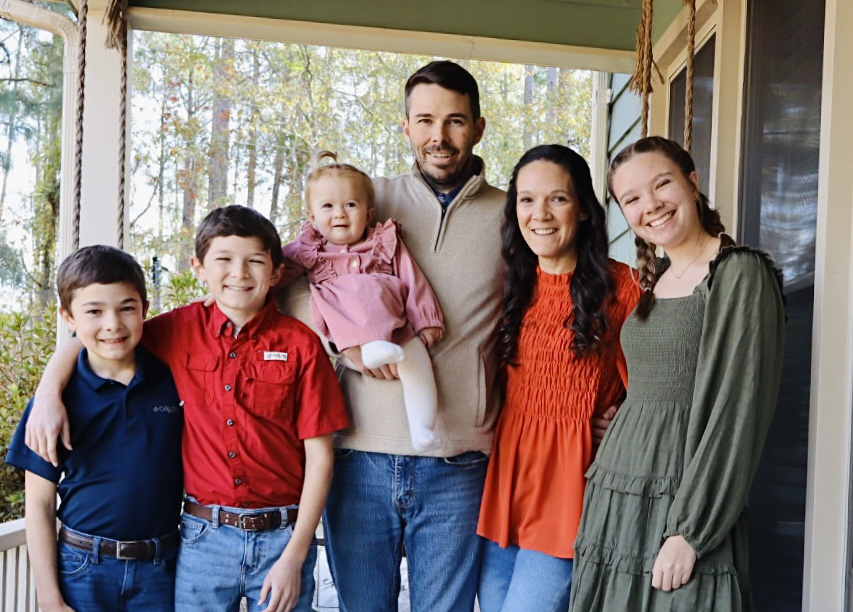

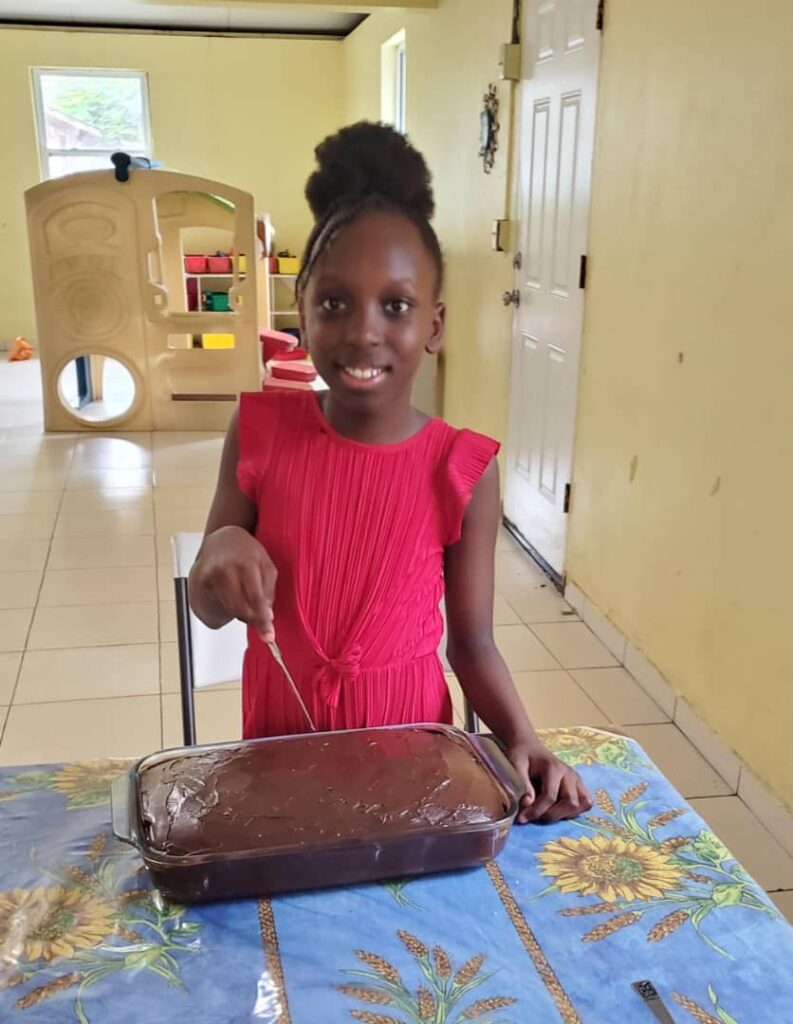
WASHINGTON (BP) – Grace Pierre Dowey, a 10-year-old girl living in a Haitian orphanage near Port Au Prince, knows she has a family in the U.S. She’s met her adoptive parents Ted and Ashley Dowey and her four siblings on Zoom, but that’s the extent of it.
The U.S. State Department’s “do not travel” advisory for Haiti has prevented the Doweys from traveling to the country suffering political and economic upheaval and rampant gang violence. They were to meet Grace this month in Miami, but a U.S. travel visa ban with no exemptions for international adoption has the family in limbo.
In the meantime, Grace lives in a creche – the Creole word for orphanage – as violence remains rampant all around her.
“It’s very difficult, to think about the fact that other creches have been stormed by gang members. And she lives very close to the capital, Port-au-Prince, and that’s obviously a very unstable place,” Ashley Dowey told Baptist Press. “We know that just the trauma of being in Haiti right now with everything that’s going on is magnified for these kids. So it’s frustrating and it’s heart -wrenching to think that she is officially a Dowey, but she’s not able to physically be with us.”
Grace is among an estimated 300 children impacted by travel visa bans the U.S. enacted on about 70 countries this year, said Karla Thrasher, vice president of international ministries for Lifeline Children’s Services, the largest Christian adoption agency in the U.S.
Lifeline matched adoptions that are in the final stages for 16 children in six nations, but the visa ban is preventing the parents from uniting with their children, Thrasher told Baptist Press.
“Children are not able to receive travel visas to travel to the U.S.,” Thrasher said. “There have been visa bans put in place before. That’s not uncommon. But there’s always been an exemption for children being adopted internationally by U.S. families.”
In addition to Haiti, the 16 children placed by Lifeline whose travel to the U.S. is banned are residents of Brazil, Colombia, Uzbekistan, Kyrgyzstan, Moldova and North Macedonia. The adoptive parents have been working to adopt their children three to five years and have invested “thousands and thousands of dollars,” Thrasher said, as the children remain in foster homes, orphanages and group homes in their respective countries.

Adoption visas are explicitly included in a ban in effect since Jan. 1, and excluded from exemptions listed in a ban in effect since Jan. 21
“Also, with Presidential Proclamation 10998, as of the effective date of January 1, 2026, the following categorical exceptions provided in Presidential Proclamation 10949 for nationals subject to the suspension on entry are no longer available under the PP: immediate family immigrant visas (IR-1/CR-1, IR-2/CR-2, IR-5); adoption visas (IR-3, IR-4, IH-3, IH-4); and Afghan Special Immigrant Visas,” according to the ban entitled “Suspension of Visa Issuance to Foreign Nationals to Protect the Security of the United States,” detailed at travel.state.gov.
The second ban, entitled Immigrant Visa Processing Updates for Nationalities at High Risk of Public Benefits Usage, added additional countries.
Thrasher expressed hope that the inclusion of adoption visas in the bans was an oversight that can be remedied.
“The hope is that this was just an oversight,” Thrasher said. “So our specific ask as we’re advocating with officials and lawmakers is to put this exemption back into the proclamation. As time goes on, though, we wonder why that can’t be done quickly and easily.”
Thrasher explained the international adoption process and the essential visas needed to unite new families.
“When children are adopted internationally, the families go through the entire process on this side, where they’re screened and vetted by U.S. Immigration. And then, once all of those approvals are in place, the families travel to the country where they are able to accept placement of the child and finalize an adoption,” Thrasher said. “After that happens, the families apply for a visa for the child to come to the U.S. That’s what is being restricted at this time.”
Grace knows she’s a Dowey, but doesn’t understand why she can’t live with her family, Ashley told Baptist Press.
“We are able to have Zoom calls with Grace. And it’s hard to tell how (the ban) has impacted her. She’s very young, but we do know that she desires to come home,” Ashley said. “And so the waiting is just really difficult. She is not able to understand why she’s having to continue to wait and why she sees us, but is not able to come home and be with her family.”
Both Ashley and Lifeline encourage prayers for the children awaiting travel to their U.S. homes, for the adoptive families and for the U.S. government to add international adoptions to the lists of exemptions in the bans.
Lifeline is also uplifting the needs in prayer, advocating for the exemptions and ministering to the families it serves.
“Starting next week, we will do support Zoom calls with the families indefinitely, just to offer them support and to pray with them and to offer any updated information that we may get,” Thrasher said. “We just want them to know that there’s a standing time that they’re going to get to hear from us and talk with us and ask their questions.”
There’s no indication of why adoption visas were not exempted this year, or of how long the bans will last, as families wait.
“She is currently ours legally,” Ashley said of Grace. “We have adopted her officially. She’s Grace Pierre Dowey. She’s a member of our family, but we’re not able to have her in our home.”
Related posts:
 Thousands coming to Christ through church’s migrant ministry
  Adoption picture of salvation, parents say
  Boyce students serve as life coaches for foster children
  Court’s order on Texas heartbeat ban encourages pro-lifers
  Friends of Refugees revived her missionary call
  The First Act of Love: Pastor’s Family, Newly Adopted Son Bond by Distributing Food in Child’s Country BCCF—Serving Children and Families for Seventy Years
  Haitian American pastors mobilize to help migrants, end expulsions