
WESTERN U.S. – Online theological education – study without onsite interaction with other students – has become an efficient way for the Southern Baptist Convention’s six seminaries to train the next generation of leaders without students having to leave their homes or places of ministry.
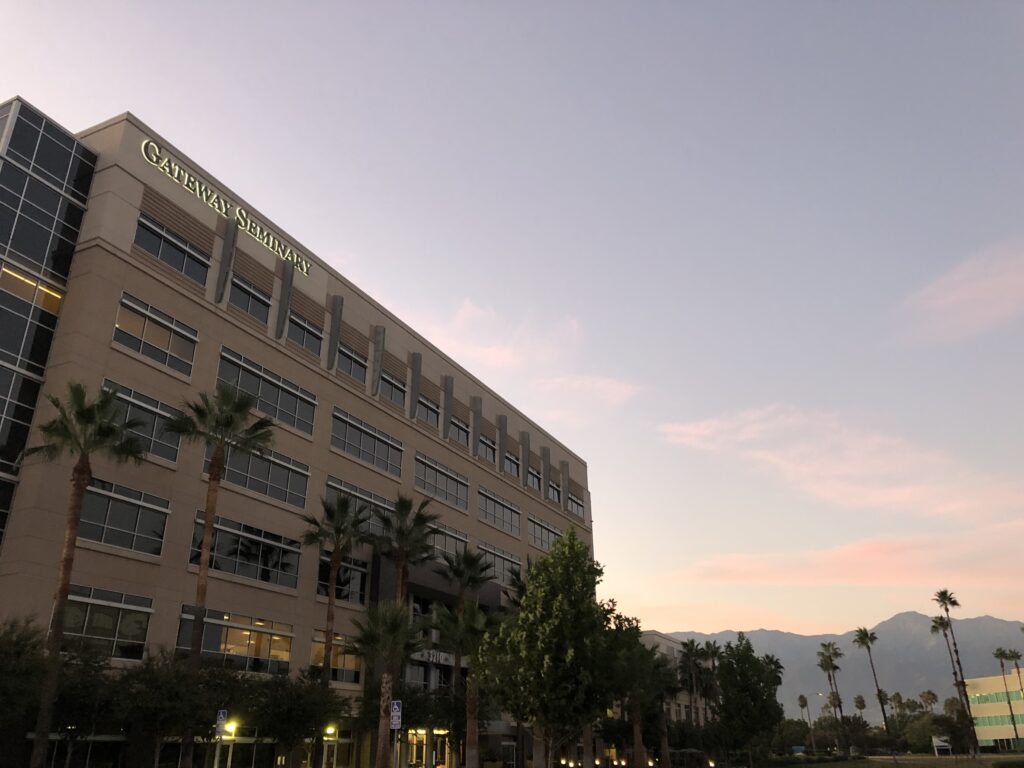
Gateway Seminary goes a step – or many miles – farther. It brings onsite accredited in-person theological education to students and churches in several locations from the Rocky Mountains to the Pacific.

“The challenge – and everyone in the West understands this – is that when our students leave for theological education, they usually do not return,” Gateway Seminary President Adam Groza told Baptist Press. “We need to be training God-called men and women without them having to leave the churches of the West.
“Gateway was ahead of the curve in understanding this,” Groza continued. “Providing biblical, localized ministry training really is at the core of our identity and mission: theologically sound, contextual education for people in the West.”
The “West” includes Colorado, Idaho, Montana, Nevada, Wyoming, Utah, Arizona, California, Oregon, Washington, and next year, Hawaii.
Regional campuses
Gateway’s main campus is in Ontario, Calif., Metro Los Angeles. What started in the San Francisco Bay area a year before the end of World War II, grew in 1973 to include the Brea campus in Southern California (which later closed after the seminary moved from Metro San Francisco to the Greater Los Angeles area.) The Pacific Northwest Campus in Vancouver, Wash., was added in 1980, Arizona Campus in Phoenix in 1995, Rocky Mountain Campus in Denver in 1996, and most recently, the northern California campus in San Leandro, the San Francisco Bay area. A new campus on Oahu, Hawaii, is set to launch in fall 2026.
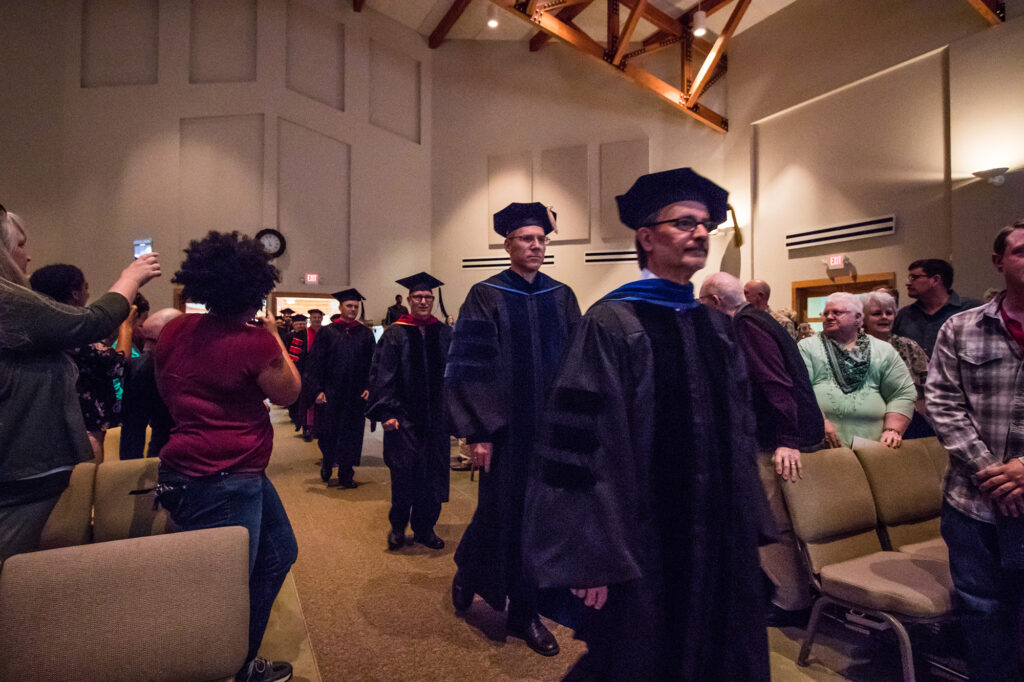
“Having a regional Gateway Seminary campus in Vancouver provides Northwest students with a biblically conservative theological education in their own backyard, fostering a deep sense of place and mission within their local church and cultural context,” Northwest Baptist Convention Executive Director Lance Caddel told Baptist Press. “While online options are convenient, the opportunity to learn and grow alongside other leaders from the Northwest strengthens relationships and reinforces shared ministry values across our region.”

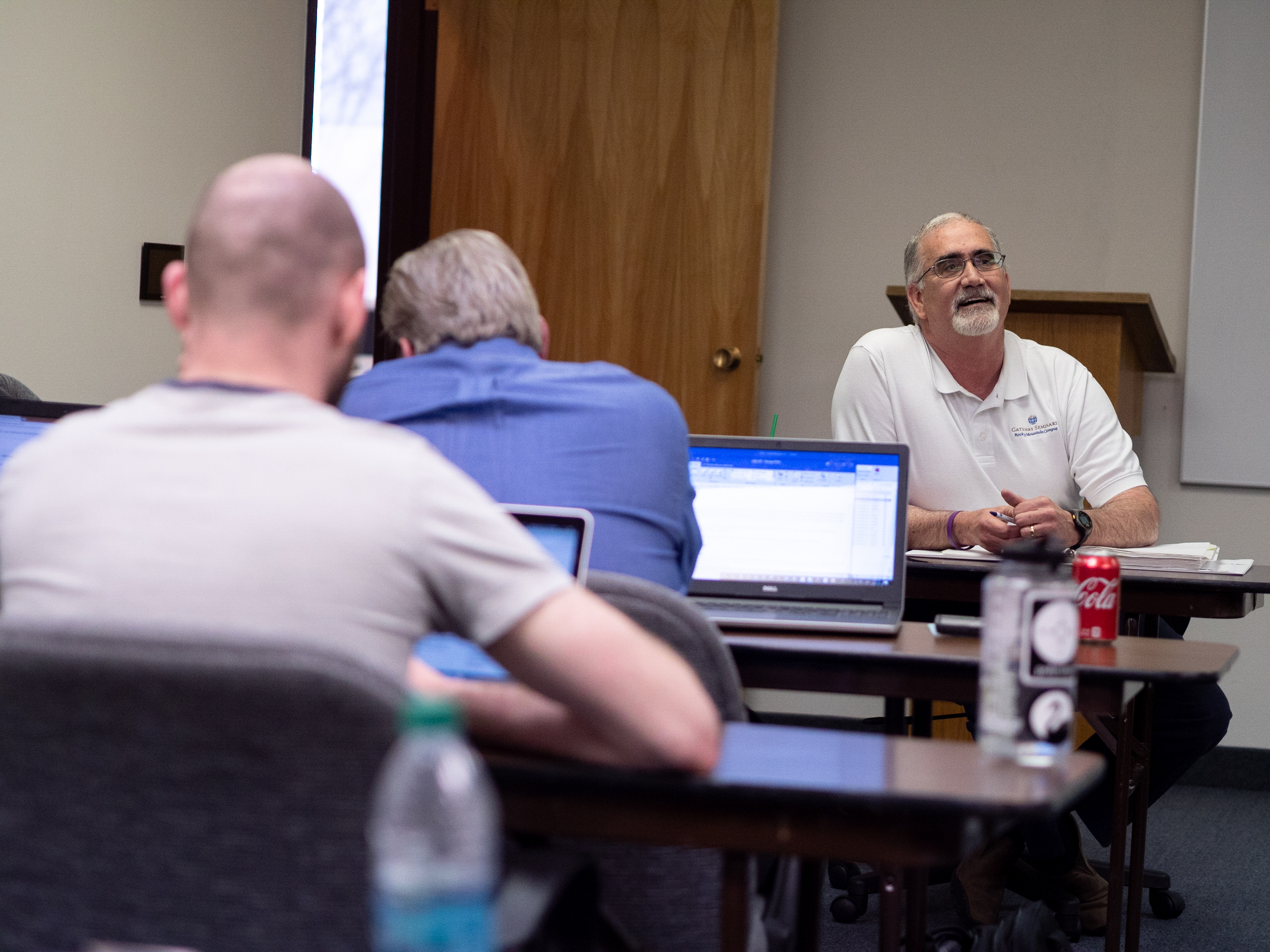
The main point of distinction for a regional campus is that a student doesn’t have to go to the California campus or take online classes to complete their degree. They can complete it in person, in their local context, building friendships with other students, Dallas Bivins, director of the Arizona campus, told Baptist Press.
“There is a world of difference between Los Angeles and Phoenix, Denver and the Bay, and Portland as well,” Bivins said. “Each unique setting allows for our students to rub shoulders not just with professors who have excelled in their hometown, but with fellow learners who are facing the same obstacles and opportunities to grow in a safe and nurturing seminary.”
Teaching sites
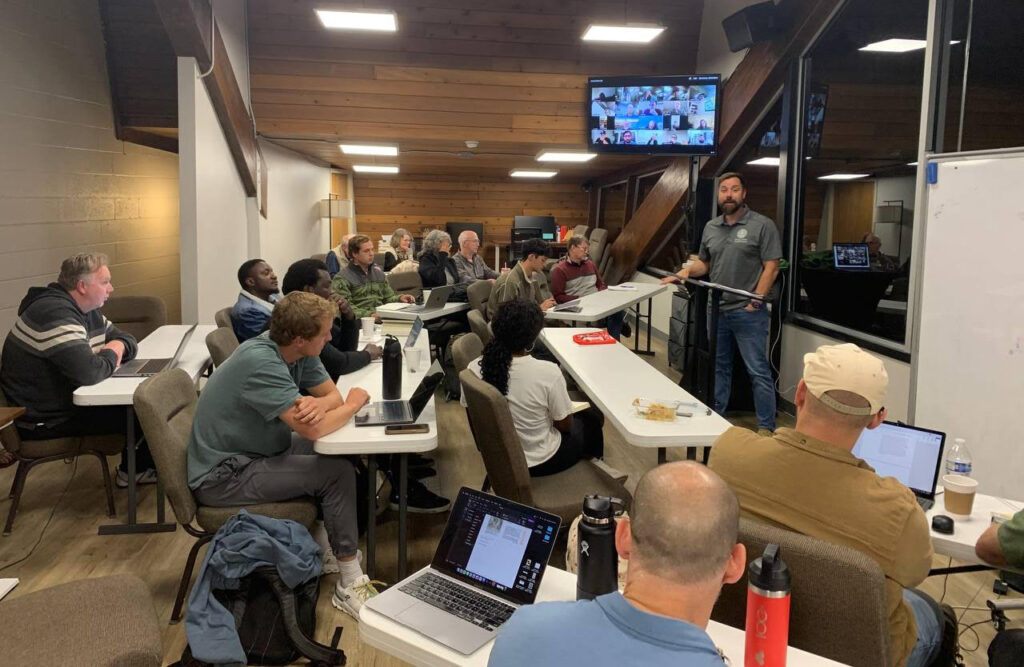
Several of the regional campuses have remote teaching sites, with still more planned to open in 2026. The first was Cross Fellowship Church in Black Forest, an hour south of Denver. The newest, slated to begin in 2026 as offshoots of the Arizona campus, include Tucson and Lake Havasu in Arizona, and Reno, Nevada. The total Arizona campus has three active teaching sites.
“The Arizona Campus has partnered with entities on several levels – local churches, local associations and state conventions – to provide theological training to those who may not otherwise attend seminary,” Bivins said. “In each case, the partnering site became aware of a need in educating their members. Because of our personal and professional relationships, they specifically requested our help in fulfilling that need.”
Then-Pastor (now emeritus) Bob Bender’s plan at Cross Fellowship in Black Forest, Colo., was to train members for leadership. This fall they’re in their 24th semester, with about 10 students each semester, Bender said. The church has grown from 125 in 1995, when the RMC started, to about 800 this year, with trained capable leaders available as the church added ministries, planted three additional churches, and sent missionaries to other Colorado churches, across North America and overseas.
“Gateway and its Rocky Mountain Campus have allowed our Utah-Idaho SBC students to attend seminary education across our two states without having to relocate to a seminary campus across the country,” UISBC Executive Director Rob Lee told Baptist Press, referring to the teaching site in Salt Lake City. “It is helping us raise indigenous leaders at all levels within our churches and from church plants.
“The Salt Lake School of Theology enables our pastors, planters, leaders and church members to further their calling and service in our churches,” Lee continued. “It meets the critical need of raising leaders for Utah and Idaho in all our churches and plants.”
Steve Veteto, director of the Rocky Mountain campus told Baptist Press he’s noticed nearly every student has been an adult learner. “In my 24 years, fewer than a handful have gone straight from high school to college followed by seminary. Our students are already in ministry or feeling called to ministry as a second or third career.” About 40 percent of RMC graduates serve in Colorado churches; four have been elected as president of the state convention.
Still more options
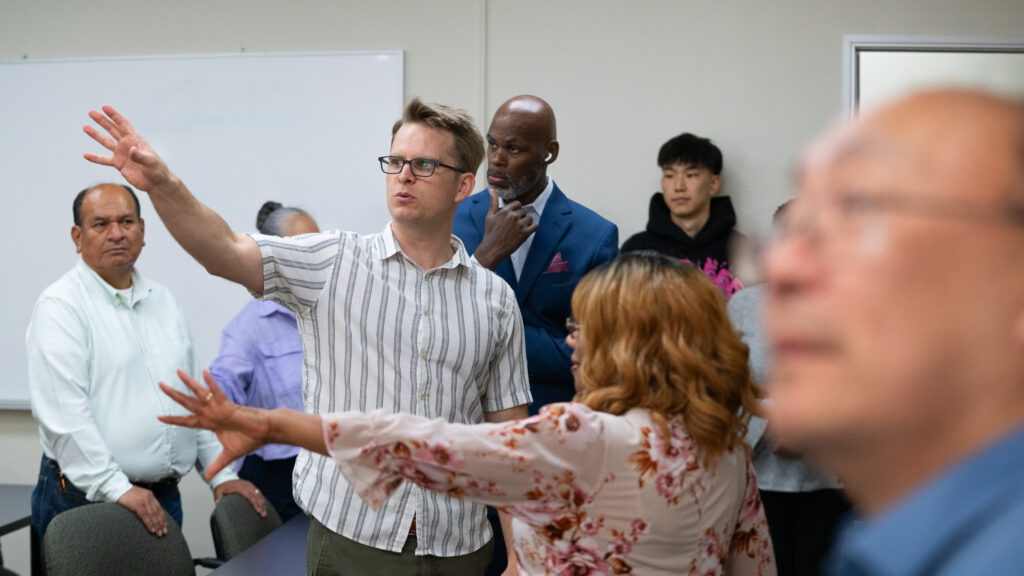
Gateway also offers ADVANCE centers providing unaccredited courses for lay leaders, and – in partnership with Send Network Español – Spanish-language church planting residencies, with accredited seminary courses.
Once known as Contextualized Leadership Development, ADVANCE courses are set up to train lay leaders, and in several cases, offer classes in languages other than English.
The Wyoming Southern Baptist Center for Leadership Development’s first classes were in 2006. There are 22 other ADVANCE opportunities across the West.
“We expected our school to have a positive impact. But nobody dreamed it would still be going 20 years later, with 17 graduating classes, and 157 graduates as of Spring 2025,” Director Fred Creason told Baptist Press. “Our greatest blessing is watching our graduates serve Jesus.”
Ed Tharp was an Indiana transplant who completed two degrees – Christian Ministry and Theology – through ADVANCE while serving as a youth pastor at Boyd Avenue Baptist Church in Casper, Wyo. He then pursued a master’s degree in theology online through Golden Gate (now Gateway), and when he graduated, received the prestigious Broadman and Holman Seminarian award. Today Tharp is senior pastor of Boyd Avenue Baptist, one of the leading churches in Wyoming.
“I never thought I’d be able to do my seminary education and still stay in Wyoming,” Tharp told Baptist Press. “Gateway has given me the ability to gain theological education and strengthen my ministry in immeasurable ways here in Wyoming.”
Every class or course of study at Gateway Seminary can help a church leader minister more effectively, President Groza said. What makes the seminary unique is not only its 11-state reach but its commitment to quality contextualized theological education.
“Our strategy is to put in-person education in proximity to the students in the churches they serve and to the people they’re called to reach, rather than have them leave those places and churches and people,” Groza said. “And then another benefit: Students learn from faculty who know their context and who know the unique distinctives and challenges faced by their churches.
“From a biblical perspective, the Great Commission is about going,” Groza said. “Christ is building His church around the world and because of that we have additional teaching sites in Hong Kong, Taiwan, Kyiv, San Diego, and an educational partnership in Boston.”
Karen L. Willoughby is a national correspondent for Baptist Press. Tyler Sanders, director of communications for Gateway Seminary, contributed to this report.
Related posts:
 Students focus on missions ‘feet’ at Golden Gate missions conference
  FIRST-PERSON: The Cooperative Part
  Gateway trustees approve 23-24 budget, hire new faculty
  Gateway to offer all master’s degrees online
  Gateway graduate’s journey from prison to pastorate
  Iorg: Sustain a lifelong passion for ministry
  Gateway trustees approve new partnership, faculty and launch theological journal
  Iorg to Gateway grads: Engage hurting people