
HOUSTON – A Texas Business Court judge has dismissed most of the claims against Second Baptist Church in Houston in a lawsuit brought by current and former church members last spring.
Citing the church autonomy doctrine, Judge Grant Dorfman granted the church’s motion for summary judgment in all but two of plaintiffs’ claims.
The suit stems from a May 2023 move by church leadership to change the church’s governing structure and bylaws.
“The represented and ostensible purpose for these amendments was to clarify the church’s beliefs, and to reinforce its stance on social issues such as marriage and family, in response to the ‘woke agenda,’” said the suit, which was filed by a group calling themselves the Jeremiah Counsel Corporation. “However, the true objective for the amendments was to radically alter Second Baptist’s long-observed democratic governance processes – and to eliminate the congregants’ voice in church matters in its entirety.”
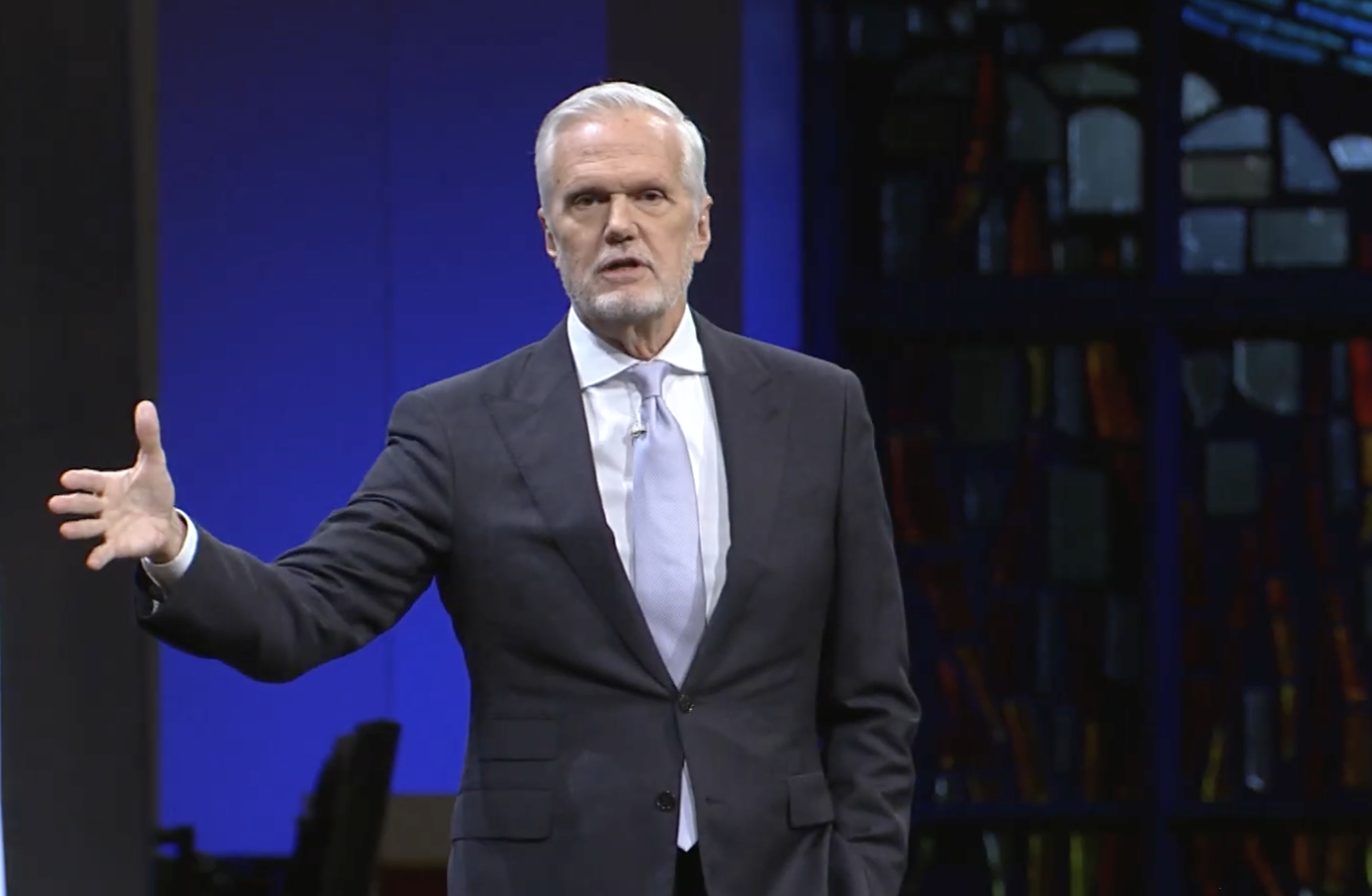
The church, which listed more than 88,000 members last year, is one of the largest in the Southern Baptist Convention. Longtime pastor Ed Young, who served as SBC president from 1992-1994, was succeeded in the pastorate by his son Ben in 2024.
“We received word that the judge has ruled in our favor in the matter before the court and we are deeply grateful,” Ben Young said in response to the ruling.
“We remain committed to the work God has called us to through this, His church. God is doing remarkable things this summer as we seek to Worship Christ, Walk with Christ, and Win Others to Christ through the power of the gospel.”
The church autonomy doctrine holds that courts are unable to rule in cases that involve matters of faith or internal church governance.
Plaintiffs claimed church leaders were fraudulent when they claimed their 2023 actions were an effort “to continue operating as a biblical church.”
However, entertaining such claims “would impermissibly entangle the Court in second-guessing the Church’s governance and property decisions …,” the judge wrote.
Jay Sekulow, chief counsel for the American Center for Law and Justice and an attorney for Second Baptist, said he was “pleased with the Court’s well-reasoned decision.”
“From the very beginning of this case, we have maintained that decisions about church governance belong to the Church, not the civil courts …,” Sekulow said.
“Throughout this litigation, the church has sought to honor both its legal obligations and its biblical mission. As a church we remain focused on its ministry, its members, and the work God has called it to do.”
Plaintiffs’ attorney John Strawn told the Houston Chronicle the church autonomy doctrine should not apply in the case.
“Just using a word like ‘biblical’ in an announcement does not give you a get-out-of-jail free card,” Strawn said.
The judge did allow that the doctrine did not prevent plaintiffs from seeking financial information.
The plaintiffs intend to appeal the ruling and released the following statement to the Houston Chronicle: “JCC believes stripping the members of Second Baptist of the long-held right to vote, without telling the members, is not an action that the First Amendment protects.”
Dorfman acknowledged his ruling “will likely engender disappointment and frustration.”
“It may strike many as unfair, or even as a dereliction of duty by the Court,” he wrote. “That was not the Court’s intention, but is a perhaps inevitable result of the church autonomy doctrine and the centrality to our country, our Constitutions, and to our people of the principle of religious freedom that it protects.”