

When my first-born son was young, I saw early signs of dyslexia as he struggled with reading, spelling, handwriting and even knowing his right from his left and memorizing the months of the year in order.
I recognized these signs since I’d been diagnosed with dyslexia myself during my senior year of high school after years of struggling. Because I homeschooled him, I could adjust the pace and use specialized resources. He didn’t compare himself to peers or see poor grades.
But at church, dyslexia became a source of embarrassment when memory verses, worksheets, or reading aloud exposed his struggles. Thankfully, with a few adjustments to our expectations at church and the ways we communicate, people with dyslexia don’t have to struggle like my son did.
The first step is understanding dyslexia and how many people it affects. Dyslexia is a common learning difference that affects how people read, spell, and process written words. The International Dyslexia Association believes up to 15–20% of the population have some of the symptoms of dyslexia, including slow or inaccurate reading, poor spelling, poor writing, or mixing up similar words.
People with dyslexia not only struggle with reading and writing, but they can also struggle in other ways as well. Common additional challenges include short term and working memory delays, issues with the speed they are expected to process information as well as with organizing and sequencing information, attention fatigue from the extra work their brains are doing to decode letters and numbers, and the social pressure of feeling behind their peers.
Dyslexia in the church
While dyslexia doesn’t reflect intelligence or ability, it can create challenges in settings where reading is central, like church. When church activities rely heavily on reading, memorization, or fast recall, these challenges can feel especially discouraging.
But with simple adjustments, the church can become a place of encouragement rather than embarrassment. Thankfully, with awareness and intentional support, your church can create environments where people with dyslexia feel included and understood.
Here are five spaces you can support people with dyslexia in your church
1. In kids ministry
Remember that behavior is a form of communication. A child’s behavior may be communicating that they are struggling to read or do the academic-type work that’s expected.

Pay attention to signs of embarrassment and struggles and change the ways the child can show you he or she understands the lesson.
For example, consider the skills needed to complete the activity sheets and make accommodations like providing a word bank of answers for those who struggle to spell.
2. In student ministry
Avoid calling on students to read who seem reluctant to volunteer. Create visual aids and graphic organizers to help students keep information organized. Timelines, story maps, and T-charts that compare ideas are helpful.
Give time for everyone to process the question or main idea before moving quickly to the next step.
3. In adult discipleship groups
Don’t mistake a reluctance to speak or engage in the discussion as a lack of interest. Many adults with dyslexia and other learning disabilities have been embarrassed in the past and are less likely to participate or answer questions aloud.
Offer a variety of ways to engage in the material, like talking with a partner or in a smaller group. You can also let class members know the passage you’ll be covering ahead of time so they can familiarize themselves with the content.
4. In worship services
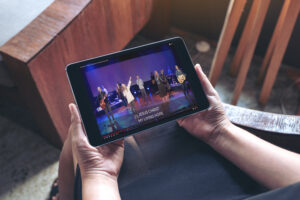
Use high contrast colors between the text on your slides and the graphic or background with consistent placement on the slides (like centered with the same font in the same size). Do not use all capital letters for lyrics to worship songs and hymns.
Offer clear and well-organized bulletins in easy-to-read fonts and sermon outlines. Repeat the focus passage more than once (“Open your Bibles to Luke chapter 15. We’ll be in Luke 15 starting in verse 11 this morning.”).
5. In digital communication
Avoid using decorative fonts and all caps. Keep paragraphs short. Use clear, descriptive language. Use bullet points to organize key points or details.
Break up long content with headings in bold (but avoid using italics). Post videos with important announcements and information so it can be heard and read.
Grace Bible
Additionally, for people with dyslexia in any church setting, the availability of the dyslexia-friendly Grace Bible has been a helpful development. The dyslexia-friendly font my son and I used in the Bible app on our phones is now available in print.
The font includes distinct letter forms that are bottom-weighted and includes added space between letters, words, lines, and paragraphs. Churches can have copies available in the discipleship and worship settings or recommend the children’s or adult version when they know there’s a need.
Dyslexia support and awareness have come a long way since I was diagnosed in 1997 and even since my son was diagnosed in 2010. With simple changes like these, churches can ensure people with dyslexia don’t feel excluded or embarrassed but instead experience learning from God’s Word and receive support from God’s people in ways that affirm their value and unique design.
This article originally appeared at Lifeway Research.