
NASHVILLE (BP) – This weekly Bible study appears in Baptist Press in a partnership with Lifeway Christian Resources of the Southern Baptist Convention. Through its Leadership and Adult Publishing team, Lifeway publishes Sunday School curricula and additional resources for all age groups.
This week’s Bible study is adapted from the Explore the Bible curriculum.
Bible Passage: Numbers 13:17-31
Discussion Questions:
- When have you felt God lead you to the brink of something new? How did you respond?
- Why was it important for the scouts to follow Moses’ instructions completely?
- What obstacles might prevent or delay us from obeying God?
Food for thought:
Have you ever noticed how a project grows? You decide to clean out the backyard shed, the garage or the closet. You are going to put down new liner paper in the kitchen cabinets. You decide to paint the kids’ bedrooms. You figure out how long it will take and can visualize what it will look like when you’re finished. You begin – excited. But about halfway through, you say, “What was I thinking? This is a lot more complicated than I thought it would be.” Challenges force us to consider our own abilities and determination.
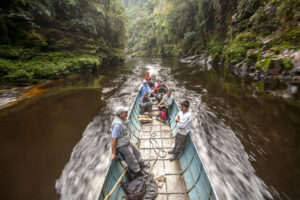
At God’s direction, Moses enlisted 12 spies to scout the land of Canaan. They would start in the Negev, a desert region in southern Canaan, and work their way north through the hill country. Moses directed them to evaluate the people and the land. Concerning the people, Moses wanted to know how densely the land was populated and how the people looked militarily. Regarding the land, he wanted to discern whether it was “good or bad” (Numbers 13:19). Moses also directed them to bring back samples of the fruit. Above all, he challenged them to “be courageous” (v. 20).
The spies went up and scouted the land, exactly as Moses had commanded. They went from the Wilderness of Zin (the land’s southern border) to Hamath (the land’s northern border). They were gone 40 days. At Hebron, a city with ties to Abraham (Genesis 13:14-18), they identified the sons of Anak. Members of this clan were known for their unusual size and strength. Arriving at a valley, the spies named it “Eschol,” the Hebrew word meaning “cluster.”
The spies probably gave it this name because of the large cluster of grapes they brought back to the Israelite camp. The grapes, along with pomegranates and figs, served as evidence that God was keeping His promise to lead them into a fertile and productive land. At the end of 40 days, they returned from their trip.
In their report, the spies initially focused on the land and how agriculturally productive it was. The phrase “milk and honey” (Numbers 13:27) highlights the rich resources of Canaan. God used this phrase at the burning bush (Exodus 3:17). The word “however” (Numbers 13:28) stands like a massive barrier in the flow of the story.
The spies shifted their report to a negative recounting of fortified cities and powerful enemies, including giants like the descendants of Anak. Caleb spoke against this negative report. He was ready to “go up now and take possession” (v. 30) of the land. He had seen the same obstacles as the other spies. But instead of being intimidated by fear, Caleb was motivated by faith in God. Yet the majority of voices expressed doubt and urged the people to abandon plans to conquer the land. Their fear overwhelmed their faith.
Just like the Israelite spies, we will face challenges as we seek to follow God. As believers, we should be careful not to take God’s provisions for granted. We can always take our concerns to Him, telling Him what we need. And finally, we can trust God to provide what we need to conduct the tasks He gives us.
Explore the Bible
Explore the Bible is an ongoing Bible study curriculum that helps groups dig into the key truths of each Bible book, while keeping the group on pace to study through the Bible books in a systematic way. More information can be found at Lifeway.com/ExploreTheBible.