Americans cherish the right to protest. It is woven into the fabric of our democracy and protected by the Constitution. But that right does not extend to barging into a church during worship, shouting down a congregation and traumatizing families gathered in prayer.
What happened Jan. 18 at Cities Church in St. Paul, Minn., was not peaceful protest. It was intimidation — pure and simple.
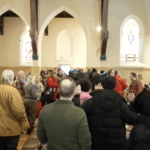
During Sunday morning worship service, protesters forced their way into the sanctuary, blowing whistles, shouting and deliberately disrupting the service. According to reports, the protest was aimed at a pastor, David Easterwood, who also serves as an ICE field office director. Whatever one’s views on immigration policy or federal enforcement operations, storming into a church service is an indefensible tactic that violates both the law and basic standards of human decency.
Churches are not public sidewalks. They are private property and sacred spaces, protected not only by property law but by the First Amendment’s guarantee of the free exercise of religion. Worshipers have just as much constitutional right to gather in peace as protesters have to assemble in public forums.
Some have tried to frame this incident as an act of free speech. It was not. Trespassing, willful disruption and harassment are not protected speech. As North American Mission Board President Kevin Ezell rightly said, “No cause — political or otherwise — justifies the desecration of a sacred space or the intimidation and trauma inflicted on families gathered peacefully in the house of God.”
It is especially troubling that a media figure appeared to suggest that protesters had a constitutional right to interrupt worship. That assertion reflects a dangerous misunderstanding of civil liberties. The First Amendment does not grant anyone the right to silence others or to hijack private religious services for political theater.
Tensions in Minneapolis are undeniably high following recent law enforcement actions related to immigration enforcement. Citizens have every right to express anger, fear, or disagreement with government policy. But targeting churches — places where people seek refuge, comfort, and spiritual guidance — crosses a line that should never be blurred.
Attorney General Pam Bondi and the Department of Justice have indicated they are reviewing whether federal laws, including the FACE Act, were violated. That review is appropriate. But legal consequences alone are not enough. State and local leaders must also speak clearly and forcefully: churches must be protected, and worship must remain free from political coercion.
This is not a partisan issue. It is a civil society issue.
If protesters can storm a church today because they dislike a pastor’s job, what prevents similar mobs from invading synagogues, mosques, or community centers tomorrow over other political disagreements? Once we normalize intimidation in sacred spaces, no house of worship remains safe.

Protest has power when it appeals to conscience, not when it bullies the innocent. True advocates for justice do not need to shout down hymn singing to make their point.
The message should be unambiguous: debate policies, challenge leaders, march in public spaces — but leave worship alone. A society that cannot protect the quiet moments of prayer and reflection risks losing far more than political arguments. It risks losing its moral compass.
This editorial originally appeared in Kentucky Today.