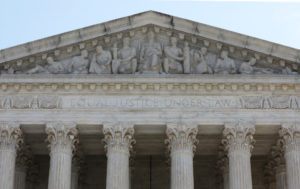


Counselors across the United States are breathing a collective sigh of relief following the Supreme Court’s decision in Chiles v. Salazar last month.
This ruling is more than a legal victory worthy of acknowledgement during this important month. It marks a significant moral and cultural turning point. At its core, the decision reaffirms a foundational truth: professionals are not required to surrender their convictions when they enter their vocation. For faith-based counselors in particular, it is a long-awaited confirmation that they are free to practice in accordance with both their professional training and their deeply held beliefs.
For years, counselors operating from a biblical worldview have found themselves in an increasingly difficult position. For example, in states like Colorado, counselors have been pressured, either implicitly or explicitly, to silence what Scripture speaks clearly about identity, human dignity, and God’s design for relationships and flourishing.
In some cases, they have faced the threat of losing their licenses or livelihoods simply for offering counsel that aligns with their faith. The result has been a chilling effect across the profession, where truth is often tempered by fear, and conviction is replaced by compliance.
The Court’s decision in Chiles changes that trajectory. It affirms that the First Amendment protects not only freedom of belief, but also the freedom to speak truthfully within the context of one’s profession. This is especially critical in counseling, where words are not incidental; they are the very means by which care is delivered. To regulate a counselor’s speech is, in essence, to regulate their ability to provide care at all.
This ruling also highlights an important reality: clients are not best served by a one-size-fits-all approach to counseling. Many individuals and families actively seek care that aligns with their faith and values. They are not simply looking for affirmation, but for clarity, direction, and hope rooted in something deeper. Denying them access to conviction-driven counseling limits their freedom as well.
At Lifeline Children’s Services, we see this need daily. Individuals come to us facing complex and deeply personal challenges: questions of identity, struggles in marriage, the weight of parenting, addiction, suffering, and even self-harm. These are not abstract issues; they are real and require compassionate, truth-centered care.
We believe healing is not found in avoiding hard truths, but in engaging them with love. In Ephesians 4, the Apostle Paul calls us to “speak the truth in love,” and that principle guides our approach. It means meeting people with compassion while pointing them toward the hope, restoration, and identity found in Christ. This kind of care does not diminish dignity; it upholds it.
Some critics argue this decision could open the door to harm; however, that perspective misunderstands the heart of faith-based counseling. Christian counselors are not motivated by condemnation, but by a desire to serve. Their goal is not coercion, but care – walking alongside individuals and offering guidance grounded in both truth and grace.
To be clear, this ruling does not force faith-based counseling upon those in need, but protects such counseling as a bedrock for truth and biblical values. It preserves real freedom of choice. Those who want faith-integrated care can pursue it, while others have the essential freedom to choose different approaches.
Ultimately, this decision is about more than professional rights – it is about principle. It affirms the freedom to live and work with integrity, without being forced to separate belief from practice. It also ensures that individuals and families across the country have access to care that is both compassionate and grounded in conviction.
While this decision directly affects counselors, its implications reach far beyond the counseling room. In affirming the freedom of professionals to speak and practice in accordance with their convictions, the Court has reinforced protections that extend to a wide range of vocations, including those in medicine, social services, and other fields where questions of conscience and care often intersect. At stake is not only how professionals work, but whether they can do so with integrity.
In a culture marked by confusion about identity and truth, this ruling is a reminder that clarity still matters.; truth still matters; and the freedom to speak that truth, especially in the context of care, is vital to the well-being of individuals and families. The reaffirmation of this freedom makes us even more appreciative this year as we celebrate Counseling Awareness Month.