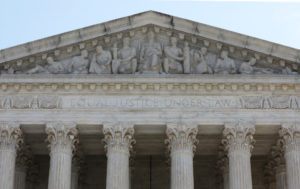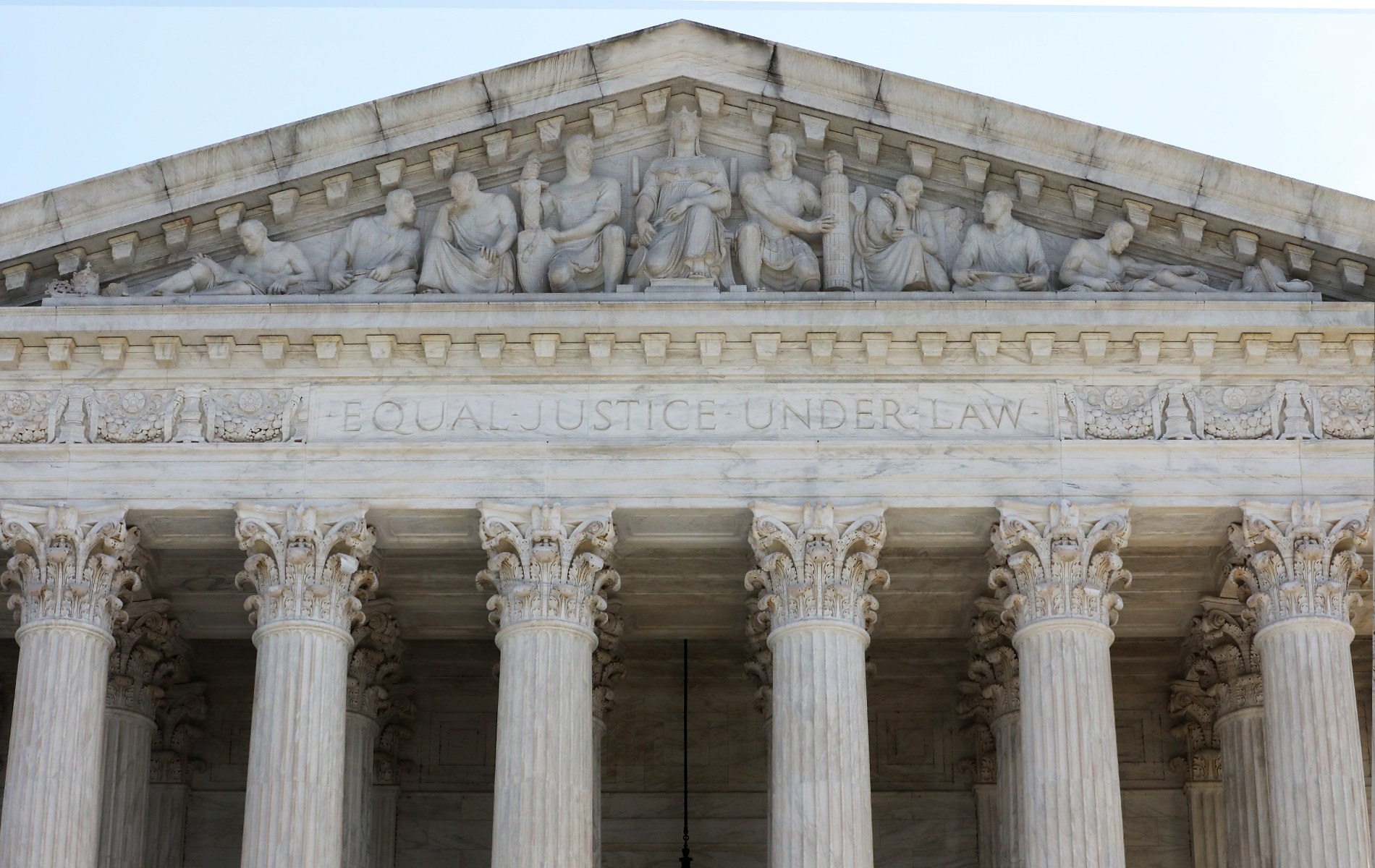

Last month, the Supreme Court issued an 8-1 decision in Chiles v. Salazar, an important free speech case for Christian counselors in Colorado. Upholding the First Amendment rights of counselors, the court reversed a 10th Circuit decision denying counselor Kaley Chiles’ right to freely speak with her clients regarding issues of sexual orientation and gender identity. The Supreme Court’s decision is a victory for the constitutional right to freely communicate beliefs, including religiously motivated beliefs. The case now returns to the lower court for further proceedings aligned with the court’s decision.
Background
In 2019, Colorado enacted a law that banned counselors from speaking about gender and sexuality to clients under 18 unless the counselors affirm the minors’ gender and/or sexuality confusion.
Kaley Chiles is a licensed counselor in Colorado, and she talks to her clients about issues including addiction, personality disorders, gender identity and sexual orientation. Chiles is a Christian, and she incorporates her convictions into her sessions, often seeing clients who want someone who shares their faith or values.
Colorado’s unconstitutional law silences Chiles from helping her clients bring their sense of identity into accordance with reality and truth, even if that is what the client is seeking. Colorado argues the law regulates the professional conduct and medical treatments of licensed counselors, but Chiles only employs talk therapy and does not prescribe medication. As such, the state’s regulation infringes on her First Amendment rights to speak freely with her clients because the state disfavors particular views she may express in her counseling sessions.
Lower court rulings
Both the district court and the 10th Circuit rejected Chiles’ argument that the law burdened her speech, saying the implication to her speech was only incidental and the state was legally regulating her professional conduct. Chiles petitioned the Supreme Court to reverse those rulings.
The question before the court
The question before the court was whether a law that censors certain conversations between counselors and their clients based on the viewpoints expressed regulates conduct or violates the Free Speech Clause of the First Amendment.
What did the court’s decision in Chiles v. Salazar say about free speech?
In an 8-1 decision, the court’s opinion, authored by Justice Neil Gorsuch, denied Colorado’s defense of its law and denounced the state as a “censorious government.” The opinion was joined by Justices Alito, Thomas, Kagan, Sotomayor, Kavanaugh, Barrett and Chief Justice Roberts. Justice Kagan wrote a concurring opinion, joined by Justice Sotomayor. The dissenting opinion was offered by Justice Jackson.
Majority opinion
The court held that the lower courts erred in only reviewing Colorado’s law under rational-basis scrutiny, the lowest standard a law must meet to be ruled constitutional. Commonly, laws infringing upon the First Amendment rights of speech and religious freedom must meet the highest standard of review: strict scrutiny. Strict scrutiny requires that a constitutional infringement must be narrowly tailored to serve a compelling government interest. Here, the justices found that:
- strict scrutiny must be applied because the law implicates the First Amendment, and
- Colorado’s law fails to meet this threshold of being narrowly tailored to serve a compelling government interest.
Colorado argued that its law only regulates professional conduct and the burden on speech is only incidental. However, the court has rejected this argument several times before, including in National Institute of Family and Life Advocates v. Becerra, a case where California attempted to require pregnancy resource centers to make certain statements to clients under regulation of “professional conduct.”
In a similar vein, Justice Gorsuch writes,
“… here, Ms. Chiles seeks to engage only in speech, and as applied to her the law regulates what she may say. Her speech does not become conduct just because the State may call it that. Nor does her speech become conduct just because it can also be described as a ‘treatment,’ a ‘therapeutic modality,’ or anything else” (Pg. 12).
Colorado’s law is content-based viewpoint discrimination against counselors who wish to communicate with clients who want to “reduce or eliminate unwanted sexual attractions, change sexual behaviors, or grow in the experience of harmony with [their] bod[ies]” (Pg. 2). Such restrictions are not given lesser standards of review, but instead, “represent ‘an egregious form of content discrimination’ where First Amendment concerns are at their most ‘blatant’” (Pg. 14).
Justice Gorsuch continues, explaining,
“the State’s law trains directly on the content of her speech and permits her to express some viewpoints but not others. Colorado does not regulate speech incidents to conduct; it regulates ‘speech as speech’” (Pg. 17).
Concurring opinion
Concurring in the opinion, Justice Kagan writes that the case would be much more difficult to decide if Colorado’s law were content-based but neutral as to the viewpoint being expressed. Justice Kagan acknowledges such a law would generally still trigger strict scrutiny review, but the court gives more deference in instances where the burden on speech is neutral as to the viewpoint expressed.
Kagan writes:
“A law drawing a line based on the ‘ideology’ of the speaker—disadvantaging one view and advantaging another—skews the marketplace of ideas our society depends on to discover truth” (Pg. 1).
Dissenting opinion
In her dissenting opinion, Justice Jackson opines a contrary view, expressing that “First Amendment principles have far less salience when the speakers are medical professionals and their treatment-related speech is being restricted incidentally to the State’s regulation of the provision of medical care” (Pg. 2).
Justice Jackson highlights that although Colorado’s law prohibits Chiles from counseling minors to accept biological reality, it does not prevent her from expressing her disapproval of the law, therefore avoiding a violation of the First Amendment. She instead believes Colorado’s law only prohibits treatment-related speech, which falls within the purviews of the state’s authority to regulate.
Why does this free speech case matter to Southern Baptists?
Southern Baptists affirm biblical truth, confirmed by biological reality, that God created us male and female by His good design. We denounce efforts, especially toward minors, that attempt to change one’s identity to something other than who God has created us to be. As the Baptist Faith and Message 2000 states, “He created them male and female as the crowning work of His creation. The gift of gender is thus part of the goodness of God’s creation.”
Our culture’s drift into acceptance of gender ideology victimizes the children who have been experimented upon by medical professionals under the guise of healthcare. It is vitally important that the state not coerce the speech of counselors who affirm biblical truth and force them to violate their deeply held religious convictions.