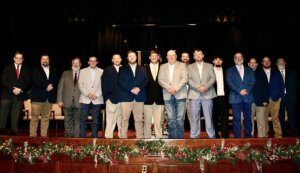

GAZA STRIP (BP) — It is uncertain whether the lone Baptist Church in the Gaza Strip will rebuild as the area recovers, Christian Mission to Gaza founder Hannah Massad told Baptist Press more than six months into the October 2025 ceasefire.
But Massad, who remotely leads Sunday worship online for dozens of Gaza Baptist Church members and friends scattered among the diaspora, has faith that a Christian witness will remain among the area’s 2.4 million Muslims, including 1.6 million Palestinian refugees.
“The Lord will never leave Himself without a witness,” Massad told Baptist Press from Jordan. “We see a number of believers.”
The Gaza Baptist Church complex is heavily damaged on its top floors, Massad said. Before the war began, the church had about 60 members among a Christian population of about 1,000 in the strip, including Catholic and Orthodox congregations.
“The church building is still standing, though it has sustained significant damage, and about 70 displaced people from the wider community are currently living there,” Massad said. “We are monitoring the situation regarding repairs to the building and also watching to see whether more people from the Christian community may leave Gaza. We are trying to prayerfully find ways to continue ministering to the Christian community that remains, while also seeking opportunities to reflect Christ’s love to the wider community as well.”
Despite a ceasefire, fighting continues routinely in Gaza, with the United Nations counting about 900 deaths since October 2025, based on Gaza health ministry numbers. Israel has killed two Hamas top leaders this month, the Jerusalem Post reported, including Hamas military chief Izz al-Din al-Haddad on May 15, and his successor Mohammed Odeh on May 26.
Nearly 80 percent of Gazans are interested in emigrating from the area, according to a poll conducted by the Coordinator of Government Activities in the Territories, the Jerusalem Post reported May 18, but the polling methodology was not disclosed, and the poll did not consider where Gazans would be received as immigrants.
“I don’t know how they are able to do this kind of research and how they have an access,” Massad said, “because Israeli personnel, it would be very dangerous for them to be among the people.”
But many do want to leave the area, Massad said, simply because they are humiliated by not being able to provide for their families.
“At the end of the day you start to think, ‘Get me out of there. I’m dying,’” Massad said of Gazans.
Israel will expand its occupation of the Gaza Strip to 70 percent of the land area, Israeli Prime Minister Benjamin Netanyahu announced May 27, expanding its territory from the 50 percent cited in the ceasefire deal. Several non-governmental organizations are working in Gaza to help the area recover as a humanitarian crisis continues, with scant access to food and clean water, and many living in tents.
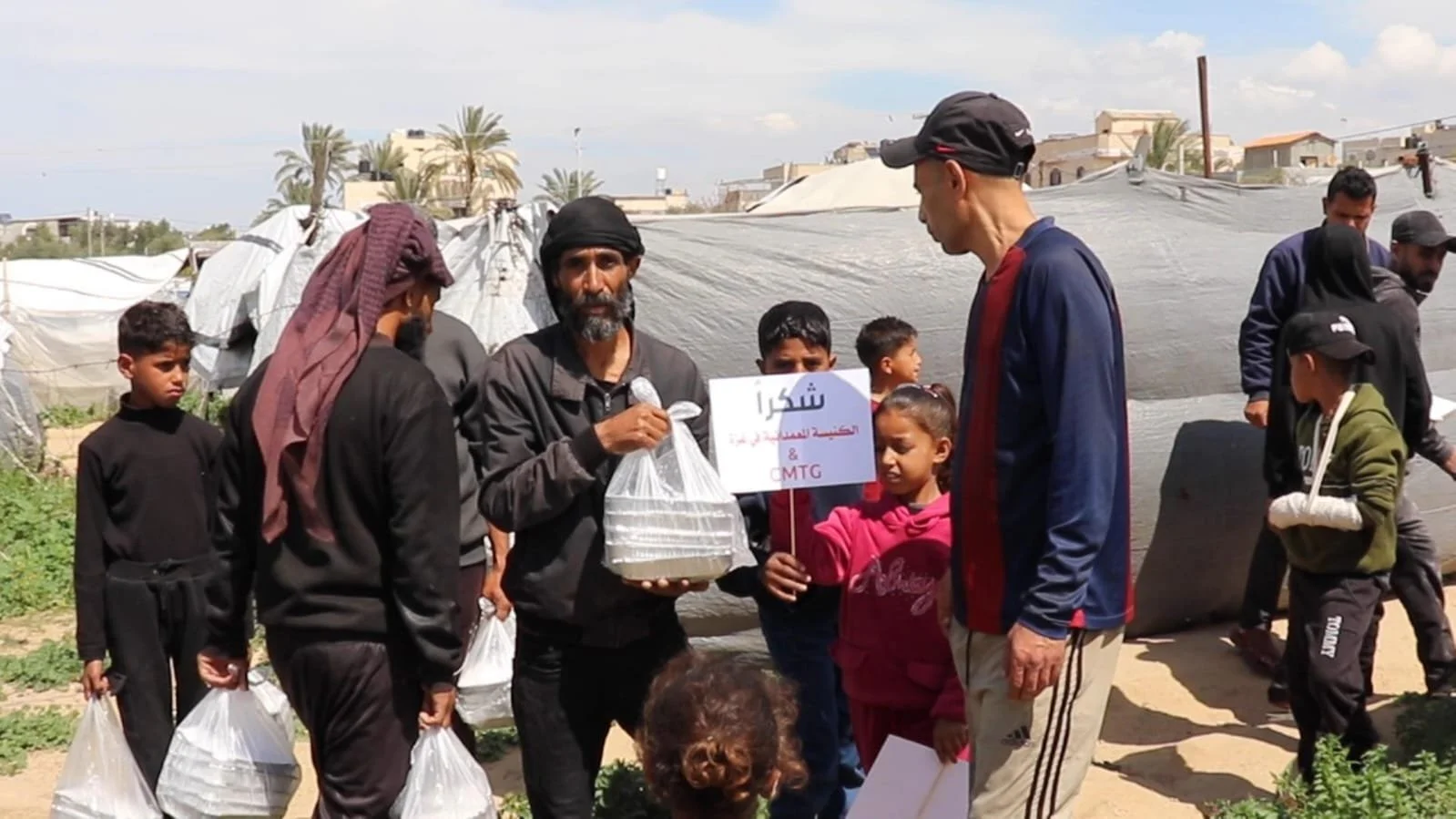
On behalf of Gaza Baptist Church, Christian Mission to Gaza continues to provide hygiene products, clean water, hundreds of food baskets and food vouchers to Christians remaining in Gaza, Massad told Baptist Press. The work is supported by donations from benefactors including Southern Baptists.
“In a sense, the church is still moving forward, a church ‘on wheels,’ if you will,” Massad said. “It’s hard to know what the future will look like or whether some members may eventually return, but we do hope to rebuild the Gaza Baptist Church building, as I know there has been significant damage.”
Even if that doesn’t happen, Massad said Gazan Christians in the diaspora are strengthened by the certainty of the greater body of Christ.
“For us as Christians, we know the real power, the real kingdom of God,” Massad said. “It’s more powerful than any other power, and that is what continues to inspire us in this journey.”