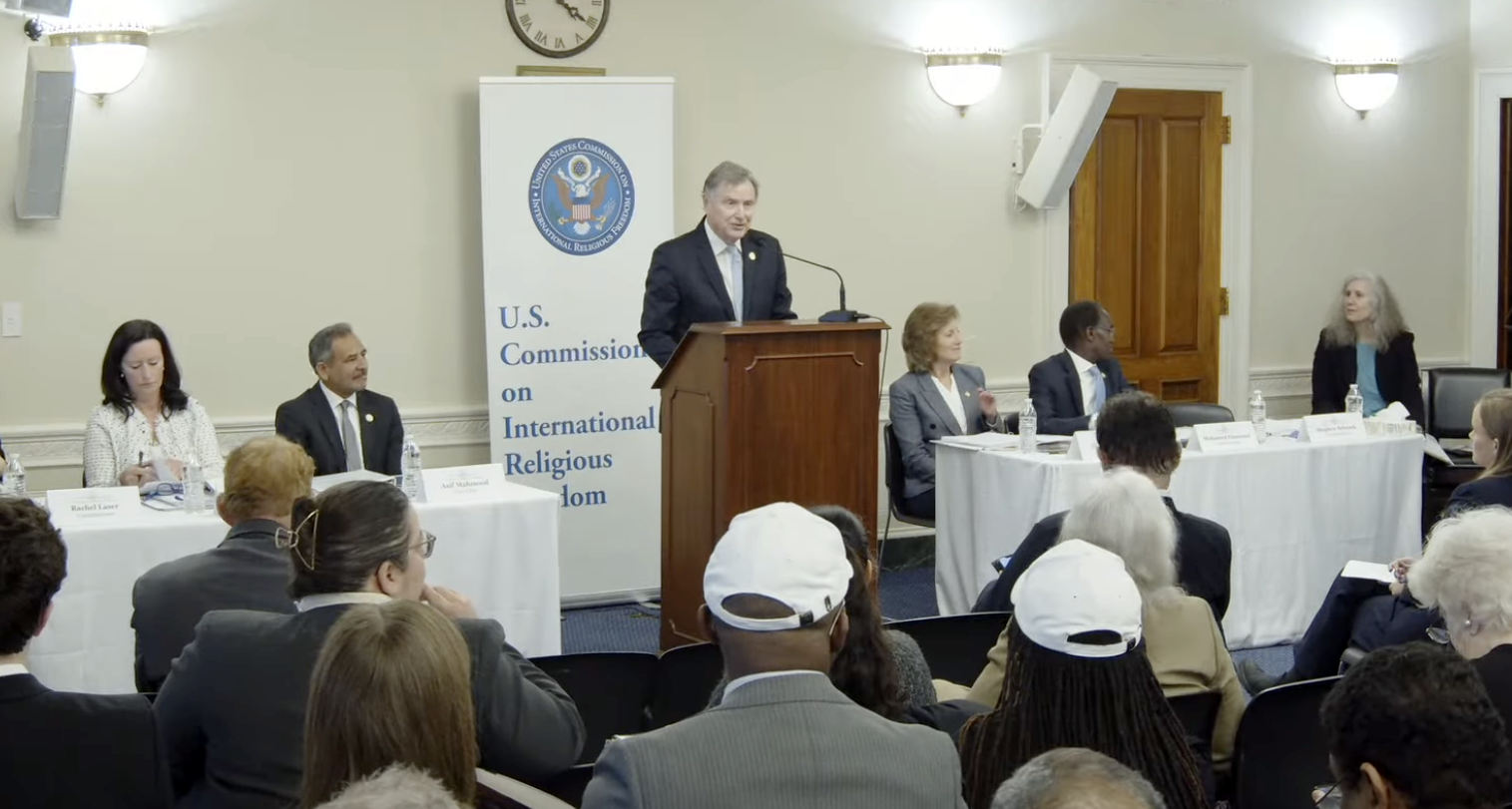

WASHINGTON (BP) – The 2026 annual report by the U.S. Commission on International Religious Freedom (USCIRF) commends the Trump Administration for designating Nigeria, among others, as a Country of Particular Concern (CPC) while lamenting the dramatic impact of budget cuts toward groups like USAID.
The report stated conditions in Nigeria as “abysmal.” Nearly 53,000 citizens have been killed since 2009, and around 21,000 over the last five years. Violence has forced millions to flee their homes and communities, seeking safe shelter in camps and other locales.
“The unfolding catastrophe is the outcome of a lethal confluence of trends: religiously motivated extremist violence; economic and ethnic tensions, long left to fester; corrosive, state-level blasphemy laws; and years of both inadequate response and pervasive corruption from the Nigerian government,” the report said.
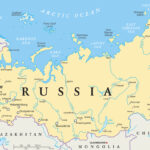
Countries remaining on the CPC list from previous years are Burma, China, Cuba, Eritrea, Iran, Nicaragua, Nigeria, North Korea, Pakistan, Russia, Saudi Arabia, Tajikistan and Turkmenistan. They are joined this year by Afghanistan, India, Libya, Syria and Vietnam, the last two moving up from the Special Watch List (SWL).
Algeria and Azerbaijan remain on the SWL. Those recommended for the list in the latest report are Egypt, Indonesia, Iraq, Kazakhstan, Kyrgyzstan, Malaysia, Qatar, Turkey and Uzbekistan.
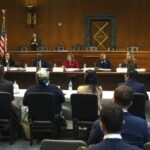
A press conference held March 4 to present the report noted with particular concern for religious groups in Iran.

“Whatever the outcome of the current conflict, USCIRF will continue to advocate for freedom of religion or belief in Iran,” said Vicky Hartzler, USCIRF chair.
Tim Mackall, policy assiciate with the Ethics & Religious Liberty Commission, said the report sheds light on the “disturbing rise” of violence and religious opression around the world.
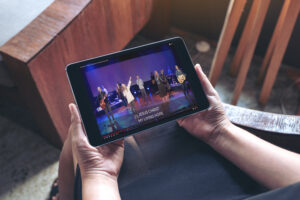
“From the slaughter of thousands of Nigerian Christians, to the crackdown of online religious services and house churches in China, and the enforcement of strict anti-Christian blasphemy laws across much of the Middle East, Central Asia, and South Asia, the work needed to advance religious freedom is abundantly clear,” Mackall told Baptist Press.
‘Fear for our souls’
“There is fear – we fear for our souls,” said one Muslim farmer to BBC News in October on the threat of violence from Boko Haram militants.
An Entity of Particular Concern (EPC), Boko Haram has driven the violence in Nigeria through mass school abductions, kidnapping and long-term captivity of women and children, beheadings of Christians and depopulating farming communities through threats of violence. Based in northeast Nigeria, the group’s activities have spread into Cameroon, Chad and Niger.

The report noted the U.S. government’s commitment to religious freedom, including President Trump’s comments in July to “expand and strengthen America’s efforts to defend religious freedom around the world.” In September, while addressing the United Nations General Assembly, he said, “Let us protect religious liberty.”
USCIRF repeatedly called the Biden administration to add Nigeria, Afghanistan, India and Vietnam to the CPC list before their inclusion.
Other entities on the EPC list include the Houthis in Yemen and Islamic State groups in the Greater Sahara and West Africa. Added to the list is Rapid Support Forces (RSF), a paramilitary group formerly under the Sudanese Armed Forces before splitting and engaging in hostilities with their former leaders in April 2023.
Downstream from funding cuts
A desire for efficiency led to Trump’s January 2025 executive order that paused all foreign assistance in January 2025.
“In March, Secretary Rubio announced cuts to 5,200 USAID programs – representing 83 percent of all USAID programs, including 85 percent of human rights and rule of law programs,” the report said. “In July, USAID ceased to implement foreign assistance and certain functions of USAID were realigned under the State Department.”
Programs eliminated included those to challenge blasphemy laws, early-warning systems for attacks in Nigeria’s Middle Belt, interfaith dialogue efforts and documentation of atrocities and religious freedom violations, including genocide and crimes against humanity.
Mackall said the ERLC is grateful for USCIRF’s efforts and urges lawmakers to consider the report’s recommendations.
“Religious freedom has been and must continue to be a pillar of U.S. foreign policy, ensuring that we continue to stand upon the Southern Baptist ideal of ‘a free church in a free state,’ which makes room for the freeing power of the Gospel to be proclaimed among every people, nation, tribe and tongue,” Mackall said.
Other findings
The report also noted conflict zones in Syria, Sudan, DRC and wider Africa. A Christian church bombing in Syria killed dozens of worshippers. Islamic State affiliates continue to operate in central and east Africa, killing Christians and attacking mosques.
China remains active in severing avenues to worship freely. Authorities meet those goals through a combination of “an extensive web of laws, regulations and policies that do not conform to international human rights standards.” The “sinicization of religion” policy also continues to inject CCP political ideology into every aspect of religious life.
Cuba, Nicaragua and Venezuela were cited for political repression through targeted harassment, surveillance and detention of clergy and religious communities throughout Latin America.
The 96-page report can be viewed and downloaded on the USCIRF website.