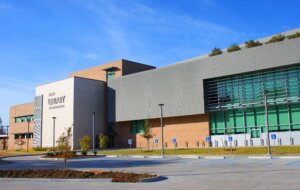

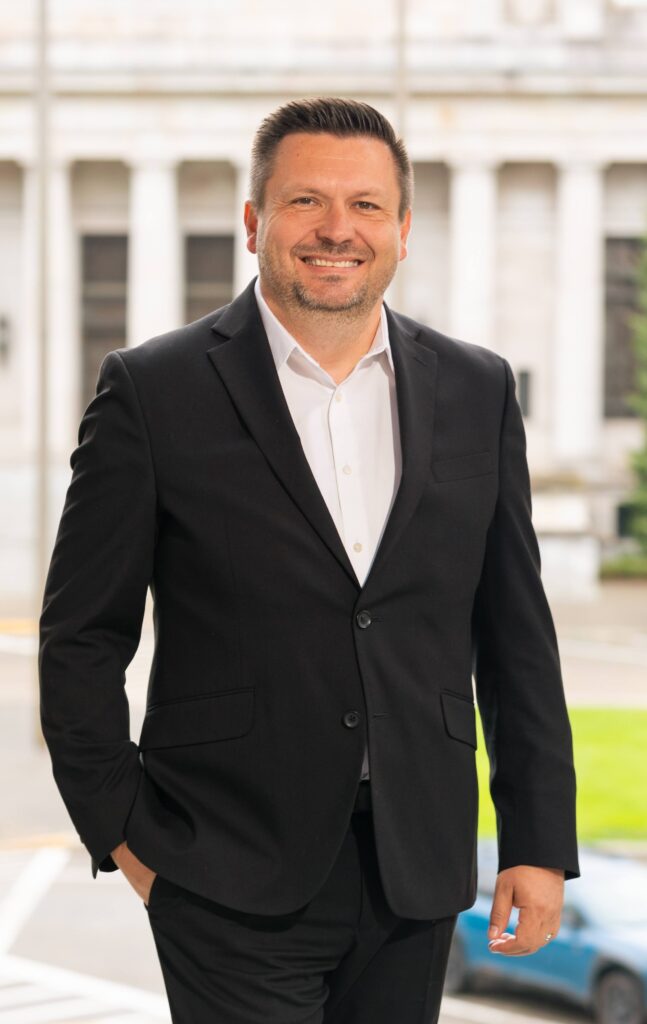
TACOMA, Wash. (BP) – As lead pastor of Good News Church in Tacoma, Moscow-born Vasiliy Stupin appreciates the reconciling power of the Gospel among the church’s 800 or so members and attendees from Russia, Ukraine and elsewhere in Europe.
But as Russia’s war on Ukraine nears its fourth anniversary in February 2026, combined with Russia’s 2014 invasion of Ukraine’s Donbas region, Stupin told Baptist Press he sees a fracture that will take decades to repair.

“My concern is that the relationship between the two peoples has been so damaged for decades in the future, that I think it’s going to take generations of intentional reconciliation to rebuild what has been damaged by the war,” Stupin said.
Stupin believes the damage of the war on Ukraine is as far-reaching as was World War II on Russia, which suffered more casualties than any other nation during the war that ended in 1945.
“I’m thinking of a similar impact in Ukraine. I can’t imagine a family that either hasn’t lost a loved one or hasn’t lost a friend or somebody close, or hasn’t been displaced,” Stupin said. “And so I only believe that it is possible through Jesus Christ to rebuild some of those relationships between the people. And that’s where we come in as a church.”
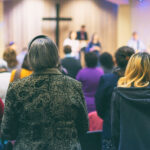
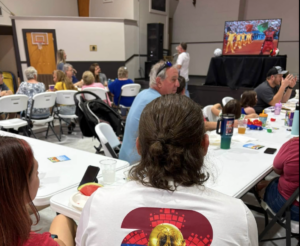
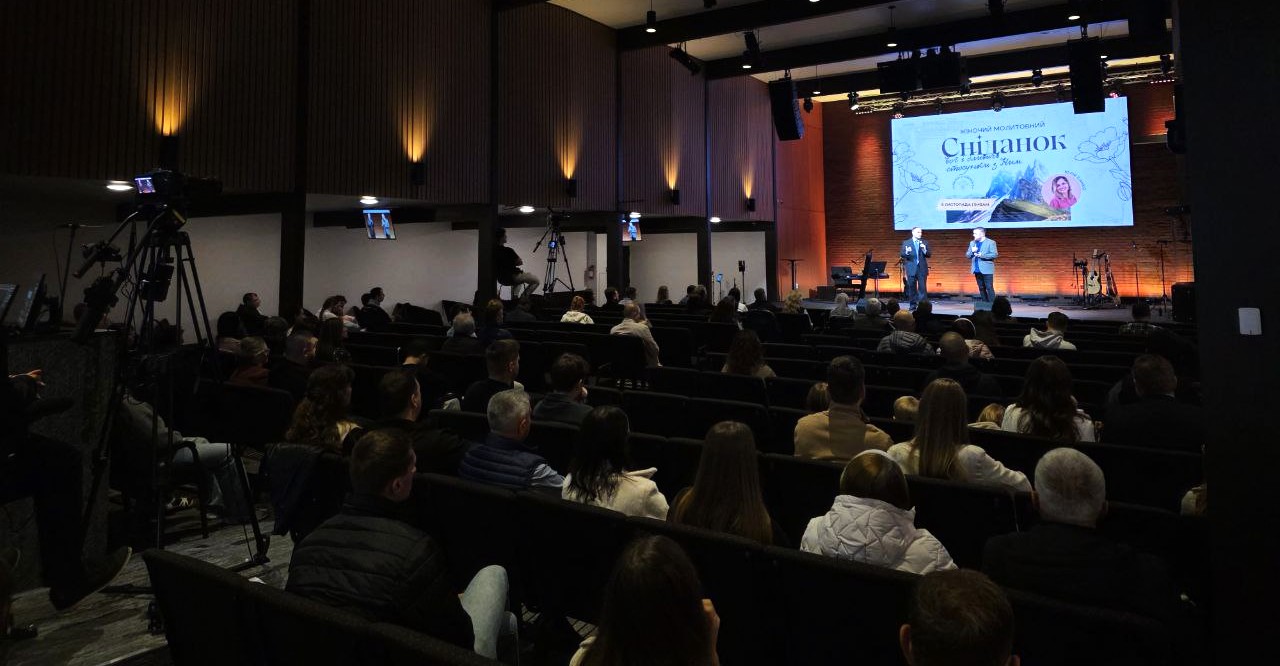
Each Sunday, the church worships in Russian at 9 a.m., in English at 11 a.m. and in Ukrainian at 1 p.m. During weekday small groups and church events, as well as service opportunities on Sundays, cross-cultural Gospel relationships develop.
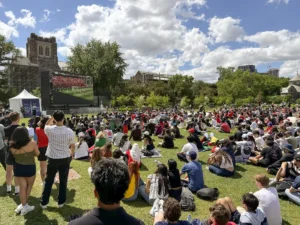
Half of the members are Ukrainian, Stupin said, with others from the U.S., Russia, Moldova, Belarus and elsewhere in Europe, representing about 17 nations. About a quarter of the membership attends the Ukrainian service. And while the church recognizes, discusses and cherishes cultural differences, Stupin said the power of the Gospel unites them.
“We don’t gather people around ethnicity or nationality or their politics. We gather people around the cross and I think that makes everything else work out,” Stupin said. It is also impactful, he said, “when you have Russians serving, as myself as a pastor who was born in Moscow, and I call war ‘war,’ and I call it a sinful thing, and we don’t support it, and we serve these Ukrainian families who have come over as refugees.
In Russia, it is a punishable crime to call the war “war,” Stupin said. Instead, Russia requires the nation to refer to the war as a “special military operation.”
Among the more than a million casualties of the war, including deaths and injuries in Russia and in Ukraine, are a Ukrainian relative of Stupin’s wife Irina. Her relative died along with a family he was helping evacuate from Ukraine when a mortar round exploded above them, Stupin said. Others have been drafted for war, picked up on the spot on the streets or at their jobs and taken immediately to military processing sites.
“War is not an abstract idea to our congregation,” Stupin said. “It has had a very real and immediate impact to the majority of the refugees within our congregation.”
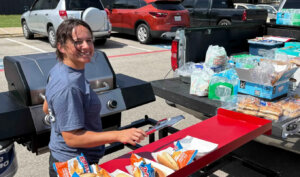
The church prioritizes recent refugees in its food bank distributions, with donated fresh produce and other items stored in a refrigerated truck and available to those in need either weekly or every other week, depending on supply. About 200 families utilize the food bank, Stupin said.
The latest peace talks between Ukraine and Russia are currently underway, but news reports of progress vary widely, as do estimates of death tolls. Perhaps 250,000 soldiers had been killed and 750,000 wounded in Russia by mid-2025, the Center for Strategic International Studies estimated. Military death tolls for Ukraine varied between 43,000 and 100,000, with another 300,000 to 350,000 wounded. More than 14,000 Ukrainian civilians had been killed through October 2025, close to 4 million Ukrainians had been displaced, and another 39,000 had been injured, the United Nations Monitoring Mission in Ukraine reported.
Good News Church doesn’t overlook the facts of the war, Stupin said, with discussions mostly occurring in small group meetings during the week.
“And yet they’re able in Christ and only in Christ to get together and worship the Lord and love on each other. That’s a beautiful picture of the Gospel, so we prioritize that, we emphasize that. We put that as our primary focus and everything else really starts aligning,” he said. “That’s not to say we haven’t had some painful or heated conversations over cups of tea and discussed what’s going on, but I think we’re all on the same page in wanting the war to end and for people to just live a peaceful life as they’re providing for their families. So that’s what we’re praying for.”
Stupin’s family moved to the U.S. in 1992 when he was 13. He joined Good News Church in 2006, was ordained and became English-speaking pastor in 2012, and transitioned to his current role in 2015. He speaks Russian and English, and leads the church with the help of a Ukrainian-speaking pastor and other leaders.
The church has tripled in size during his leadership, including refugees of the war who are grappling especially with immigration issues. The church is praying for clarity and at least short -term protection and stability for immigrants of the war, he said, that will allow them to concentrate on their daily lives.
Good News Church is serving those impacted by the war in multiple ways, having funded vans to evacuate people in the initial stages of the war as many fled Russia’s onslaught. The church bought generators and washing machines for internally displaced refugees, and has trained counselors to help people cope with the tragedy, although Stupin said more counselors are needed. The church planted Good News Church in Katowice, Poland, serving war refugees there.
Stupin anticipates a decades-long recovery once the war ends.
“Once the pain subsides, once the emotion dies down, once the rebuilding begins, I think it will take years of very intentional loving on each other,” he said. “And the church, I believe, will be the primary instrument of that reconciliation. That’s one of the areas that I think that we really need to grow in.”
He encourages fellow Southern Baptists to pray for the war’s end, to pray for Ukrainians and Russians who have emigrated here, to be agents of reconciliation and to remain cognizant of the war’s atrocities.
“I would just encourage my Southern Baptist brothers and sisters to not become numb and callous towards what’s happening and to intentionally refresh their hearts,” he said, “and get re-plugged into prayer and support the reconciliation work that the Lord is doing.
“If it’s not the love of God that brings us together, then nothing else will,” he said of Russia and Ukraine. “No politician will, no program will, no peace plan will.”