
Editor’s note: This story was updated after initial publication to provide clarity surrounding the discussion of restoration to ministry leadership of those who have committed abuse.
ATLANTA – Individuals from several states gathered March 5 at Christ Covenant Church in Atlanta for the Safer Churches workshop designed to equip leaders in creating ministry environments that protect the vulnerable from abuse as well as respond biblically when abuse does occur.
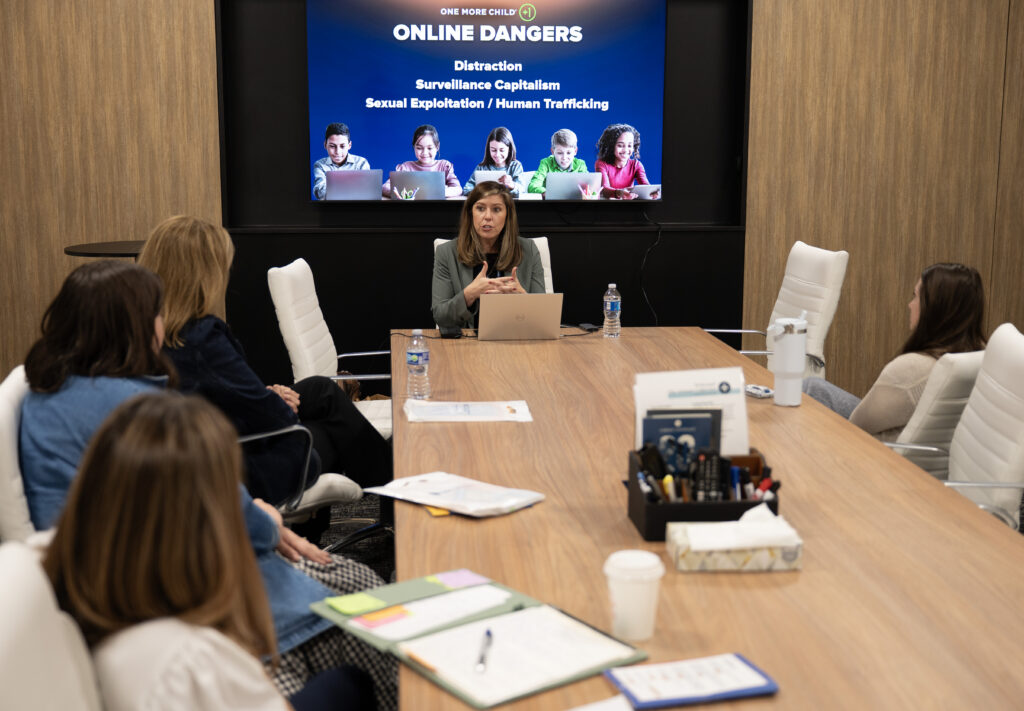
The full-day workshop, organized collaboratively by Evangelical Council for Abuse Prevention, Christ Covenant Church, Rehoboth Church Family in metro Atlanta and the Southern Baptist Convention Executive Committee, included two main sessions, two breakout session blocks that focused on a total of 15 topics, and three lunch programming options. Each facet of the workshop was designed to provide practical guidance in abuse prevention and response for specific Christian leadership roles, including pastors and other ministry leaders, Woman’s Missionary Union and women’s ministry leaders, and associational mission strategists and other associational leaders.
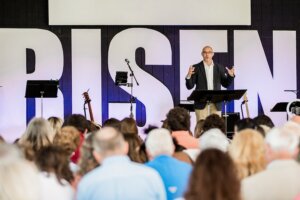
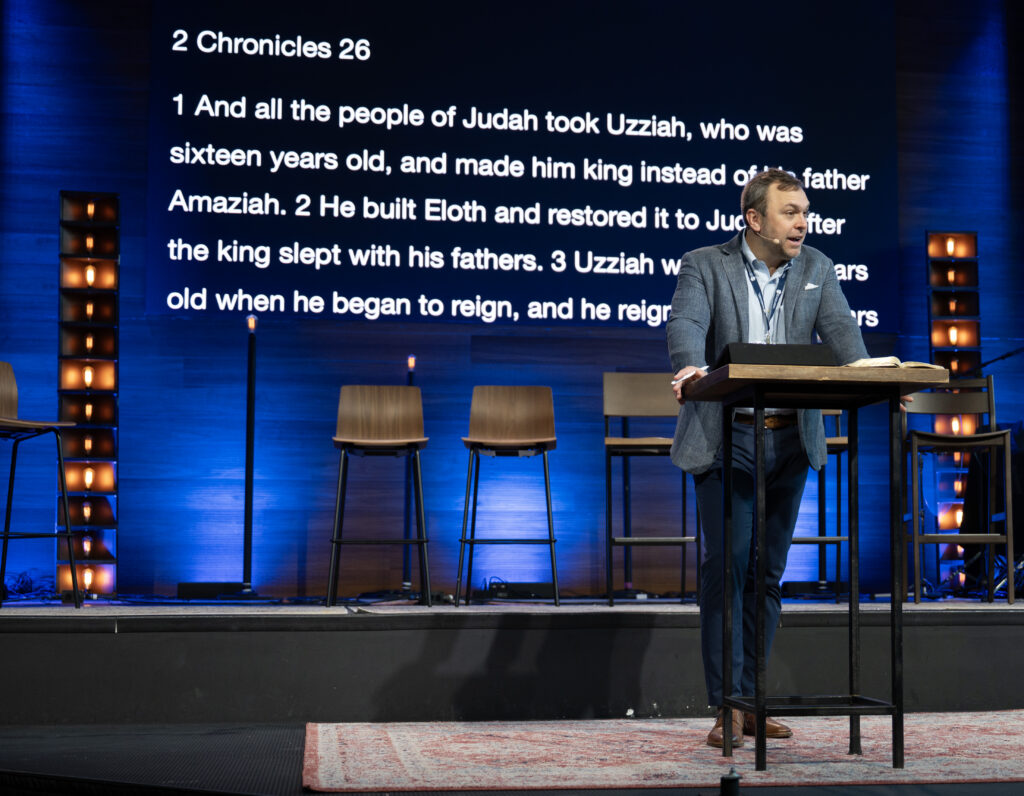
In the opening session, Jason Dees, senior pastor, Christ Covenant Church, focused on 2 Chronicles 26, in which King Uzziah, in the first years of his reign “did what was right in the eyes of the Lord.” However, after he became powerful, “his pride led to his downfall.”
The downfall of King Uzziah can be likened to the downfall of churches and ministers if they allow power to lead to sin, particularly the sin of abuse, he said, as he recalled a once-respected Christian leader who became ensnared in sin as a sexual predator.
First, Dees said, “Great success can lead to great pride which can lead to sin. Pride can lead to self-reliance, and a false sense of self and low sense of God.”

Next, he said, “Confronting sin is always hard. Vigilance against sin is not a one-person job.” Such vigilance, he said, requires courage, conversations “we’d rather not have” and risks.
Finally, Dees emphasized, “Where there is sin, there is always a cost.” Just as the hypocrisy of King Uzziah resulted in corruption, the hypocrisy of Christian leaders today can result in corruption.
Next, Troy Bush, senior pastor, Rehoboth Church Family, led in a five-person panel discussion. As the discussion brought attention to numerous facets of abuse prevention and a biblical response, panelists shared personal experiences and wise counsel.
Pastor Ken Rucker, lead pastor of New Branch Community Church in Dacula, Ga., said, “I shouldn’t be surprised by the depths of depravity” in today’s culture. But he admitted he has been “surprised and disappointed” by the response of churches “not being transparent, siding with the offender and quickly restoring the offender” when abuse occurs. He called on attendees to take a more active stance in preventing abuse as well as taking a more biblical perspective when confronting offenders and responding to survivors.
Discussion included whether sexual offenders should be disqualified from any ministry role permanently, even if the ministry role is something as simple as setting up chairs for a church event. While panelists agreed that Christians are called to show grace and to acknowledge that God can restore spiritually an individual who has sinned, churches must demand accountability and realize that restoration is a lengthy process, noting that restoration of sexual offenders to ministry leadership roles is excluded.
Panelist Craig Mosgrove, co-pastor of Dwelling Place Church in Woodstock, Ga., focused on vulnerable children, saying, “How we treat our children will be what unravels us as a nation. We are not about self-preservation; we are there to serve people.”
In protecting children, panelist Camila Zolfaghari, vice president of government affairs for Street Grace, stated, “Demand fuels trafficking,” and urged adult leaders to be aware of pornography and even sextortion that children can be drawn into unknowingly.
Author, speaker and counselor Julie Lowe agreed, saying, that while she has always said, “There is nothing new under the sun. There are new avenues of this (sexual exploitation) under the sun. Kids are often inundated with it before parents know.”
Churches must stand together to combat abuse, believes panelist Jimmy Baughcum, executive director, Atlanta Metro Baptist Association, and he shared that to be a member church of the Metro Atlanta Association, churches must sign a document, stating that they “shall not protect predators.”
As one of the women’s ministry lunchtime programming leaders, Sandy Wisdom-Martin, executive director-treasurer of national Woman’s Missionary Union, emphasized, “It’s critically important that those of us who work with small groups, especially involving children, are equipped and prepared to ensure that our churches and ministry settings are safe spaces.”
Attendee Dan Adams, lead pastor, RiverTown Church in Jacksonville, Fla., agreed, “As we disciple the next generation, we must have safe and welcoming environments to facilitate that discipleship.”
Leading an associational leaders lunchtime discussion, Ray Gentry, president/CEO of the Southern Baptist Conference of Associational Leaders, said, “We recommend associations, at least annually, emphasize the importance of making our churches as safe as possible for children and all who are vulnerable to sexual abuse as well as direct pastors and church leaders to resources such as sbcabuseprevention.org.” He said such emphasis could be as simple as a brief announcement at an annual meeting and a reference in the program.
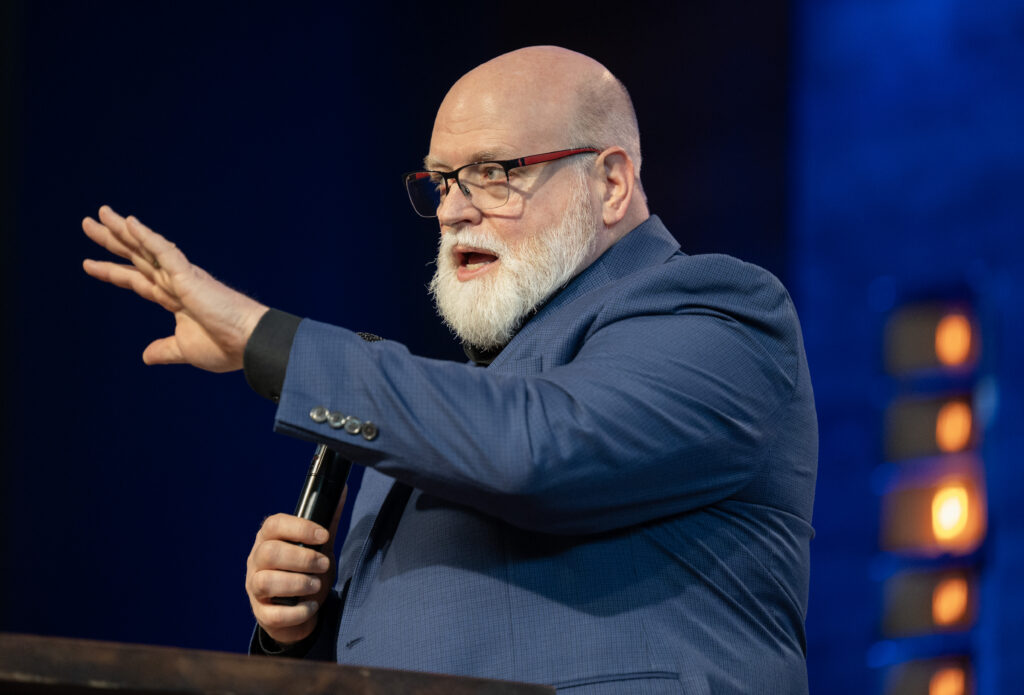
Pastor Bush led the Safer Churches event with an afternoon message from 1 Peter 5:1-4 about shepherding the flock of God. After he became senior pastor of Rehoboth Church Family in 2012, he was “horrified and broken” to learn that a serial child abuser had assaulted five middle school boys in his church in the 1980s. He briefly described the steps he led his church to take in the aftermath of this abuse.
He then outlined 10 lessons learned through the “horrific” experience. One, many churchgoers, and perhaps most churchgoing women, have been sexually abused. Two, a multilayered abuse prevention plan, including public discussions, is necessary. Three, “Sometimes, calling the police is not enough.” Four, “Survivors should not have to carry the weight of justice.” Five, “Survivors carry lifelong scars.”
Six, one of the fastest areas of abuse today is youth-on-youth abuse and child-on-child abuse. Seven, “Little things can make an enormous difference.” Eight, based on circumstances, church leaders often must decide between what is biblically righteous or legally advisable. Nine, false allegations do occur, but all accusations must be taken seriously. Ten, assumptions must not be made that leaders know about the abuse or allegation.
In closing, Jeff Dalrymple, who has served as director of abuse prevention and response for the SBC Executive Committee since January 2025, said, “I pray that you will take away hope, not fear, from what you’ve learned today.” He called on attendees to assess where their church or ministry is in terms of creating a safe environment for the vulnerable, assign someone to take the ministry assignment of protecting the vulnerable, and identify next steps.
Partners for the event included Anchored Virtual, YSO Academy, Compass Abuse Prevention Services, Street Grace, Bitner Henry Insurance Group and the Georgia Baptist Mission Board.

Related posts:
 Georgia Baptists back bill that would criminalize ‘improper sexual conduct’ from clergy
  Forces for Good Summit aims to equip churches for sexual abuse prevention, response
  Former Truett McConnell president sues university over termination
  Missouri youth leader charged with abuse of youth group member