
MBTS For the Church luncheon discusses preaching the SBC
By Jonathan Lumley/MBTS
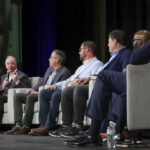
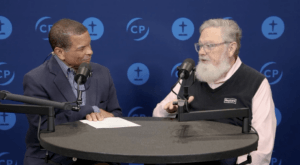
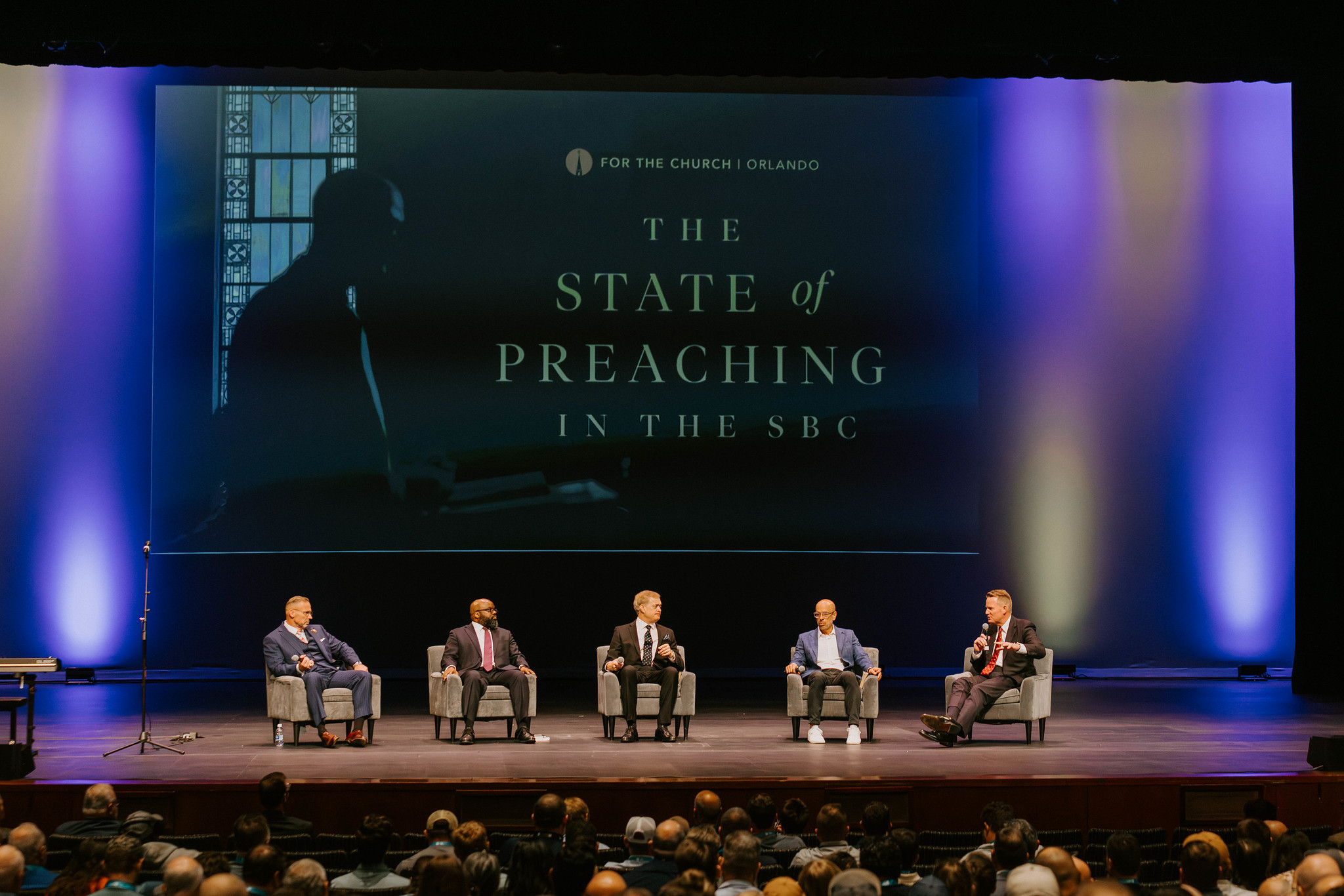
ORLANDO – More than 1,400 participants gathered at Midwestern Seminary’s For the Church Orlando event during the Southern Baptist Convention Annual Meeting June 9 for a discussion led by President Jason K. Allen on the state of preaching in the Southern Baptist Convention.
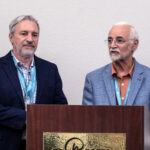
Joining Allen for the discussion were Southern Baptist Convention President Clint Pressley, Florida Baptist Convention Executive Director Stephen Rummage, Imago Dei Church Pastor Tony Merida, and Shiloh Metropolitan Baptist Church Pastor H.B. Charles, Jr.
The discussion followed a time of worship led by Matt Boswell, professor of worship ministries at Midwestern Seminary, during which attendees sang “All Hail the Power of Jesus’ Name,” “Christus Victor,” and “Here Is Love (Everlasting Praise).”
Opening the conversation, Allen noted Midwestern Seminary’s longstanding commitment to strengthening local churches through faithful preaching.

“Because we exist for the church, no church is healthier than the strength of its pulpit,” Allen said. “No convention of churches will prove to be healthier than the collective strength of the pulpits in those churches.”
Allen reflected on the recovery of biblical exposition that has taken place in Southern Baptist life over the last several decades alongside a renewed commitment to the inspiration, inerrancy, authority, and sufficiency of Scripture. He then invited panelists to assess the current state of preaching across the convention.
A renaissance of expository preaching
Rummage expressed encouragement about what he described as “a real renaissance of expository preaching” among Southern Baptist pastors.
“There was a time where the majority of Southern Baptist preaching would have been topical or textual preaching,” Rummage said. “What we’re seeing now is a real renaissance of expository preaching.”
He noted that pastors today are increasingly committed to identifying the main idea of a biblical passage through careful interpretation and faithfully communicating that message to their congregations.

Merida echoed Rummage’s assessment, observing that younger pastors and church planters often arrive already convinced of the importance of exposition.
“I’m not having to sell exposition. It’s more of, ‘Help us learn how to do it,’” Merida said.
Pressley reflected on his own journey toward expository preaching. Raised in a church committed to biblical authority but unfamiliar with formal exposition, he recalled encountering expository preaching during seminary and discovering a simple but transformative approach to handling Scripture.
“You read the Bible, explain it, and then apply it,” he said.
Charles likewise expressed gratitude for the influence of faithful Bible preachers within Southern Baptist life. While celebrating the growing commitment to exposition, he encouraged preachers not only to handle the text accurately but also to communicate its truth persuasively and clearly.
“You’ve got to get the text right, and you have to get the truth across,” Charles said.
Christ-centered exposition
The conversation then turned to the growing emphasis on Christ-centered exposition within evangelical preaching.
Merida pointed to Jesus’ teaching in Luke 24 as the model for understanding Scripture, noting that the Bible’s storyline consistently points to Christ and His redemptive work.
“We stand in that legacy of preaching the text and pointing people to Jesus,” Merida added.
Rather than forcing connections to Christ, Merida explained that faithful exposition recognizes the themes, promises, and trajectories already present in Scripture and demonstrates how they find fulfillment in Christ.
Building on that theme, Rummage encouraged preachers to ask a simple question of every biblical text: “What is God doing here?” By focusing on God’s redemptive activity rather than merely human examples, he said, preachers can more faithfully connect Scripture to the gospel.
Charles and Pressley similarly emphasized that Christ-centered preaching must move beyond moral lessons or isolated applications to show how every text relates to the saving work of Christ.
“As the preacher, our fundamental duty is to be pointing the souls to whom we preach to Christ,” Charles continued.
Equipping the next generation of preachers
In the final portion of the discussion, Allen asked the panelists to reflect on the needs of the next generation of preachers and the role of mentorship in preparing future pastors.
The panelists expressed gratitude for younger ministers’ love for Scripture and commitment to biblical faithfulness, while also identifying areas where growth is needed.
They encouraged young preachers to pair careful study with passion in the pulpit and an inclination and care for personal holiness in all contexts, noting the need for a vibrant spiritual life. They stated that while study prepares a sermon, prayer prepares the preacher.
Merida urged pastors to preach from hearts captivated by Christ rather than merely presenting information.
“People are hearing not only my words,” he said. “They’re also hearing the subtext of my sermon.”
Charles highlighted what he described as the life, labor, and leadership of the preacher. He stressed the importance of personal holiness, diligent preparation, and faithful pastoral leadership, warning against pursuing celebrity rather than service.
“Christian ministry is about servanthood, sacrifice, and suffering,” Charles said. “It’s not about being a celebrity.”
Concluding the discussion, Allen encouraged both younger and older pastors to invest in the development of future preachers by creating opportunities for ministry experience and faithful mentorship.
“To preach the Word is an honor,” Allen said. “To steward the local church is a privilege.”
Throughout the conversation, the panelists returned to a common conviction: the health of Southern Baptist churches depends upon faithful preaching. As attendees left For the Church Orlando, they were reminded that the future strength of the convention will be shaped week after week in local church pulpits as pastors faithfully proclaim God’s Word and point their people to Christ.
SEBTS Women’s Breakfast explores Great Commission legacy
By SEBTS Staff
ORLANDO – Outgoing Southeastern Baptist Theological Seminary President Danny Akin and his wife Charlotte answered questions and challenged women to prioritize the Great Commission at the 2026 SEBTS Women’s Breakfast June 10 in Orlando.
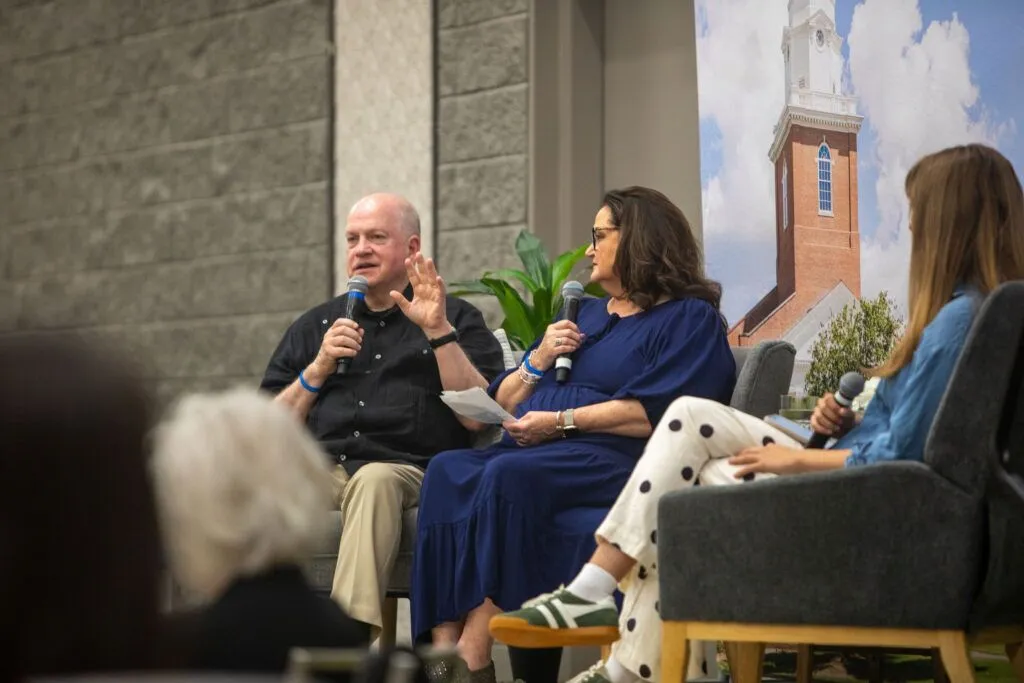
Married for 48 years, the Akins have walked together through the joys and challenges of life, experiencing the faithfulness of God and the blessing of partnership in ministry. Having seen God grow their family from two to 25 with four sons, four daughters-in-law, and 15 grandchildren, the Akins learned the invaluable lesson of prioritizing family and devotion to Christ amid a busy and flourishing ministry.
For the Akins, maintaining biblical priorities requires intentionality and Christlike sacrifice. Celebrating Charlotte’s loving and sacrificial investment in their sons, Danny Akin said, “They are four young men who are in ministry and love the Lord because of the influence and impact of their mother. We determined early that we would pour our lives into our family.”
“If you look in the dictionary for the word ‘servant’, you’ll find her picture,” Danny said.
Charlotte’s selfless spirit not only in the home but also at Southeastern Seminary continues to bear fruit in the lives of women throughout the convention. Candi Powers, women’s life coordinator; Kelly King, assistant professor of Christian Ministry; and Sophie Rhoads, Southeastern alumna all voiced appreciation for Charlotte Akin’s impact alongside her husband.
For the past 22 years, the Akins have also faithfully served Southeastern Seminary and Judson College as president and first lady. What has marked their leadership at Southeastern is the Great Commission passion that they developed early in their ministry together. Recounting a formative international mission trip in the early 2000s, the Akins recalled how God gripped their hearts for the Great Commission when they came face to face with the world’s greatest problem: lostness.
“We saw the massive lostness of the world,” Danny said, “and God really gripped our hearts. Seeing how lost the world was really motivated us to help Southeastern be more about the Great Commission.”
In the months and years to follow, the Great Commission became the Akins’ driving passion and Southeastern’s rallying mission. Now Southeastern stands as the Great Commission seminary of the SBC, and the Akins’ legacy extends through the thousands of men and women who have been inspired by their leadership and have answered God’s call to carry the life-transforming Gospel of Jesus Christ to rural churches, urban centers, and hard-to-reach places around the world.
“We love being together and getting to do things for the Lord together,”Charlotte Akin said. The Akins’ life together demonstrates the powerful potential of a marriage rooted in the Gospel, expressed in sacrifice, and oriented toward the Great Commission.
Thanks in part to the Akins’ faithful example and leadership, Southeastern Seminary and Judson College exist to equip men and women to answer God’s call to serve the church and fulfill the Great Commission in their homes, on the mission field, and in public ministry, leaving Great Commission legacies of their own wherever God calls them.
To learn more about how Southeastern uniquely equips women to fulfill their calling to serve the church and fulfill the Great Commission, visit sebts.edu/women.