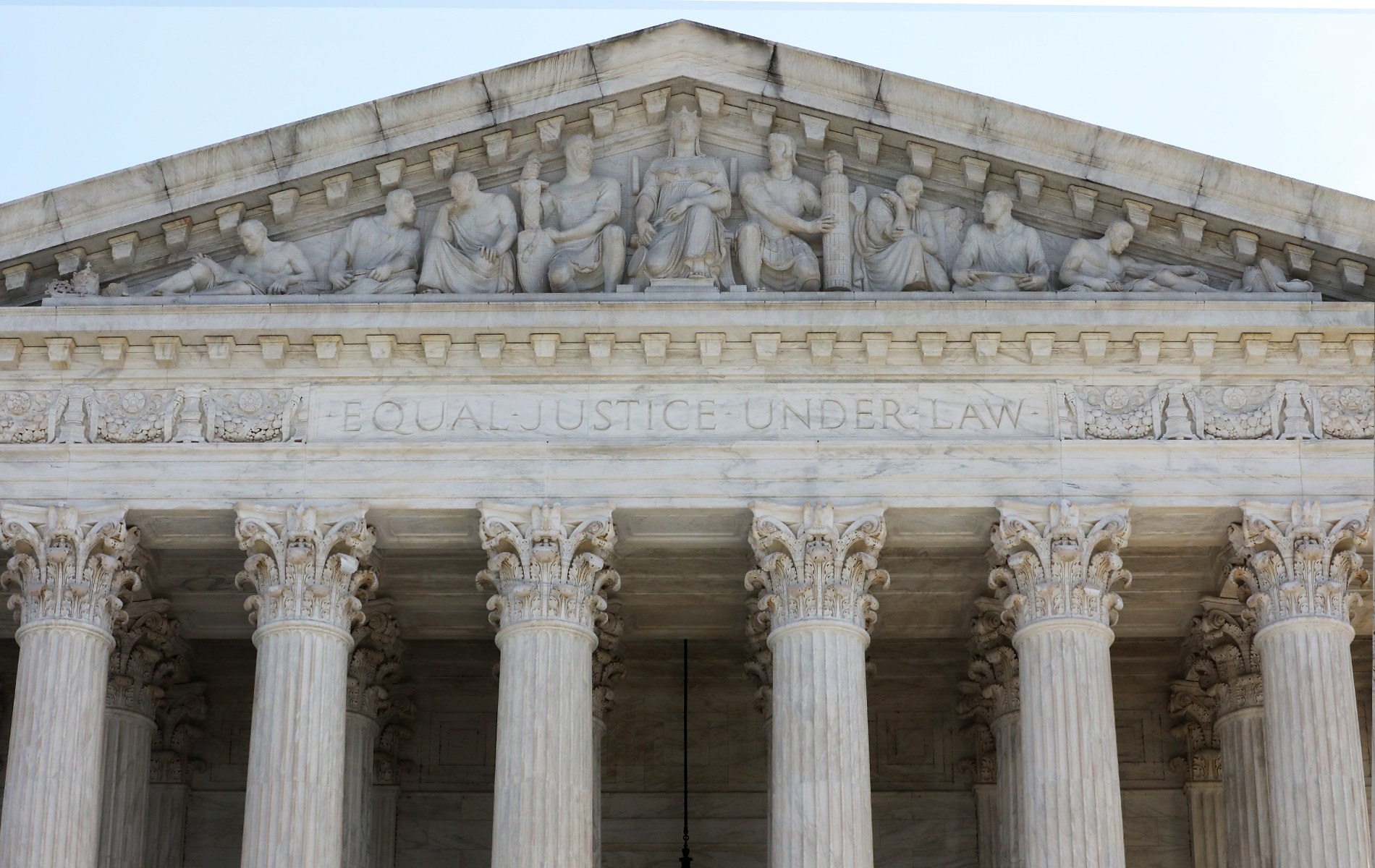

WASHINGTON (BP) – Telehealth and mail-order abortion pill prescriptions remain accessible as a case challenging the medication works its way through lower courts, the U.S. Supreme Court ruled May 14th.
The high court extended its earlier stay of a Fifth Circuit Court of Appeals ruling that had required in-person doctor’s appointments expressly in Louisiana and Texas – but effectively nationwide – for mifepristone prescriptions.
The Southern Baptist Ethics & Religious Liberty Commission, which has advocated extensively for protections of unborn life, expressed sadness upon the high court’s announcement Thursday evening.
“We are heartbroken by the immediate ramifications of this decision, which will result in direct harm to women and countless preborn lives lost nationwide,” the ERLC said in response to the ruling. “In Louisiana alone, the state estimates 1,000 preborn lives are lost each month to these pills. In the U.S., 1 in 10 women taking mifepristone each year experience serious, often life-threatening, adverse complications, harming women at a rate of over 22 times the reported rate for mifepristone.”
Medication abortion is the most prevalent mode of ending unborn life in the nation since the high court overturned Roe v. Wade.
“This unfortunate decision means that while legal proceedings are underway in the Fifth Circuit, the lower court’s decision does not hold,” ERLC lamented. “Abortion drug providers can continue sending mifepristone into pro-life states, defying the laws of those states, circumventing an in-person consultation with a provider, and putting thousands of women and babies at risk.”

Associate justices Samuel Alito and Clarence Thomas dissented in the ruling issued at the close of the court’s day without explanation, granting the request from drug manufacturers who challenged the Fifth Circuit ruling.
“The May 1, 2026 order of the United States Court of Appeals for the Fifth Circuit, case No. 26–30203, is stayed pending disposition of the appeal in the United States Court of Appeals for the Fifth Circuit and disposition of a petition for a writ of certiorari, if such a writ is timely sought,” the high court wrote. “Should certiorari be denied, this stay shall terminate automatically. In the event certiorari is granted, the stay shall terminate upon the sending down of the judgment of this Court.”
In his dissent, Alito said the stay undermines states’ rights to protect unborn life.
“The Court’s unreasoned order granting stays in this case is remarkable. What is at stake is the perpetration of a scheme to undermine our decision in Dobbs v. Jackson Women’s Health Organization, 597 U. S. 215 (2022), which restored the right of each State to decide how to regulate abortions within its borders,” Alito wrote. “Some States responded to Dobbs by making it even easier to obtain an abortion than it was before, and that is their prerogative. Other States, including Louisiana, made abortion illegal except in narrow circumstances. … But Louisiana’s efforts have been thwarted by certain medical providers, private organizations, and States that abhor laws like Louisiana’s and seek to undermine their enforcement.”
Louisiana and Texas are among 17 states where abortion is illegal in most circumstances. In the case at hand, the states are challenging the 2023 loosened guidelines for mifepristone prescriptions that allow virtual office visits and mail order delivery. In states where unborn life is protected, telehealth provision for abortion pills increased from 74,000 in 2024 to 91,000 in 2025, the Guttmacher Institute said in an annual report.
Among states continuing to curtail mifepristone use, Oklahoma Gov. Kevin Stitt signed a bill May 7th making it a felony to provide abortion pills without a prescription, carrying 10-year prison terms and fines of up to $100,000, according to House Bill 1168. The new law, set to take effect in mid-August, does not restrict pharmacists, drug manufacturers, or legal distributors from dispensing the pills for lawful medical purposes.