
BEIRUT, Lebanon – The multi-faceted work of Lebanese Baptists is constantly buffeted by strife, whether between Israel and Hezbollah or the spillover effects of the long Syrian civil war that ended in 2024.
But amid the tumult, there is perseverance and purpose in the six ministries under the umbrella of the Lebanese Society for Educational and Social Development, also known as Thimar, or “fruits” in Arabic. (See related story here.)
The seminary
Arab Baptist Theological Seminary’s roots date back to 1953 when missionary Finlay Graham began teaching three students in his home. When the Arabic-language seminary formally opened in 1960, 21 students were enrolled from Lebanon, Syria, Jordan and Egypt. At its first graduation three years later, more than a dozen degrees were awarded.
The seminary is accredited by the European Council for Theological Education and the Middle East and North Africa Association for Theological Education. It now also offers a master of theology degree, including online classes, and a doctor of philosophy degree in conjunction with Bethlehem Bible College in Palestine, the Evangelical Theological Seminary of Cairo and the Protestant Theological University in the Netherlands. Year-round, a blog features a range of articles by the seminary’s professors.
Students who enroll at ABTS typically overcome a range of challenges before arriving at the seminary – and during their studies – but perhaps none greater than Awad Guda, a 2020 graduate from South Sudan.
In 2008, while using his bare-bones motorcycle as a taxi, Guda became a Christian the day a former passenger told him about Jesus, quoting John 3:16. He matured in his faith and, as a student in Uganda, began discipling young believers. In 2017, he made his way to ABTS, intent on serving the Lord more effectively.
Despite the 2020 COVID-19 lockdown, Guda was able to return to South Sudan. He found transportation to a cybercafé an hour away to work on his studies and later moved to a city with a United Nations hospital where he could access the internet. He now leads a team based in his village in South Sudan to introduce Christ to people who “rely heavily on evil spirits, …(on) witchcraft and praying to our ancestors for healing.” The team also is assisting a local orphanage with relief aid and the children’s schooling.
Guda describes his ABTS studies as “a testament to how much the Lord has changed me. I’ve grown to know how to give different aspects of my theological formation their due.”
Publishing house
Dar Manhal Al Hayat, Arabic for “source of life,” dates back more than 65 years when two missionaries, Mabel Summers and Virginia Cobb, began translating Sunday School materials into Arabic.
DMAH has released 21 Arabic-language books since 2024, five of which are original works and the rest translations. A book on apologetics by Jordanian pastor Suheil Madanat is among the new resources, “Evidence for the Existence and Manifestation of God.”
In tandem with the book, DMAH has produced a 15-episode series highlighting Madanat’s exploration of major worldviews and historical, scientific and logical evidence for God’s existence. The series features a number of theologians, authors and educators from Lebanon, Egypt and Jordan and is being aired on several Christian TV stations reaching audiences across the region.
One Egyptian pastor wrote to DMAH to say, “I now know better how to answer people’s questions and doubts. I used to be driven by the questions, but I am now driven by the answers.”
A Family Worship Series, meanwhile, aims to encourage family devotions through three new books, coloring books and a nine-episode children’s series. DMAH also has developed resources conveying a Christ-centered approach to mental health amid the ever-looming possibility of crisis in the Middle East, with Lebanese Christian therapist Enaam Haddad featured, for example, in a three-part series. DMAH has participated in book fairs in Egypt, Saudi Arabia and Iraq and sponsored workshops for Sunday School teachers and for helping churches address such issues as addiction to pornography and the struggles that teenagers face.
The school
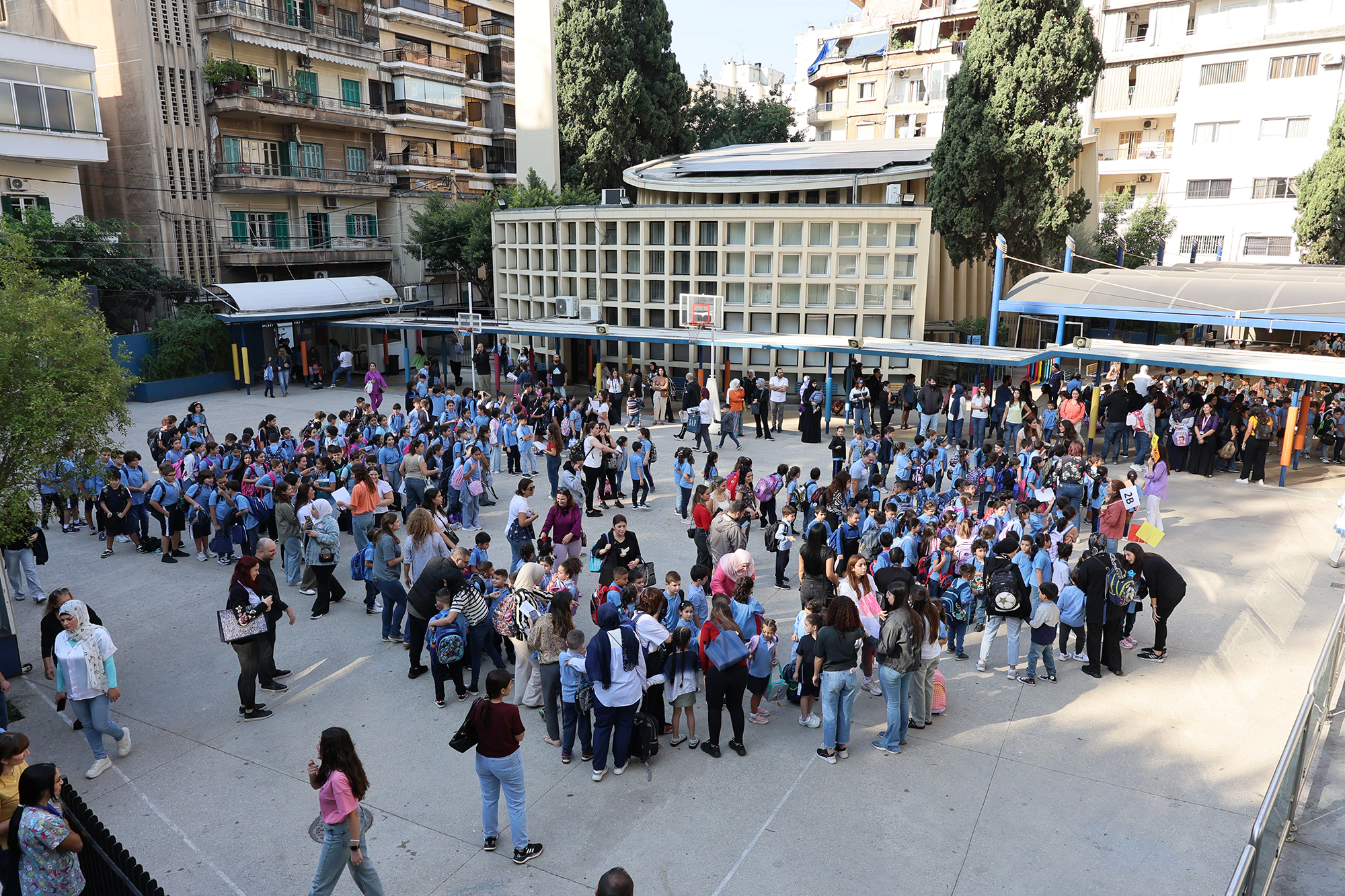
Beirut Baptist School, in achieving accreditation candidacy last year, scored such feats as embracing the challenge of the COVID-19 shutdown in 2020 by moving to online instruction that the school had already been developing. The school’s founder, missionary Jim Ragland who led the campus for 30-plus years, died in 2023 at age 99.
In times of turmoil, the school has worked with Thimar to provide food boxes and vouchers to families who sometimes ask “why we are doing this for them when they are not part of our own religious affiliation,” Julia Wallace, a Thimar staff member in 2021, recounted. “But they know our Christian mission, they know our Christian identity. … (W)e’re able to witness in ways that direct evangelism maybe wouldn’t have as strong of an impact in this context.”
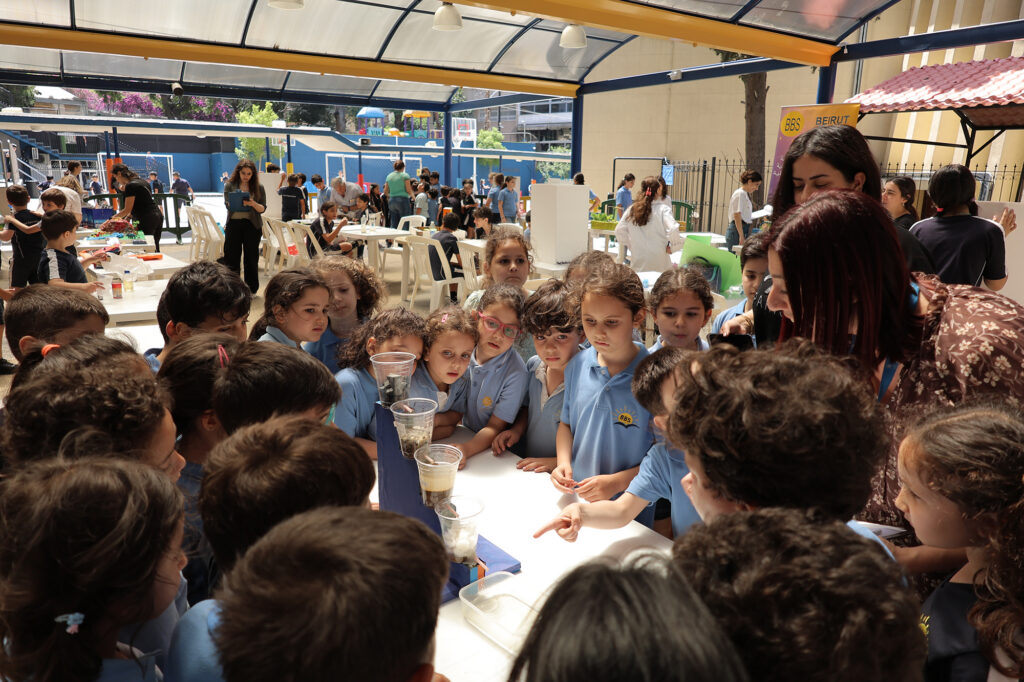
Alice Wazir, the school’s principal, said teachers and staff “have come to realize that our role as Beirut Baptist School is not only to be an academic institution, but also a community service institution where we are aware of our community’s needs and are ready to stand next to them and support them when needs arise.”
The school faces the challenge of students’ daily disquiet in the war-torn country. Four counselors are on staff, and chapel and Bible classes are part of each week’s schedule.
Jad Tabet, one of school’s administrative staffers, noted that “mentoring a student doesn’t always yield immediate results. Sometimes months go by without seeing growth in students. But then all it takes is one student asking for help, one student opening up about challenges, for us to see how God works in his time, not ours.”
Relief ministry
Thimar’s relief arm, Middle East Revive and Thrive, or MERATH, originally called Lebanese Baptist Aid, regularly responds to the human toll of upheaval in Lebanon and neighboring countries.
Through a network of partner churches, MERATH has moved into action, for example, to deliver aid among thousands who have been displaced by hostilities between the entrenched Iranian-backed Hezbollah militia in Lebanon and the Israeli military. And they have aided Syrian refugees during that country’s civil war and subsequent violence between warring factions that sometimes exacts a toll on Christian and other minority communities.
Lebanon’s geographic size alone makes ministry daunting. It is about the size of Connecticut, while Israel is twice as large to the south and Syria is about 18 times larger to the east and north.
Shelter, food boxes, blankets, winter clothing, diapers, personal hygiene items and medical care – and church members and counselors with caring hearts to come alongside traumatized individuals – often expand the reach of adult Bible studies and children’s and youth activities among those forced to flee their homes.
Milad Hadded, pastor of Lebanese church near the Syrian border, acknowledged that the congregation “did lose a few members” as a partner church distributing MERATH aid. Even so: “As we started to witness how God was working among the Syrian refugees, the miracles he was doing to bring them to him, we couldn’t but be encouraged and fueled to do more and more. Today we love our Syrian neighbors. We see them as people created by God. We see no obstacles.”
Discipleship
Thimar’s discipleship arm, Salt & Light, has been providing nurture to four churches and one church plant in recent years to advance their community presence, undergirding Bible studies, home visits and aid distribution.
And for the church plant, situated in a non-Christian community, Salt & Light also has established a relief center as a base for humanitarian assistance, after-school education support, discipleship classes and worship meetings
Additional Salt & Light activities include conferences for families and women, youth ministry workshops, a youth camp and hosting a medical team from Northern Ireland for a weeklong outreach.
SKILD
A sixth ministry under Thimar’s umbrella is SKILD, an acronym for Smart Kids with Individual Learning Differences, founded in 2011, sparked by a support group of four mothers at Beirut Baptist School.
Today, SKILD operates a center in Beirut to provide customized educational plans and therapy for students of all ages with learning difficulties and developmental challenges whose needs are often overlooked, along with support groups for their parents. SKILD also conducts teacher workshops to strengthen special education departments in schools not only in Lebanon but also Syria and Iraq. And it has developed more than 100 digital activities and resources to aid parents and teachers.
Although Lebanon is “a land soaked with tears,” Tabet reflected, Thimar’s ministries remain “rooted in love, relentless in hope and present in the pain experienced by our communities.”