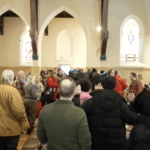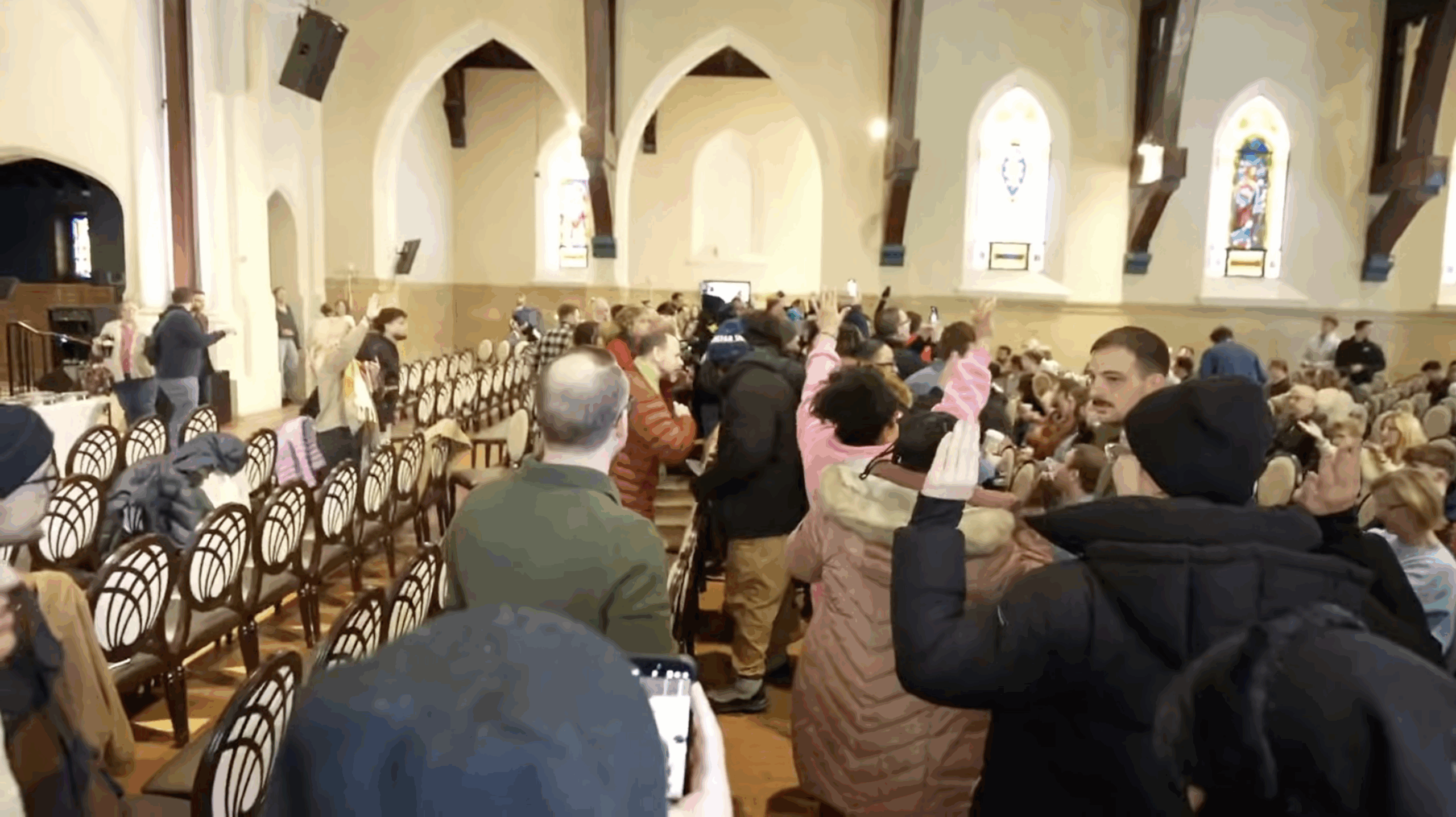

MONTGOMERY, Ala. (BP) – A bill that passed the Alabama House of Representatives on Feb. 24 and criminalizes disrupting a worship service is one of several that states are considering after a protest inside a Southern Baptist church last month.
“This protects houses of worship – not just churches, but synagogues, mosques, others – from any outside group organizing to come into their building and causing a disorderly scene, harassing, or, God forbid, causing some kind of riot during the worship time,” Greg Davis, president of Alabama Citizens Action Program (ALCAP), told Baptist Press.
Davis and others were preparing a bill to file when they learned Rep. Greg Barnes had done so days earlier.
“He’s passionate about the issue,” said Davis, “so we joined with his bill.”
The Alabama House of Representatives approved HB363 on Feb. 24, sending it to the Senate. If passed, disrupting a worship service would carry a Class C felony and be punishable by up to 10 years in prison.
Oklahoma lawmakers had introduced a measure last year that didn’t receive the required support. That changed following the Jan. 18 protest inside Cities Church in St. Paul, Minn.

With those scenes fresh last month, the state Senate passed a bill that was then signed by Gov. Kevin Stitt. It makes a first offense for disturbing an assembly of religious worship punishable by a fine of up to $500 and/or imprisonment for up to one year. That becomes a felony with a second offense, carrying a potential $1,000 fine and up to two years in prison.
In Idaho, HB615 passed the House overwhelmingly today (Feb. 26) and will go to Gov. Brad Little’s desk. Little, a Republican, is expected to approve the law that will make it a misdemeanor to intentionally disrupt a religious worship service.
It is an amendment to the state’s Disturbing the Peace statute, which came about after groups protested military funerals.
“Now we have across the nation – in different places and including Idaho – sometimes worship services are disturbed for political protests and or reasons maliciously and willfully,” said the bill’s sponsor Bruce Skaug (R). “… This [bill] came about because of some security people from different churches who approached me and said, ‘We need to do something.’”
Ohio’s HB 662 remains in committee and will take “disturbing a lawful meeting under certain circumstances” from a misdemeanor to a felony of the fifth degree. South Dakota’s bill seeks to move the penalty for disrupting religious worship from a misdemeanor punishable by up to a year in county jail and a $2,000 fine to a felony that allows a judge to decide if the perpetrator goes to state prison for two years alongside a $4,000 fine.
A New York City bill was introduced in January as well, although its genesis appears to be connected more to creating protest buffer zones and protecting synagogues, receiving broad Democratic support not seen in the other states.

Arrests made in the Minnesota protests inside Cities Church came through the FACE Act, a federal law, despite the state having its own law preventing interference with religious observance. The Minnesota-Wisconsin Baptist Convention cited the law in its condemnation of the protest inside Cities Church.
“This should be a bipartisan issue,” said Davis. “Nobody wants to go to worship in fear that a group is going to show up and riot. This is about freedom of religion and freedom of worship, which are central to American life.”