
When Deaf Pathway Global (DPG) set out to test a groundbreaking new approach to Bible translation, the organization didn’t begin with a complex theological text or a long Gospel narrative. Instead, DPG leaders chose a story from Scripture filled with courage, tension and triumph.
They chose Esther. At first glance, the decision might seem unexpected, but for DPG, Esther was the perfect place to begin a venture in how the Bible reaches Deaf communities worldwide.
Established in 2020 as a non-profit venture of Brentwood Baptist Deaf Church in Tennessee and the International Mission Board, DPG grew from efforts in the U.S. to provide American Sign Language-based Bible stories for Deaf communities. The ministry seeks to empower international Deaf communities with access to the Bible in their heart language.
“Deaf Pathway Global’s translation model takes advantage of a concept we call ‘sign roots,’” said Nick Jungheim, an IMB missionary who serves as DPG president. “To explain sign roots, imagine if all spoken languages were built from a shared set of basic sounds. Even though the languages are different, those basics would still feel familiar across cultures.”
Jungheim, who is Deaf, explained that sign languages across the world share a common foundation, including natural body movements, facial expressions and the use of visual space.
Sign roots are developed through shared elements that form a kind of universal base layer, including the following:
- Movements for everyday ideas like eat, go, see, person or question;
- Facial expressions that convey emotion, emphasis or grammar;
- Intuitive pointing and use of visual space.
“Because of these shared roots,” Jungheim said, “Deaf people from different countries can often communicate meaningfully, even without knowing each other’s formal sign language. Conversations are not perfect, but understanding is often surprisingly high.”

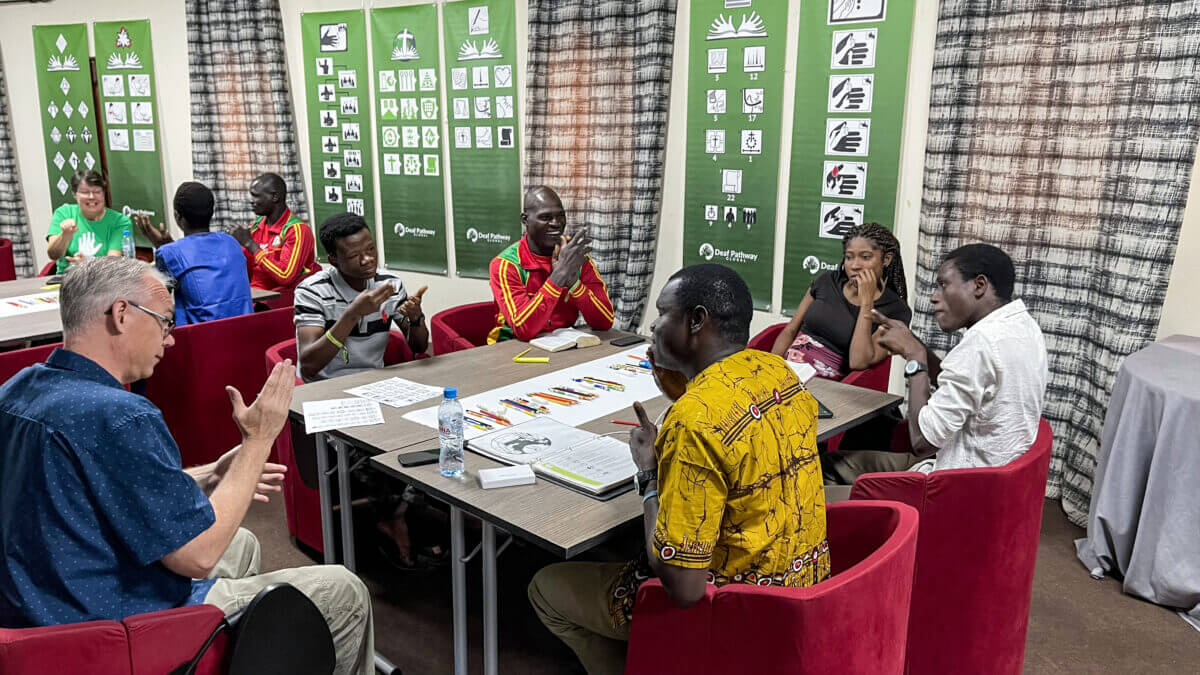
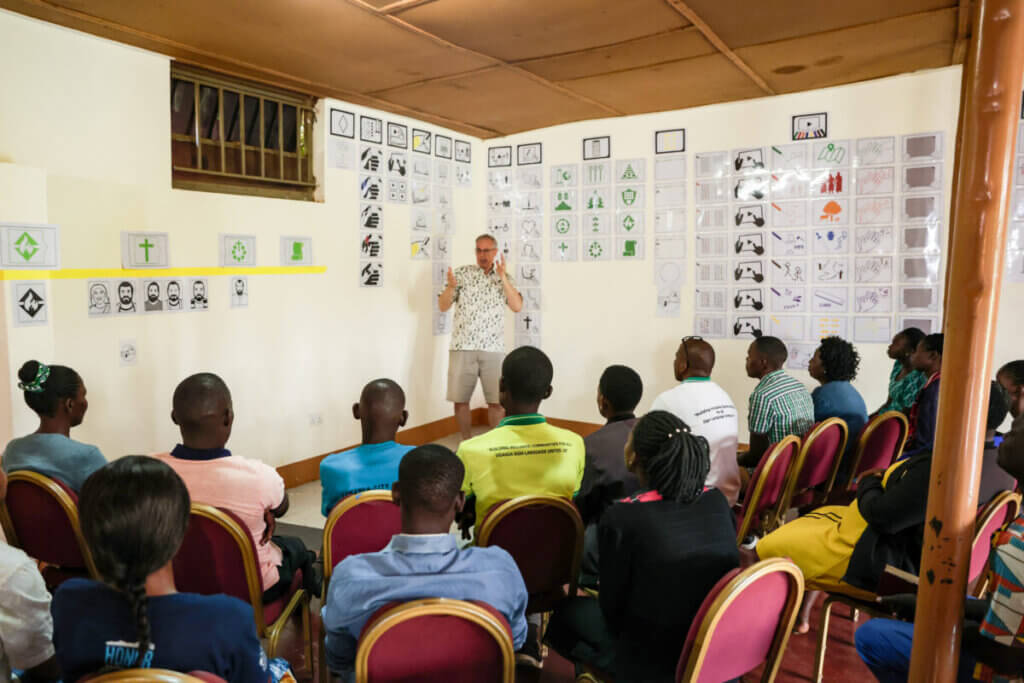
DPG has built on this reality by creating sign root templates, which are visual frameworks that allow multiple translation teams to work from the same foundation, adapting it into their own heart languages.
“Creative storytelling provides the context that allows sign roots to carry rich meaning naturally,” Jungheim said. “Instead of explaining abstract ideas directly, stories show them through lived experiences, which aligns closely with how sign language communicates visually and relationally.”
Why Esther?

Since the sign roots method works best with stories, Jungheim explained how Esther stands out as one of the best books for the project.
“I needed a narrative-style book of the Bible that all of our international teams could work on simultaneously,” he said. “The book also needed to be short enough to demonstrate that this translation model could serve as a proof of concept before beginning translation of the New Testament.”
Jungheim reported that DPG is planning on translating the Book of Luke after Esther.
With a total of 167 verses, Esther is concise yet highly visual, full of dramatic scenes and vivid characters. Just recently, DPG completed translating Esther in seven sign languages including American, Hungarian, Slovenian, Serbian, Senegalese, Chinese and Thai Sign Language.
“To my knowledge, nothing like this has even been attempted before,” Jungheim said. “The project has already demonstrated the validity and potential of the translation model DPG is currently employing.”
A global first
For comparison, a traditional translation model can take decades. Jungheim said the American Sign Language Bible required 37 years to complete, focusing on ASL individually, while DPG employs a different method. “We employ a cooperative approach using multiple sign languages,” he said. “This is why our model is faster and more powerful than traditional translation models because we have international teams supporting each other.”
Globally, there are an estimated 300-400 sign languages. At that pace, Jungheim concluded that completing Scripture translation would require thousands of years.
Project Esther offers a glimpse of a different future.
Before this new model, DPG primarily used chronological Bible storying, which translated selected Bible stories to help audiences understand Scripture as a unified narrative – “from Creation to Christ and beyond,” Jungheim said.
While effective, that approach has limitations. It introduces people to Scripture but doesn’t provide full access to the Bible. The sign roots model changes that. Now, multiple translation teams work simultaneously, guided by centralized exegesis teams who analyze original Hebrew and Greek texts, create detailed storyboards, produce teaching videos and develop sign root templates.
Instead of isolated efforts, teams now share in building something unified, book by book and story by story. “By working collaboratively, they are able to produce stronger and more refined translations than they could independently,” Jungheim said.
Translation without borders

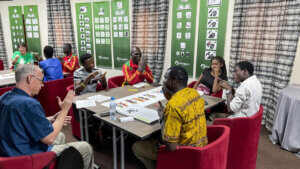
Today, DPG teams are actively working across the globe. Teams are stationed in the United States, Hungary, Slovenia, Serbia, Senegal, Thailand and China.
Each team brings its own language and cultural perspective, while staying connected through the shared framework. And the work is only expanding.
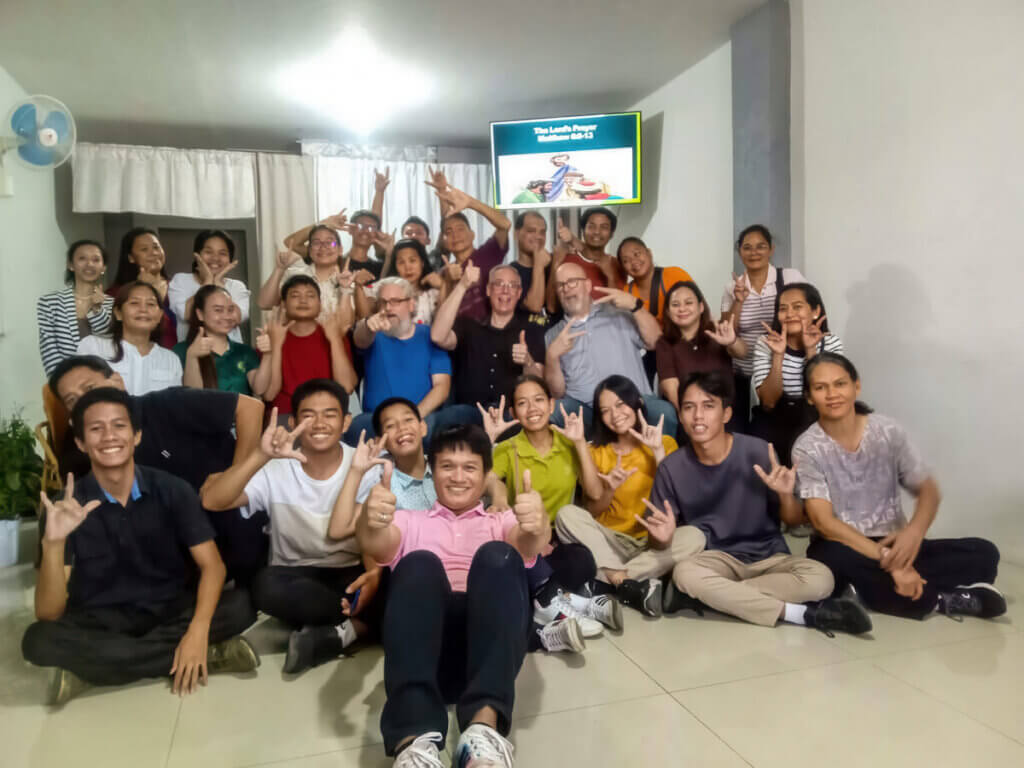
“In August 2026, we will be launching a new Filipino Sign Language team in Davao City, Philippines,” Jungheim said. “This team is especially significant because it will serve as a model for what a ‘post-sign roots’ translation team could look like.”
If successful, this Philippines model could scale rapidly. Jungheim explained the Filipino team, and other translation teams going forward, will translate off the “library” of sign roots videos, bringing Scripture within reach of Deaf communities worldwide at an unprecedented pace.
“The IMB is excited to partner with Deaf Pathway Global to accelerate Bible translation for hundreds of sign languages,” said Victor Hou, IMB chief of staff administration. “This is a partnership where we are doing more together to carry out the Core Missionary Task among millions of Deaf peoples.”
A story that keeps growing
The story of Esther is one of courage in the face of uncertainty. It’s a reminder that change often begins with a single bold step. In many ways, DPG’s Project Esther reflects that same spirit.
What began as a carefully chosen test case has already demonstrated that a new kind of Bible translation is possible. A translation that is faster, more collaborative and globally connected.
And if this model continues to succeed, Esther, like the book’s character impacting the Jews, may impact Deaf communities worldwide, “for such a time as this” (Esther 4:14).