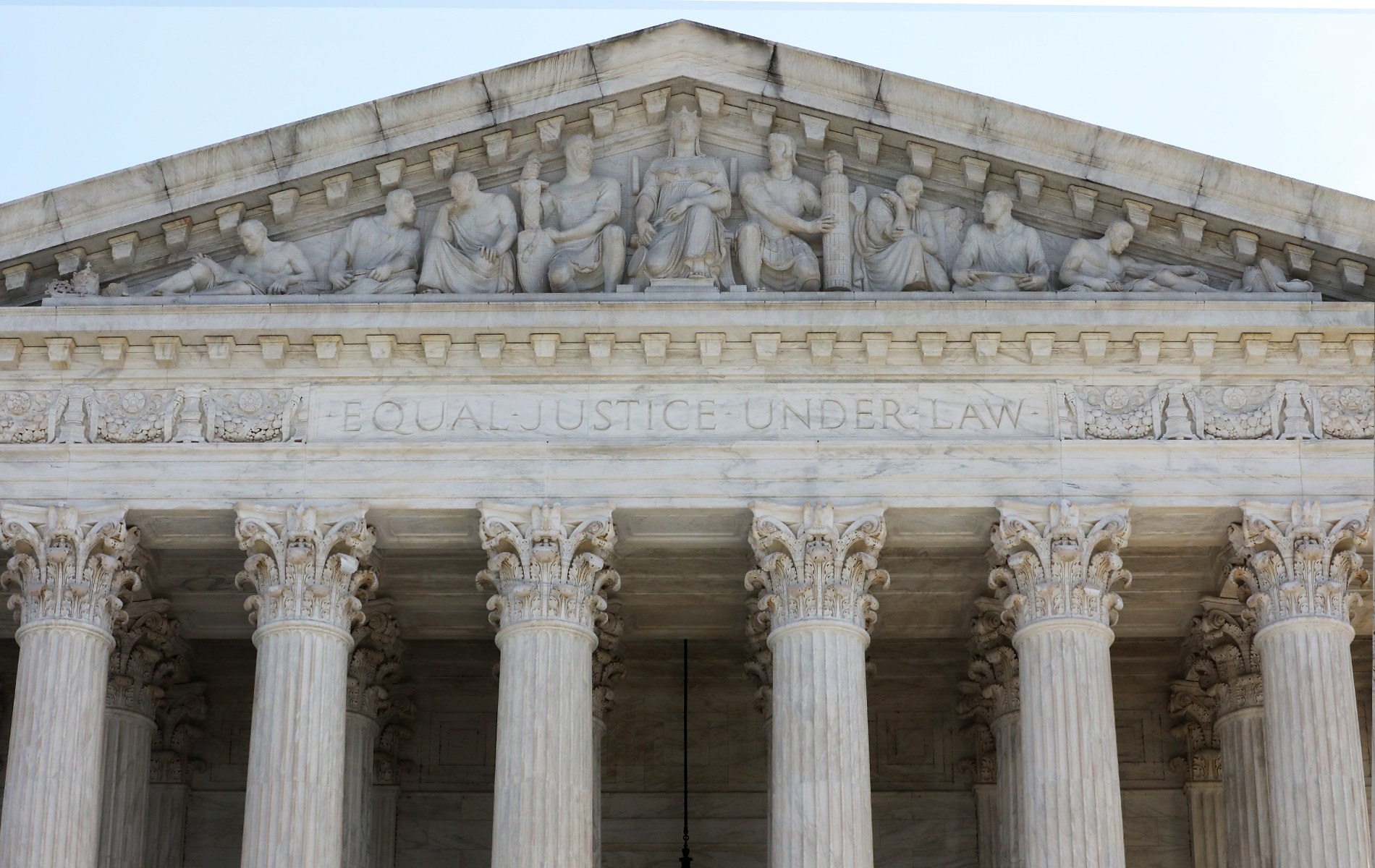

WASHINGTON, DC (BP) – One week from today (Jan. 6), the U.S. Supreme Court will review two cases over state laws seeking to clarify competition in sports according to biological sex.
Attorneys in Little v. Hecox and West Virginia v. B.P.J. will go before justices Jan. 13.
At issue in the latter is a Bridgeport, W.Va., student identified in court documents as “B.P.J.,” who began identifying as a girl in the third grade and taking puberty-blocking medication. B.P.J. competed only on girls’ athletic teams throughout elementary school.
The state’s 2021 passage of the Save Women’s Sports Act, which designates athletic participation according to biological sex rather than gender identity, was deemed discriminatory by the 4th U.S. Circuit Court of Appeals in April 2024 after a suit brought by the ACLU and Lambda Legal.
That July, the state of West Virginia and attorneys with Alliance Defending Freedom asked the Supreme Court to hear the case, which the court agreed to do in July 2025. Last September, the Ethics & Religious Liberty Commission joined others in an amicus brief regarding both cases.
Central is the definition of the word “sex” in Title IX and how it refers to protecting participation in any federally-funded education program or activity – more to the point in this case, women’s sports. West Virginia, Idaho and about 27 other states say it refers to biological sex determined at birth. Those on the other side claim it includes gender identity.
Idaho was the first state to pass such a law with the March 2020 Fairness in Women’s Sports Act. It was challenged by the ACLU the next month on behalf of transgender athlete Lindsay Hecox.
ADF filed its motion in response that May on behalf of two female Idaho State University athletes – Madison Kenyon and Mary Kate Marshall – who say they lost to male athletes competing in their sport.

Southern Baptist student impacted
Adaleia Cross, a member of Simpson Creek Baptist Church in Bridgeport, W.Va., spoke up not long after the 4th Circuit’s April 2024 decision. She lost her spot on her middle school track and field team when B.P.J. joined the squad. But more than that, some of B.P.J.’s comments made her feel uncomfortable.
“In any other situation, I would report the comments to my school immediately. But since BPJ identifies as transgender, I was worried I would be labeled as transphobic, and it would make things awkward on my team,” she said. “So, I didn’t say anything and tried to stay as far away from BPJ as possible.”
Most recently, Cross and another student, both now in high school, came forward alleging more details on attempts by B.P.J. to intimidate them. Those accusations include graphic comments in the locker room that were reported to the school.
In a statement provided to Fox News Digital, ACLU representatives for B.P.J. say their client denies those allegations and that the school found them to be unsubstantiated. ADF attorneys representing the Cross family responded that their client had sworn by her statements under oath and under penalty of perjury.
Related posts:
 Reformation: SBC entities celebrate 500th anniversary
  ERLC letter to Trump transition team encourages policy changes
  EXPLAINER: Ethical and theological considerations on IVF from the SBC
  GOP candidates: ‘delay’ Supreme Court nomination
  U.S. Olympic and Paralympic officials bar biological men from competing in Olympic women’s sports
  District court strikes down Title IX change that would change meaning of ‘sex’
  ‘Caring Well’ conf. on sex abuse passes 1,300 registrants
  Long-term view needed, Moore says of marriage