
The feast enjoyed by the Plymouth colonists and the Wampanoag people in 1621 is what most people think of as the first Thanksgiving. However, the first recorded English day of Thanksgiving in the New World actually took place at “Berkeley 100” in Virginia two years earlier.
Recognizing this earlier declaration in no way detracts from the events which took place in Massachusetts in 1621. The Pilgrims’ observance was significant, noble and inspirational. They suffered the deaths of half of their company in their first winter 1620-1621. The Pilgrims’ Thanksgiving feast the following fall was a remarkable testimony of their faith and gratitude, especially in light of their significant losses.
However, the account of the Pilgrims’ Thanksgiving feast should not diminish the generally overlooked Thanksgiving held at Berkeley 100, later renamed Berkeley Plantation, on the James River, in 1619.
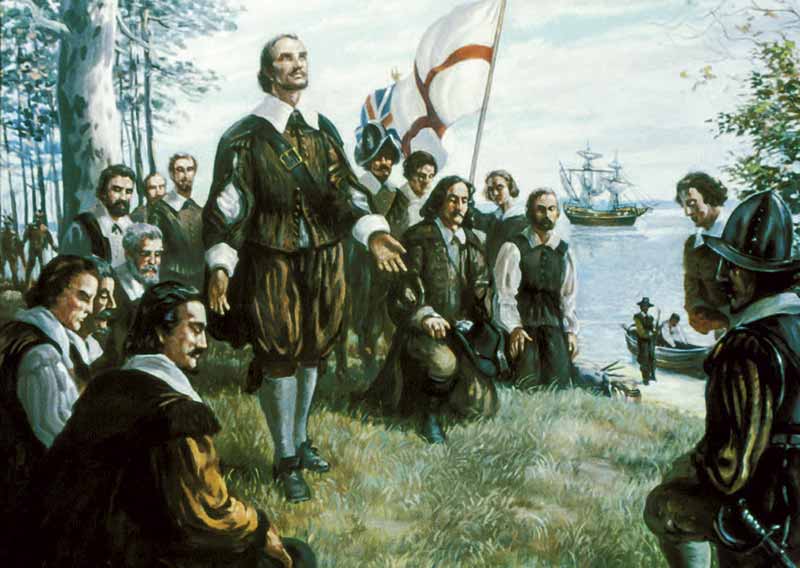
The Berkeley settlement of 36 people was located on a “king’s grant,” a tract of land given by the king, large enough to supply 100 of the king’s men (soldiers) for a year. Unlike the Pilgrims, the first Berkeley Thanksgiving in 1619 did not include a feast. It was a prayer meeting, which had been prescribed by the charter of the Berkeley Company, the financial backers of the new settlement.
The charter stated that upon their arrival, which took place Dec. 4, 1619, they were to have a prayer service of thanksgiving. It further stipulated that subsequent anniversaries of that date should “be yearly and perpetually kept holy as a day of Thanksgiving to Almighty God.” The practice continued until 1622, when 11 Berkeley residents were killed in an ambush carried out by Natives, and the plantation ceased operations
Over time the records of the first Thanksgiving were lost, only to be rediscovered in the late 19th century.
One of the most compelling features of the story of Berkely 100 is its leader – Captain John Woodlief. Woodlief had been part of an earlier expedition at Jamestown and survived the 1609-1610 “starving time.” Like the Pilgrims, those in Virginia suffered tragic losses. By the spring of 1610, decimated by starvation and disease, only 60 out of 300 survived. Captain Woodlief’s involvement in the Thanksgiving of 1619 speaks to the company’s faith in the face of an uncertain future.
For many years, elementary students in Virginia were taught, “1619 was a Red-Letter Year” because of several significant events that took place:

- The Virginia House of Burgesses became the first representative government in the English colonies.
- The London Company transported 90 single women, potential wives, to Virginia to help stabilize and expand the colony which had been predominately settled by males.
- A captured Dutch ship introduced Africans to the colony, laying the foundation for centuries of slavery.
The year was also significant in the religious history of the emerging nation. The newly created Virginia legislature adopted the Church of England as the “State Church” of the colony. The generally accepted consensus or the era was if religion is good for the people, then it was the responsibility of the government to provide religious services for the people.
This legislation set in motion the struggle for religious freedom in the American colonies. In the following years, the Virginia colony alone would become home to religious refugees from Europe including Puritans, Quakers, French Huguenots and Catholics. By the time of the American Revolution 150 years later, more religious refugees had settled across the South. These included Portuguese and Spanish Jews, Austrian Lutherans, Scottish Presbyterians, German Mennonites and Baptists.
As the nation approaches its 250th anniversary, it is appropriate to revisit the historical facts of its founding – especially the role religious faith played in its development. It will be important to ensure that societal and academic bias do not negate the role religion played in the formation of the nation. Faith was not only important as a driver of immigration and later migration, but as a driver for dissenting religious groups’ support for the Revolution to pave the way for religious freedom.
It is equally important to remember that the struggle for religious freedom did not end with the Revolution. In many ways, it was only beginning.
Related posts:
 LifeSpring Church: Keeping Missions in the Forefront
  Clinton, Trump spar over race, personal ethics
  HUD policies to be more friendly to churches in 2026
  FIRST-PERSON: Going to court
  Clinton, Trump clash in 2nd heated debate
  Uvalde church continues to mourn the loss of two girls in school shooting
  WWI missions, theology legacies remembered
  Anti sex-abuse advocates welcome signing of Take it Down Act into law