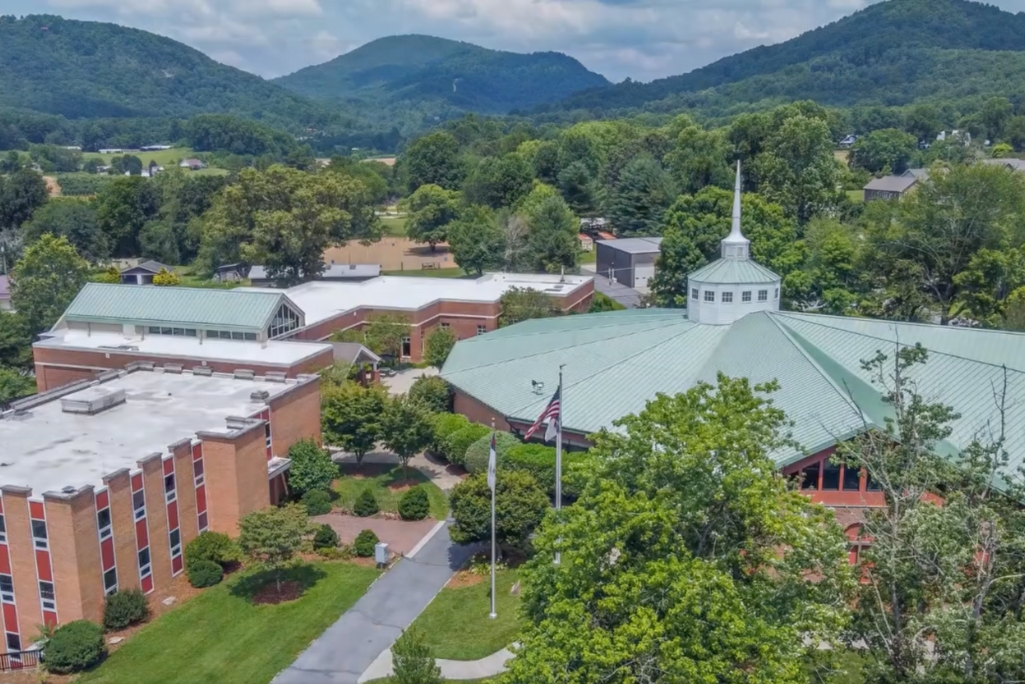

HENDERSONVILLE, N.C. — The advisory team tasked with helping Fruitland Baptist Bible College (FBBC) navigate the changing landscape of higher education has released its final report, revising recommendations that were first presented in a preliminary report released last fall.
The revised recommendations outlined in the final report were made following conversations and dialogue with Fruitland alumni and supporters after the release of the initial report, which included a listening session held during the Baptist State Convention of North Carolina’s annual meeting last November.
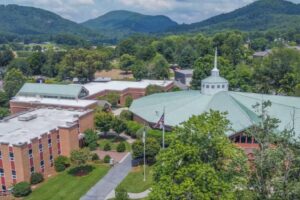
Members of Fruitland’s board of directors unanimously endorsed the final report during a meeting held Jan. 8 on the school’s Hendersonville campus in western North Carolina (WNC). The report was also overwhelmingly affirmed by the N.C. Baptist board of directors on Feb. 10 during a meeting held at Caraway Conference Center near Asheboro that was rescheduled due to winter weather.
“The Advisory Team, with much gratitude, has received the dialogue from those who love Fruitland and who now more acutely understand the school’s circumstances,” the final report said. “Among these, many have expressed a fresh outpouring of support for Fruitland and desire to see vibrant days ahead in parallel options to how Fruitland has admirably served WNC and beyond in her history.”
Associate degree to continue
The most notable change in the final report concerns Fruitland’s associate degree program. While the preliminary report recommended ceasing new enrollment in the program and transitioning the school away from degree-granting status, the final report calls for the program to continue, subject to ongoing review.
The report calls for certain “viability metrics” to be established for the program related to self-sustainability, enrollment and fundraising. The report further states that continued evaluation should determine whether the associate degree program remains viable.
Communication, transparency emphasized

The final report places an increased emphasis on communication and transparency “concerning all matters related to Fruitland’s health and viability.” The report calls for regular reporting on enrollment, finances, costs, needs and progress toward viability goals. These updates would be shared with Fruitland administrators, faculty, students and alumni, as well as the Fruitland and N.C. Baptist boards of directors.
Budget review, tuition increase recommended
The advisory team also recommended an immediate and comprehensive budget review that includes an evaluation of campus costs and potential new sources of revenue. In light of current financial shortfalls, the report recommends that Fruitland’s board of directors consider a tuition increase during the 2026 academic year.
Expansion of ministry training
While revising its recommendations on the associate degree program, the advisory team reaffirmed its call to expand non-degree ministry training. The final report supports the continued development of Hispanic and other non-English programs, ministry and leadership “Essentials” courses, certificate programs for continuing education, and expanded online, hybrid and non-traditional delivery models.
Campus preservation reaffirmed
The report also reiterates that the Fruitland campus should be preserved for ministry use regardless of any future decisions regarding the associate degree program. Potential uses include pastor retreats, conferences, hybrid courses, short-term housing for church residencies and ministry space for local churches.
Leadership transition underway
With Fruitland President David Horton set to retire in March, the advisory team also recommended the prompt appointment of a search committee for the school’s next leader and that the findings and recommendations contained in the final report help guide the formation and work of a search committee.
Micheal Pardue, newly elected chairman of Fruitland’s board of directors, said the school’s board began work on forming a search committee as well as appointing an interim leader during its meeting in January. Following the release of the advisory team’s final report, Pardue said he is “excited” about the future of Fruitland.
“As chairman of FBBC’s Board of Directors, I am excited about the future of NC Baptists’ educational ministry,” Pardue told the Biblical Recorder in a statement. “This report gives us clear direction for our role as stewards of this critical NC Baptist ministry. For 80 years, FBBC has served the Kingdom of Christ, training leaders across NC and around the world. I want to see FBBC be a convention ministry that all NC Baptists are excited about. I desire that FBBC would be an institution every church considers when sending students for ministry training.”
The release and approvals of the final report mark the culmination of nearly a year of review and work by the advisory team, which was requested by Horton and formed in early 2025 to assess the status, trajectory and future direction of the school. Over the course of its work, the team analyzed historical enrollment and financial data, reviewed academic and ministry programs, and gathered input from Fruitland leadership, alumni and other stakeholders before presenting both the preliminary and final reports.
Steve Scoggins, pastor emeritus at First Baptist Church of Hendersonville, N.C., and a longtime professor at Fruitland, served as the advisory team’s chairman.
The Fruitland and N.C. Baptist boards will now work together to implement the recommendations outlined in the final report.
Robert Hefner, president of the N.C. Baptist board of directors, said he is grateful for the work of the advisory team and is praying for Fruitland’s future.
“I am grateful to be a Fruitland alum, and I have been privileged to assist the work of the advisory team,” Hefner said. “I am prayerful for God to illuminate the next season for Fruitland, and I trust that He will.”
Fruitland is a ministry of the Baptist State Convention of North Carolina. Founded in 1946 as Fruitland Baptist Bible Institute, the school has served N.C. Baptists for nearly 80 years by providing biblical and practical ministry training. Known for its focus on pastoral preparation and hands-on education, Fruitland has trained generations of pastors and church leaders, with a significant number of N.C. Baptist pastors tracing their ministry preparation to the school.
While the final report concludes that Fruitland faces significant challenges similar to other institutions of higher learning in both the sacred and secular spheres, opportunities remain for continued ministry impact.
“As the Advisory Team, we rejoice with so many across North Carolina at the history, heritage, and impact of Fruitland on churches, pastors, ministry leaders, missionaries, and ultimately the Kingdom of Christ in her decades of ministry training,” the report said. “It’s with great appreciation for that history and much prayer and attention to her future stewardship that we have assimilated this report.”
This article originally appeared in the Biblical Recorder.
Related posts:
 The Salt Company seizing unprecedented opportunity to reach college students
  SBC DIGEST: SWBTS faculty book on authority, sufficiency of Scripture; HLGU to remain open
  BCM director Smith receives honorary doctorate for service
  Hannibal-LaGrange asks for accommodation from ‘unconstitutional’ Department of Education regulation
  Pastor is first Burmese-American elected to Indianapolis-area school board
  3 Christian teachers share about their work in public schools SBC DIGEST: U.S. Senator to address Union University graduates; Texas Mission:Dignity recipients to get extra check
  How parents can engage local public schools