
WASHINGTON, D.C. – Secretary of War Pete Hegseth released a video Tuesday evening (Dec. 16) announcing immediate changes to directives given to military chaplains.
Hegseth described the original intent of chaplains, that they are “to be the spiritual and moral backbone of our nation’s forces.”
That role, however, has been degraded, Hegseth said, claiming that “an atmosphere of political correctness and secular humanism” had minimized chaplains to be “viewed by many as therapists, instead of ministers.”
In his announcement, the main target of Hegseth’s concern was the “United States Army Spiritual Fitness Guide,” which was released in the summer of this year. The guidance, approximately 100 pages in length, only mentions God one time and relies on “new age” notions of spirituality, Hegseth said.
“In short, it’s unacceptable and unserious. So, we’re tossing it,” said Hegseth. He went on to say, “Our chaplains are chaplains, not emotional support officers, and we’re going to treat them as such.”
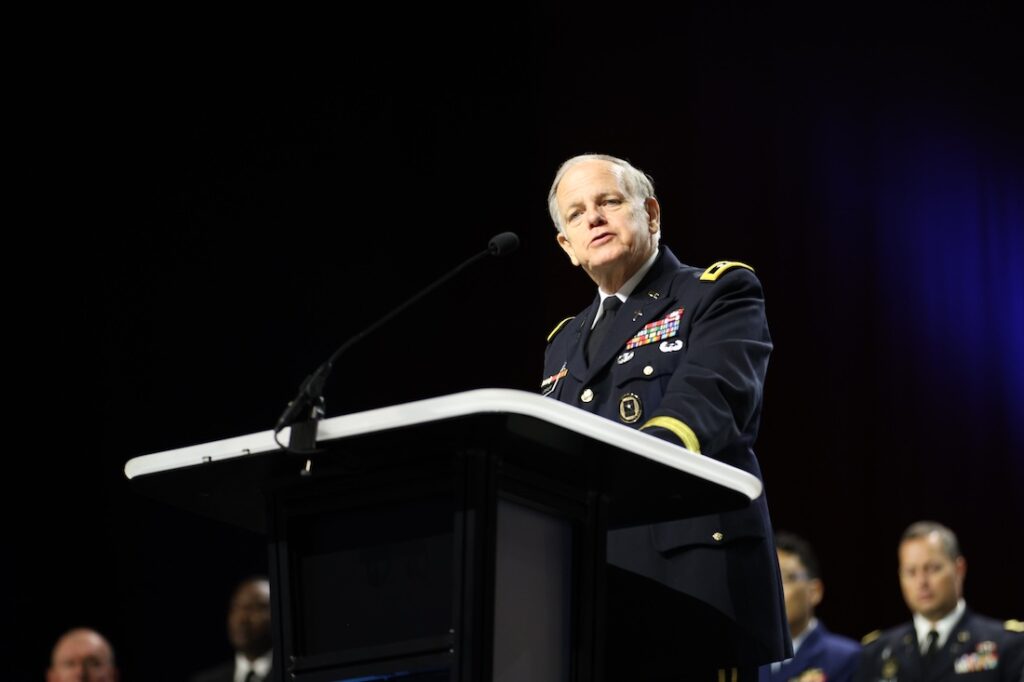
Douglas Carver, senior executive director of chaplaincy for the North American Mission Board (NAMB) and a retired U.S. Army Major General who served as the 22nd Army Chief of Chaplains, oversees the largest Protestant group in military chaplaincy: Southern Baptists.
“I am grateful for Secretary Hegseth’s remarks on this important issue,” Carver said. “In addition to serving as the spiritual leaders for our service men and women, military chaplains are champions of religious liberty within the context of the Armed Services, ensuring that all those under their pastoral care have the opportunity to freely exercise their religious beliefs and practices.”
“Military chaplains play a critical advisory role to their command and staff regarding all matters of religion, morale, and ethics,” Carver said. “The chaplain is the only staff officer in a military organization who, as a service member and an American citizen, has the education, experience, and exposure to religious beliefs, practices, and cultural worldviews to properly advise military leadership in the Constitution’s First Amendment right of religious liberty.”

A chaplain’s duty, Carver said, involves advocacy for the religious liberty of all military members under their care, ensuring everyone can freely exercise their religious beliefs and practices. Military chaplains also have the constitutional right to exercise their religious liberty in accordance with the faith tradition of the denomination that endorsed them into the chaplaincy. In the case of endorsed Southern Baptist chaplains, they faithfully minister in accordance with the Baptist Faith and Message 2000.
Hegseth’s decision comes at a time when spiritual interest among active-duty military members is on the rise. Recent survey data analyzed by social scientist Ryan Burge indicates that there are fruitful opportunities for ministry among service members.
Over the last decade, the number of active-duty personnel between 18-45 years old who attend church weekly increased while the number of civilians in that same age group who attend church weekly decreased over the same period.
Chris Motz, senior counsel for First Liberty Institute, said that Secretary Hegseth’s directive safeguards the religious liberty of military chaplains and other members of the Armed Services against those who have sought to undermine that liberty through the years.
“We commend President [Donald] Trump and Secretary Hegseth,” said Motz in written comments, “for taking bold steps toward protecting religious freedom for those who sacrifice the most to defend it by ensuring that every chaplain in our military is able to fulfill their mission to be the spiritual light for our brave warriors.”
NAMB president Kevin Ezell said on X, “Grateful for this renewed focus on religious liberties and a strong chaplain corps.”
Andrew Walker, ethics and public theology professor at Southern Baptist Theological Seminary, called Hegseth’s announcement “a superb development.”
“I’ve worked with [NAMB] chaplains quite a bit and have two Army Chaplains as doctoral students,” Walker posted to X. “Given the constraints they must work within, I imagine this policy shift will be met with high praise.”
Amy Vitale, government affairs counsel at The Becket Fund for Religious Liberty, highlighted the essential role military chaplains have played for more than 250 years.
“They provide distinctly religious support: leading worship, offering spiritual counsel, and providing religious guidance for troops as they meet the high demands of service to our nation,” Vitale said. “The strength of the military chaplaincy and the strength of our service members are intertwined.”
Along with removing the Army’s spiritual fitness guide, Hegseth also referenced plans to simplify the War Department’s “faith and belief coding system,” which is the methodology the military uses to identify the varied faith and belief traditions represented in the military.
Beyond those immediate changes, Hegseth said that further reforms to military chaplaincy would be forthcoming.
“There will be a top-down cultural shift, putting spiritual well-being on the same footing as mental and physical health as a first step toward creating a supportive environment for our warriors and their souls,” Hegseth said.
Insofar as any future changes bolster the religious freedom and practice of chaplains and other servicemembers, Carver welcomes the direction.
“Our Founding Fathers guaranteed, in our Constitution, the right to freedom of religion, not just freedom of worship,” Carver said. “Religious liberty, in thought and expression, is the key to a spiritually strong and virtuous Armed Forces and produces social harmony within a civil society. I pray that we continue to respect, celebrate, and defend the religious liberty of all our military members.”
Related posts:
 Pastors in Uniform
  FIRST-PERSON: After 250 years, Chaplains remain indispensable “points of light”
  High court urged to accept florist’s appeal
  Exoneration points to need for accuracy in criminal justice Chaplaincy at Fort Benning: It’s All about Presence New Southern Baptist Church Plant Reaching Marines in California Already Running Out of Space
  FIRST-PERSON: From Ground Zero in New York to Building Zero in Baghdad
  FIRST-PERSON: Faith in Action: Honoring Our veterans beyond words