

WASHINGTON (BP) – International adoptions that were halted for about 300 U.S. families can resume on a case-by-case approval basis after the U.S. State Department granted a National Interest Exception impacting immigrant adoptees from more than 70 countries.
But the exception is only an incremental improvement that still “leaves a window for the possibility of visa applications to be denied,” Karla Thrasher, vice president of international ministries for Lifeline Children’s Services, told Baptist Press. An exception is not as helpful as an exemption.
“While we see this as a step in the right direction to provide an exception under the National Interest Exception, our hope is that the White House will consider just the overall exemption,” Thrasher said, “so as to clear up any questions, any doubts, that children would be able to receive immigrant visas. Our plan is to continue to advocate for the exemption.”
In the meantime, Lifeline is celebrating the exception as a step in the right direction.
“We don’t really have a lot of information as to why they would deny visa applications, what the process would look like from there,” Thrasher said. “We sent a list of questions back to the Department of State, just asking for clarification. We’re trying to get that information today.”
The U.S. State Department announced the exception Jan. 28 to immigrant travel visa bans in effect since Jan. 1 and Jan. 21, emphasizing administration support for international adoptions.
“In countries where the issuance of immigrant visas is currently limited or paused, children being adopted by U.S. citizens may qualify for an exception under the National Interest Exception” the advisory states. “Consular posts have been instructed that intercountry adoptions are eligible for National Interest Exceptions under the current presidential proclamation and should be processed on a priority, case-by-case basis. Prospective adoptive families should continue the normal adoption process, including submitting visa applications and attending consular interviews.”
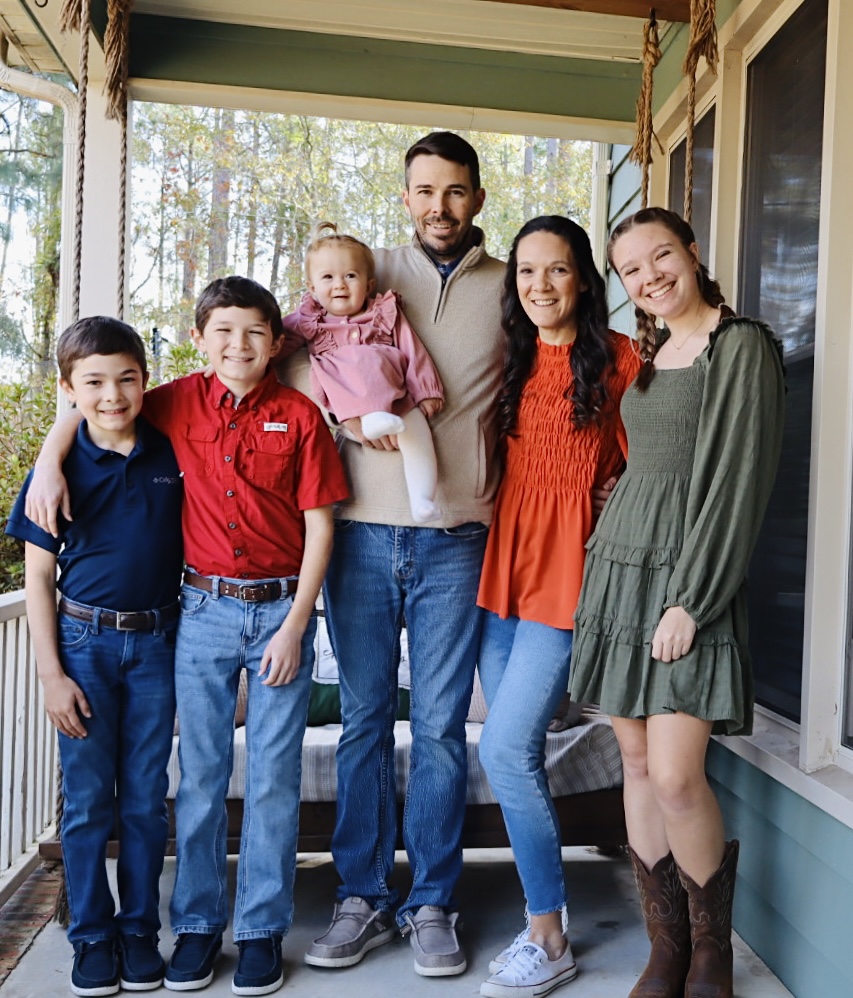
For 10-year-old Grace Pierre Dowey, the exception means U.S. consular officials will determine whether she will be able to gain an immigrant visa to leave an orphanage near embattled Port Au Prince, Haiti, and join her new family in the U.S., Ted and Ashley Dowey and their four children already in the home.
Before the bans were enacted, Grace was to travel to Miami to meet her family in January for the first time in person, and then travel to the family home in another state. The adoption has been completed, and all that remains is for Grace to be allowed to join her family, the Doweys have said.
Grace’s mother Ashley Dowey expressed weariness yet hopefulness upon the change.

“We know that the Lord is in control and you know He’s sovereign over the timing,” Ashley told Baptist Press, “but it’s also hard on a mom and dad’s heart to wait, knowing that that’s our girl and she can’t come home yet.”
There’s also uncertainty regarding the impact of the exception, Ashley said, as her family and friends continue to advocate for an exemption.
“I think our hope is that they would make an overall exemption for orphans and their families in general, and not that we would have to essentially,” she said, “go through a more stringent process to obtain that visa, but that it would be a very smooth, easy thing as it has been in the past.”
Ashley’s daughter Grace hasn’t applied for her travel visa, but is awaiting the completion of required paperwork at Haiti’s Ministry of the Interior. Once complete and with visa in hand, an official in Haiti will accompany Grace to Miami to meet her family.
Grace is among 16 children Lifeline is working with in six countries whose adoptions are completed or nearing completion, including children in Haiti, Brazil, Colombia, Uzbekistan, Kyrgyzstan, Moldova and North Macedonia. The adoptive parents have been working to adopt their children three to five years and have invested “thousands and thousands of dollars,” Thrasher has said, as the children have remained in foster homes, orphanages and group homes in their respective countries.
Lifeline, the largest Christian adoption agency in the U.S., wants to know what criteria will be used in adjudicating individual immigrant visas and whether there are any particular steps the agency needs to complete to ease the process.
“We’re just trying to learn as much as we can so that we can provide the best guidance we can to families that are trying to make decisions as far as do they travel now,” Thrasher said. “Do they wait for more information? What does that look like?”
In its guidance, the State Department said “intercountry adoption remains a high priority for the administration, and adoption-related visas will continue to be processed as expeditiously as possible.”