
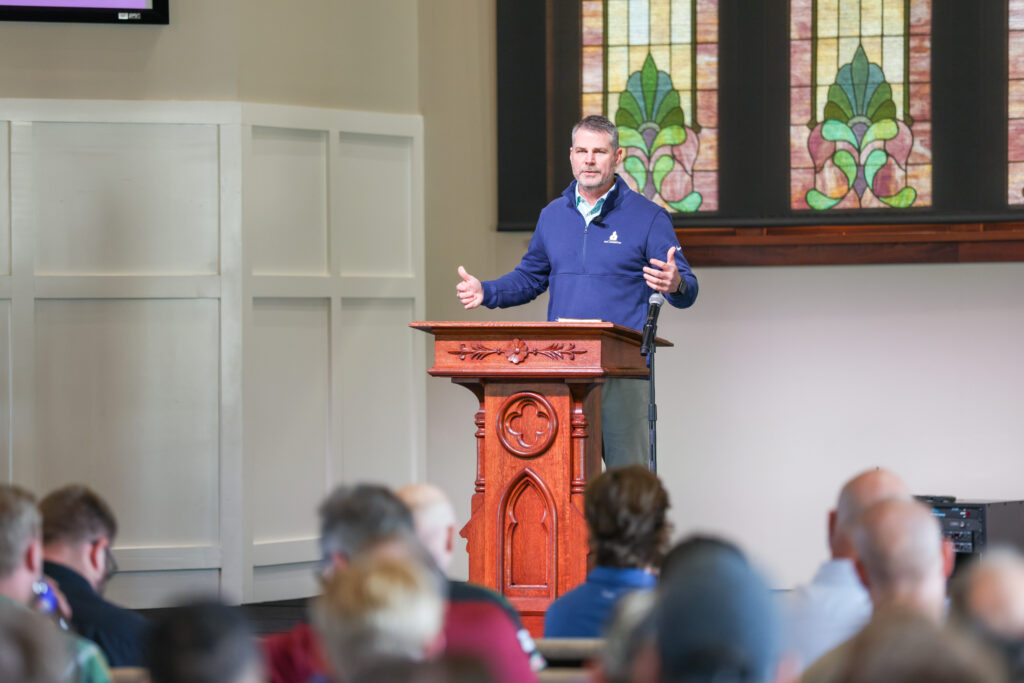
NASHVILLE (BP) – Keith Boggs speaks to about 3,000 men a year in a variety of settings across the country. He has a good feel for the issues at the forefront of men’s ministry and how churches address them.
He is also encouraged by a recent Gallup poll indicating a significant increase in interest by young men toward religion. But, he cautioned, interest is far from enough.
“It needs to be understood in context,” said Boggs, founder of REAL MOMENTUM Ministries. “In Mark 6:34, Jesus looks at the crowd and sees people like sheep without a shepherd. That’s where many young men are right now. They’re showing up, they’re open, but they’re not yet connected.”
He pointed to Titus 1 and 1 Timothy 3, passages that illustrate God’s design for “qualified, godly men who lead with integrity and clarity” to draw others into discipleship.
“It’s a call for strong, faithful leadership to step in and guide the young men who are looking for answers,” he said.
The percentage of American men age 18-29 who said religion is “very important” in their lives leaped from 28 percent in 2022-23 to 42 percent in 2024-25, according to the poll. Women in that same bracket over that time dropped from 32 percent to 29 percent.
The result is the highest for young men since 43 percent affirmed religion’s “very important” status in their lives in 2000-2001.
World events can certainly factor. Churches filled up after 9/11. Charlie Kirk’s assassination last fall had a similar effect on young men who had watched his videos defending the faith on college campuses.
Terry Dorsett serves as assistant pastor at First Baptist Church in Marlborough, Mass., in addition to his role as executive director for Baptist Churches in New England. First Baptist’s history goes back 158 years, and like many urban congregations, recent decades have seen women outnumbering men in the seats.
“Over the last two years, that tide seems to have turned,” Dorsett told BP. “A wave of young men, especially young men of color, has begun attending the church. Many come alone, with no prior connection to the congregation.”

Some attend with extended family and friends. Several are immigrants, he added, and discovered the church’s online services, leading to a visit.
A noticeable increase came after Kirk’s death, but not due to a type of hero-worship of the conservative commentator.
“These young men didn’t necessarily agree with his viewpoints. In fact, some would adamantly disagree with him,” said Dorsett. “But several have said Kirk believed in something strong enough that he was willing to die for it, and they wanted something they could believe in that strongly.”
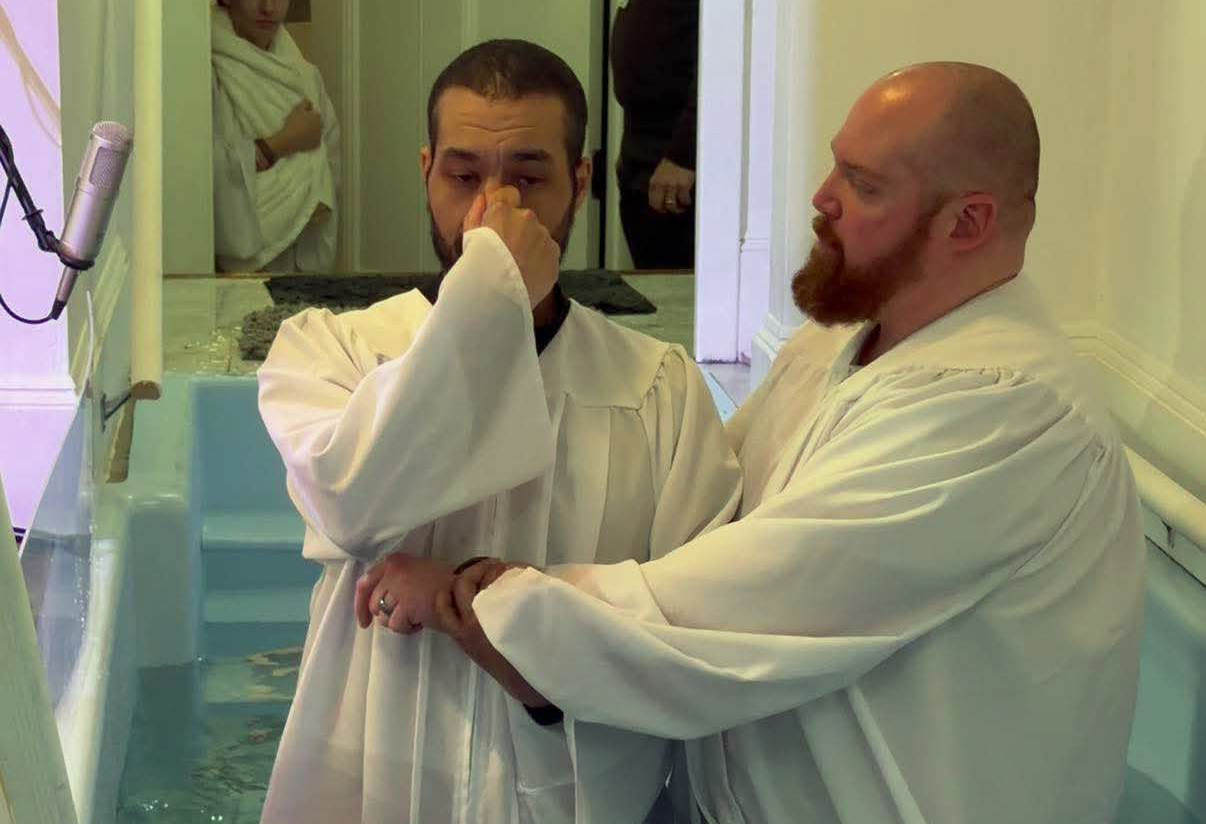
The church baptized five young men – including one in his 30s – on Easter Sunday. Two more spoke with Lead Pastor Logan Loveday after the service and will be baptized at the end of the month.
“God is doing something significant in the hearts of young men,” Dorsett said. “Our prayer is that we can effectively join God in His work.”
Men of varying ages in Alexandria, La., meet every Friday morning at Calvary Baptist Church as part of The Quest. Senior Pastor Todd Strain said the men’s ministry’s role in equipping young disciples has only grown in importance.
“In recent years, there has definitely been an openness to the Gospel,” he said. “Evangelism is the spear for discipleship, and those are built on relationships. We want to connect them with another man or group of men.
“There’s no better time to get something going to connect with them. Gen Z is favorable to face-to-face encounters, and that’s ideal with discipleship. It seems there’s an open door and it’s a good time to strike while the iron is hot.”
The increased interest in religion did not translate into a similar increase in identifying with a religious faith, indicating a large group of those not yet anchored in solid theology. The desire apparently exists, though.
“Young men are feeling the weight of a culture that hasn’t given them a clear identity or purpose, in the home or the church,” said Boggs. “They are searching not just for belief, but for direction. They want older men to step in and show them what a godly, stable life actually looks like. They aren’t resource-deficient; they are relationship-deficient.”
The different responses to interest in religion and identification with a particular faith are important, he said.
“Deep down, they know and feel that they could be more than who they have become. But they’re not sure where to find help. Young men today have a growing curiosity about spiritual things, but commitment hasn’t caught up yet.
“This moment isn’t just about a rise in interest,” Boggs said. “It’s about a call to raise up men who meet the qualifications of Titus 1 and 1 Timothy 3, and who are matured in Christ as Colossians 1:28-29 describes.
“If the Church responds well, this could shape an entire generation.”