
DALLAS (BP) – Vocational satisfaction, mental health and relational wellbeing continue to challenge pastors despite growing assurance in their calling, newly released State of the Church research found, with many pastors under 45 also citing financial concerns.
While pastors are less exhausted and more confident in their calling, vocational satisfaction remains at its lowest point in more than a decade, Barna Group and Gloo said of the findings among Protestant senior pastors in the U.S. from a diversity of denominations.
More than half of all pastors surveyed, 52 percent, said they need the most help to feel physically and mentally healthy, but that portion rose to 62 percent among pastors 45 and younger, researchers said. Many, 41 percent of all pastors and 38 percent of those under 45, said they also could use help establishing close and supportive relationships. Well over half of pastors, 58 percent, expressed confidence in their calling, rebounding from the 35 percent who cited such confidence in the COVID pandemic years spanning 2020-2022.
“By several measures, pastors in 2026 are in a more sustainable season of overall wellbeing than they have been in years. Pastoral exhaustion is down. Confidence in one’s calling has largely rebounded from its pandemic low,” researchers wrote. “What has not recovered is deeper vocational satisfaction.”
While 72 percent of pastors said they were “very satisfied” with their vocation in 2015, that portion has dwindled to 52 percent, researchers said.
Barna’s research, in cooperation with Gloo, was conducted Jan. 29 through Feb. 8 among 502 senior Protestant pastors.
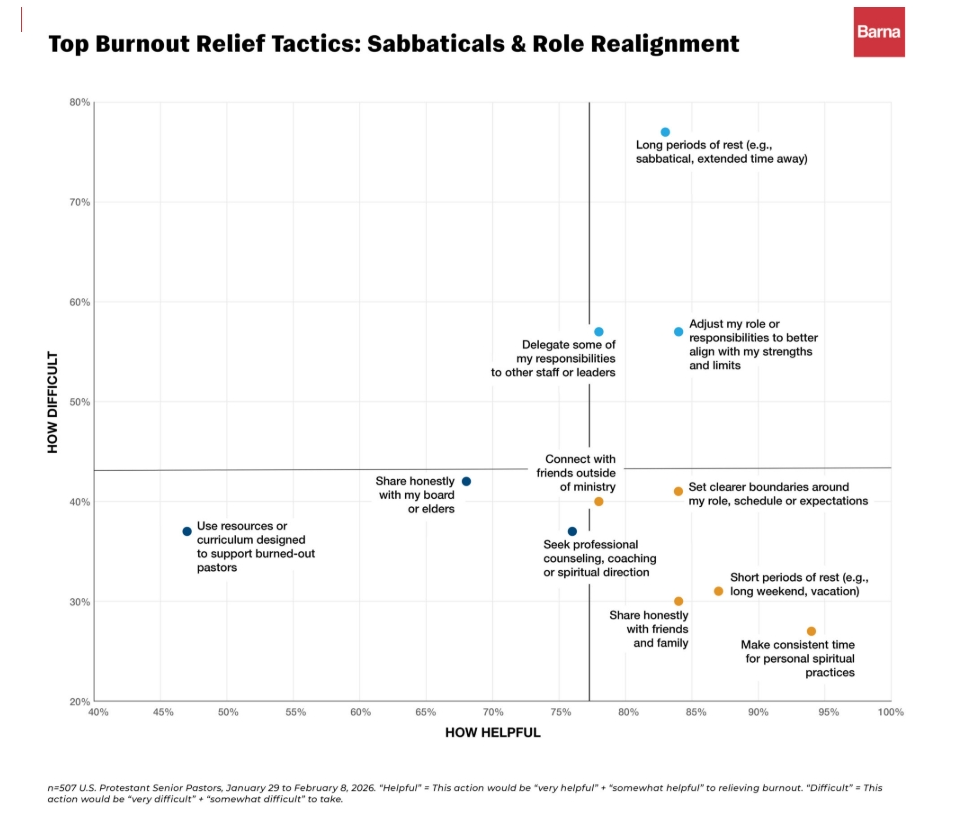
Gauging burnout, pastors said the resource that would help them most – sabbaticals or extended time off – was also the most difficult to attain. Pastors said it would also help to delegate some of their responsibilities to other staff, and to adjust their duties to better align with their strengths and limits.
“Pastors deserve the time to step away and ask honestly whether their role is an expression of their actual gifts,” said Daniel Copeland, Barna’s vice president of research. “We need church leaders who are in touch with themselves, in touch with God, and living in alignment with how they’re made. If there’s any vocation we want liberated from the mundane, it’s this one.”
“There’s a difference between recovering from burnout and actually resolving it,” Copeland said.
“Consistent rest, boundaries and personal spiritual practices build the weekly rhythms that keep a pastor healthy,” he said. “But the deeper question – whether your role is genuinely an expression of your gifts and strengths – requires a different kind of time and attention altogether. That’s the work most pastors haven’t had space to do.”
While most pastors aren’t able to take extended sabbaticals, researchers recommend smaller changes that can also impact wellbeing. Among them:
- Take care of physical and mental health by taking time away from the work desk, getting consistent sleep and participating in physical exercise not related to ministry obligations. “These register in the data as real contributors to restoration,” researchers wrote, “not merely nice additions to a busy schedule.”
- Nurture and consider building more relationships. Pastors said they primarily rely on spouses for relational support, followed by fellow pastors or ministerial leaders. “Close friends outside the congregation are named by 42 percent. Mentor or spiritual director rank lower, at 30 percent, and a counselor or therapist lower still, at 18 percent,” researchers said, describing these as “support structures that remain underutilized across the profession.”
An overview of the findings is available here, with more extensive data also available.