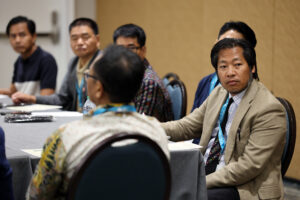

ORLANDO, Fla. – “This is a very powerful tool,” Victor Chayasirisobhon gushed Wednesday morning, June 10, at an hour-long meeting of the Ethnic Research Network. “This is going to save me hours and hours – if not days! – of work.”
Chayasirisobhon, director of missions for the Orange County (Calif.) Southern Baptist Association, expressed amazement at the wealth of information he was seeing at a meeting for ethnic leaders at the 2026 SBC Annual Meeting in Orlando. The meeting was designed to roll out a new web-based tool for leaders of ethnic church networks wanting to take a deep dive into area demographics.
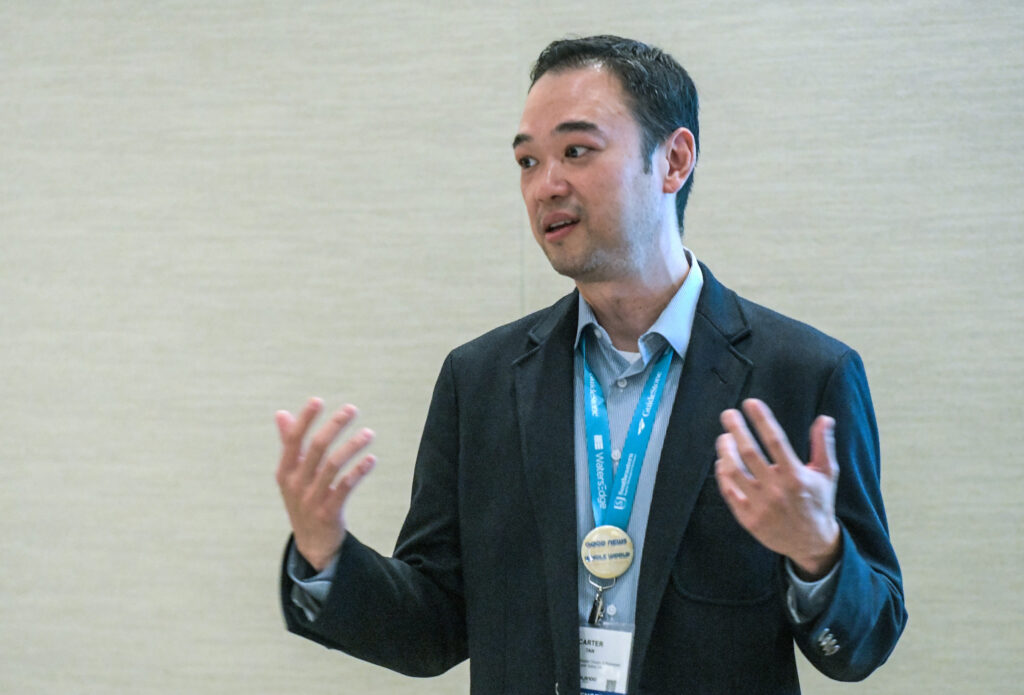
“This meeting is to introduce you to the new web page we have created,” ERN President Carter Tan told the dozen leaders present. “This replaces the baptistresearch.com website going forward.”
The Ethnic Research Network’s purpose is to visually tell stories of Southern Baptist diversity through data, Tan continued. “ERN focuses on our shared commitment to advance the Gospel in every community for the Great Commission.”
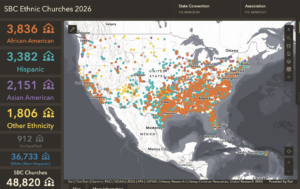
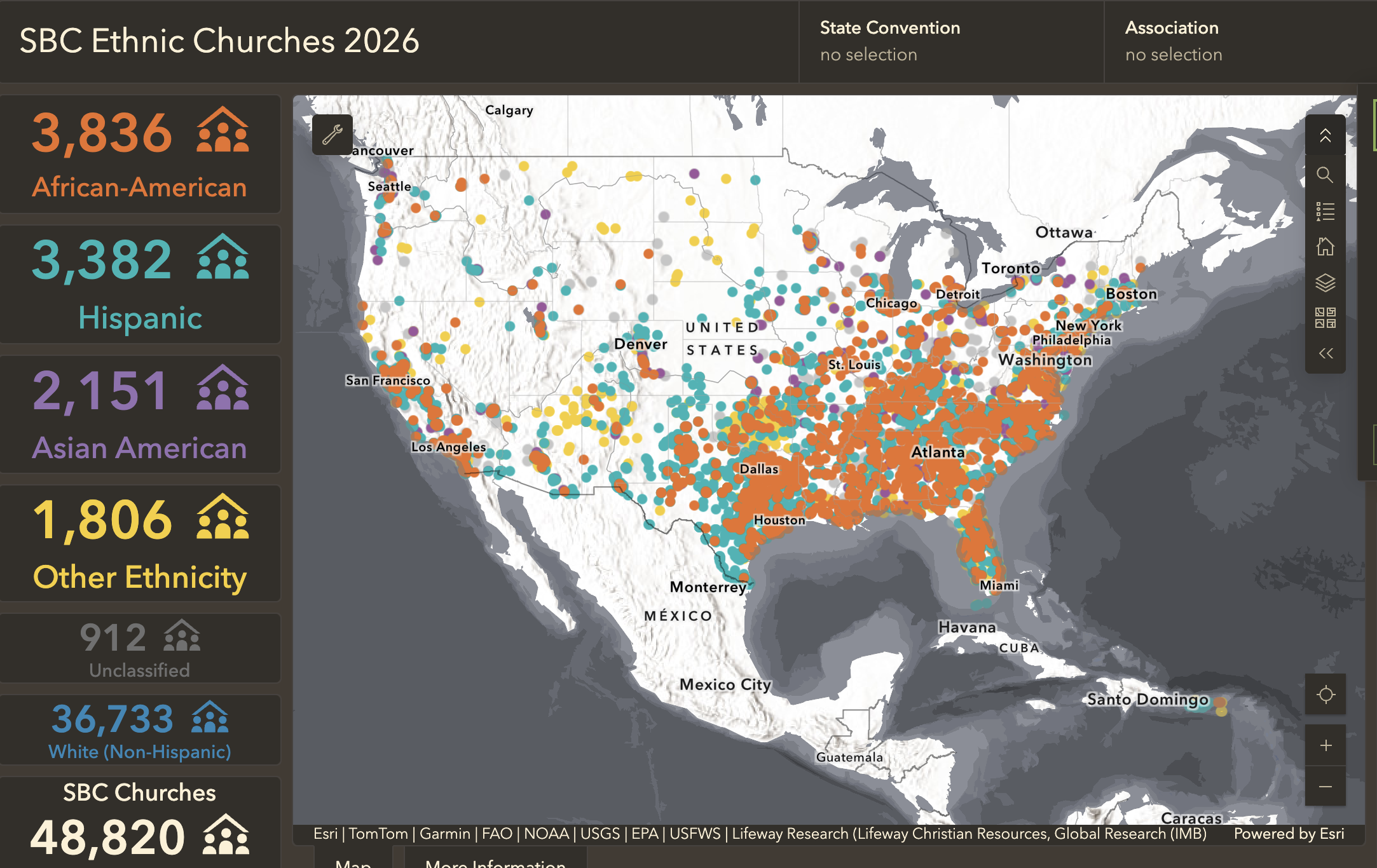
The tool is a “dashboard” that highlights ethnic churches across the nation. The dashboard can be filtered to the associational and state convention level.
“You can begin using it now to look at ethnic diversity across the United States,” continued Tan, who also is English Ministry Elder of Grace Chinese Baptist Church in Richmond, Va. “This will help you drive some strategic decisions in ethnic ministry for your area.”

ERN VP Brent Waldrep, a member at The Trails Church in Celina, Texas, and a data analyst for IMB, provided a quick overview of the website’s capabilities, after explaining where it is located:
The Ethnic Research Network is part of the Diaspora Missions Collective, a collaborative initiative between the IMB, NAMB, WMU and the SBC’s six seminaries. ERN research is housed on that website: dmcollective.org. To use the research, select “network” on the home page and select “Ethnic Research Network” from the menu.
“We tell stories of SBC diversity through the visualization of data,” Waldrep said. “This helps ethnic leaders look at their churches in their context, which helps them look to the future.
“With this tool, you will be able to see which areas in your region are growing or declining in population, the foreign-born composition at the county and neighborhood level, and which neighborhoods or communities need a new evangelistic or ethnically evangelistic church.”
As of late May, the SBC consisted of 48,820 churches, according to ERN’s front page. This includes 3,836 African American churches; 3,382 Hispanic churches; 2,151 Asian American churches; 1,806 labeled “other ethnicity;” 912 “unclassified” churches; and 36,733 white (non-Hispanic) churches.
With this new web presence, ethnic leaders are able to see what the census data is for states, counties and for neighborhoods within counties, Waldrep said. The data provides information such as population, whether it is increasing or decreasing in a defined area, the ethnic diversity of an area, and the income level. A search can also be made to see all the churches – and the churches’ ethnicity – in that area.

There is much more to this illustrative data, said Waldrep, who has worked for the International Mission Board for 24 years in data collection. He followed the path blazed by Minh Ha Nguyen before the IMB data scientist’s untimely death after being caught in a riptide on vacation in 2024.
It was Nguyen who figured out how to visualize data – numbers – to make it easier to strategize ministry plans. He built an earlier website for the U.S. to capture the visual “stories” as he liked to call them, from America, based on material he had developed for IMB’s worldwide scope.
On one screen – which Waldrep calls a “map” – a dot represents a church. When the dot/church is clicked on, the ethnic church’s already public information is displayed. (A church’s information can be updated at any time by a designated person informing a designated person at the associational or state convention office.)
In addition to a church’s name, address and other basic information, a pop-up window also shows what association and state convention the ethnic church is part of, as well as its ethnic category/ies and sub-category/ies.
The ERN’s web presence enables the viewer to see all ethnic churches by large ethnicity, such as Asian, and that ethnicity’s sub-groups, such as Cambodian, Chinese, Filipino and several more.
An inherent weakness of ERN’s web presence is that it is reliant on information gleaned from outside sources, primarily U.S. census data, (which can become outdated) and the SBC’s Annual Church Profile, Waldrep said.
A third of Southern Baptist churches do not turn in their annual ACP report, which is due by January for the previous year. Report forms are available on state convention websites.
“By using this data, an ethnic network is able to plan for the future,” Waldrep said. “By looking here – this website – they can see what nationalities are moving into the area and compare those numbers to available churches to see if a church should include more diversity or to see if there is an opportunity for new church plants.
“I showed this to Frank Williams the other day,” Waldrep continued. (Williams is executive director of the Baptist Convention of New York.) “He was like, ‘Man, I love this!’”
The Baptist Convention of New York includes 454 churches, 200 of which are in the Metro New York Baptist Association, Waldrep said Williams told him. About 50 percent of Southern Baptist churches in the state of New York are ethnic churches; about 70 percent of those in the Metro New York Baptist Association are ethnic churches. The ERN VP showed Williams which areas of the city had a concentration of which ethnicities, and which SBC-affiliated churches of which ethnicities were in each area.
“It was easy to see divergence in ethnicity and in Southern Baptist presence,” Waldrep said. “Visualization shows you where more churches are needed, and for which people groups.”
Rural areas also are seeing an influx of foreign born, Waldrep said.
Last year Waldrep made a visit to Guyman, Okla., a rural town of about 13,000 residents. While there he joined local Baptist leaders on a visit to one of the pork processing facilities.
“The nations of the world were there working in that pork packing plant,” Waldrep said. “In the plant cafeteria, flags of countries from around the world pointed to the global nature of that work force that had moved to a rural town in the panhandle of Oklahoma.”
The mood in the room was one of amazement at the wealth of information available to ethnic leaders.
“The first thing I said when I saw this the other day was, ‘These are the things I am looking for to help my church navigate my community,’” said Bruno Molina, executive director of the National Hispanic Baptist Network.
Big picture: About 23 percent – nearly a quarter – of Southern Baptist churches identify as ethnic, and the biggest increase in Southern Baptist churches are among non-Anglo ethnic groups.
“With this new web-based tool, we can help you identify where the people groups are, and where churches to spread the gospel are needed,” ERN President Tan said. “It’s about knowing our context so we can develop strategies to reach people with the Gospel.”

Related posts:
 Wide range of SBC ethnic fellowships to meet in Orlando
  Presidential candidate appearances highlight unity, key differences heading into Tuesday vote
  Brazilian Baptist pastors expand events to include SBC 2023
  National African American Fellowship continues five-year Vision 2030
  Messengers deem Saddleback, two other churches not in friendly cooperation with SBC
  2015 Annual Meeting Story Collection
  ‘One Mind, One Voice’ to be the theme for Indianapolis gathering
  Hispanic pastors discuss leading a church out of COVID