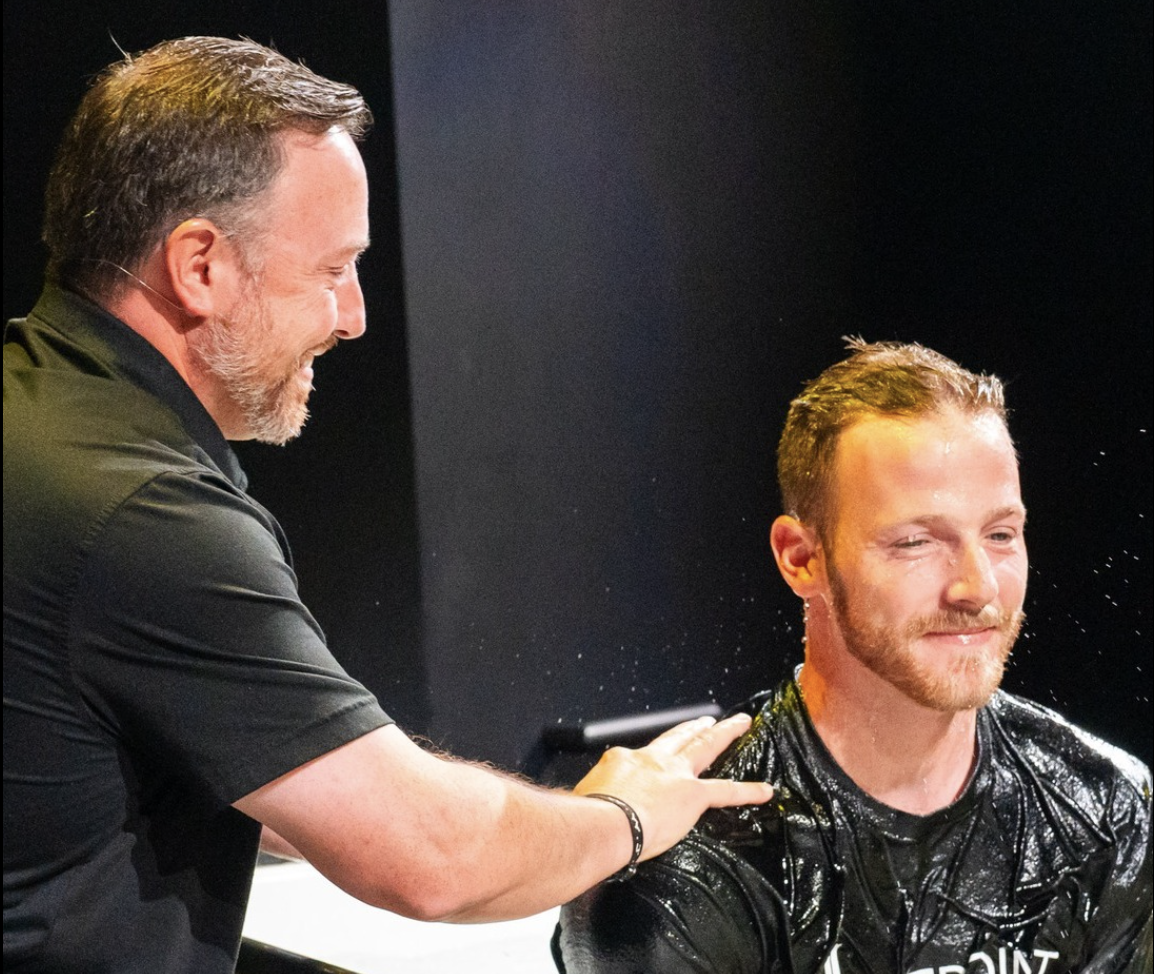

NASHVILLE (BP) – Southern Baptist churches in New England have 10,000 more people attending worship now than they did a decade ago. In Ohio, churches gave a record amount through the Cooperative Program last year, and in Michigan, baptisms increased by 15 percent.
Southern Baptist Convention Executive Committee President Jeff Iorg said one reason for growth in regions outside the South is the sheer focus that is required to succeed.
“Frankly, the leaders are trying to build something, and there’s just no time or money to put into anything other than the core,” Iorg told Baptist Press, adding that Southern Baptists have poured a tremendous amount of prayer, giving and partnerships into emerging regions.
Terry Dorsett, executive director of the Baptist Convention of New England, said aside from God deciding “to show us His favor,” the staff has “worked really hard to mobilize our non-English-speaking churches.”
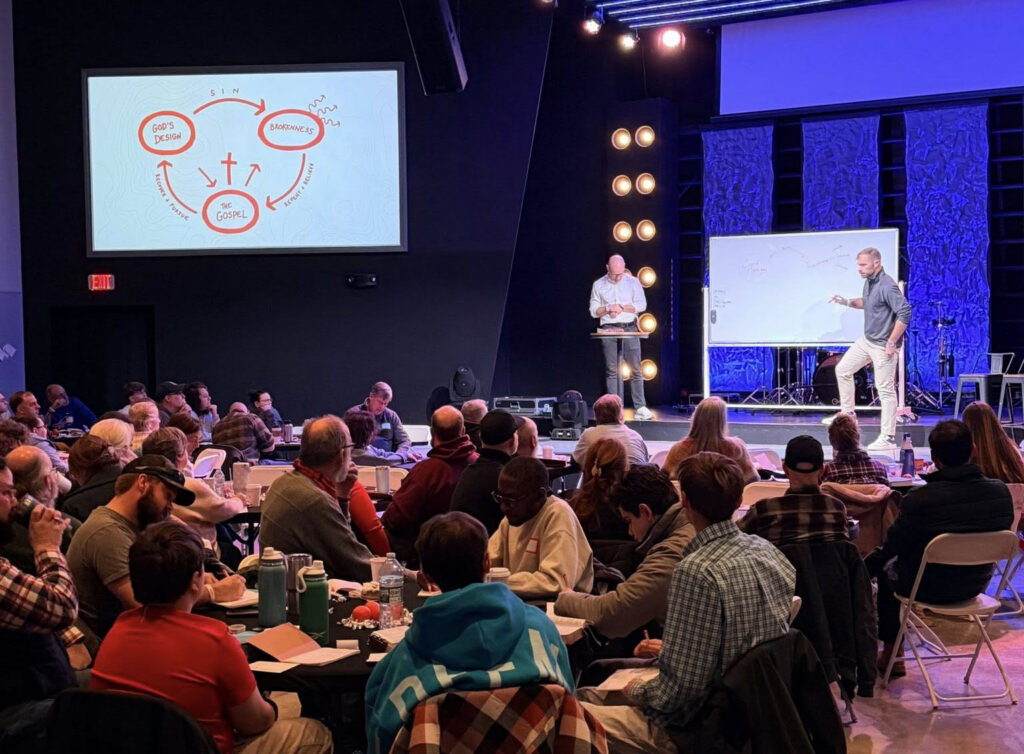
Fifty-seven percent of churches in the New England convention worship in a language other than English, up from 51 percent five years ago. That includes 25 languages every Sunday morning, Dorsett told BP. “Most of our growth is coming from non-English-speaking churches.”
When the New England staff saw that God was working particularly among international churches, they shifted their composition.
“We’re no longer just all white people,” Dorsett said. “We have two Egyptians, two Brazilians, a Haitian. Our staff is becoming multiethnic, and it’s allowing us to get deeper into these non-English-speaking churches. We’re finding that many times, these people are far more responsive to the Gospel than some of the native New Englanders who’ve been here for generations.”
In Ohio, churches gave $4.8 million through CP last year, up from $4.3 million in 2022. This is after the convention voted in 2016 to forward 50 percent of CP giving from churches for national and international missions and ministries.

Jeremy Westbrook, executive director of the State Convention of Baptists in Ohio, told BP a CP emphasis there has included casting a vision for those who are not familiar with CP, creating value by serving local churches and calling for investment by asking churches to give sacrificially.
“I have churches every year who join our state convention simply because of the Cooperative Program,” Westbrook said. “I had lunch with a church planter two years ago, and he said, ‘This Cooperative Program thing is absolutely phenomenal. Has everybody heard about it?’ I said, ‘I think they’ve heard about it. I think many have forgotten the power of it.’”
Along with higher CP giving, baptisms are up 121 percent over four years in Ohio, Westbrook said, and church planting numbers are among the highest in decades. “In the Midwest, there is a Gospel receptivity.”
Westbrook sees the challenge of reaching the lost not so much as a geographical issue these days but as a generational one.
“In the age of social media and AI, I think there is a genuine hunger among a new generation that’s asking, ‘What is truth? How do I make my life count?’ I think our pastors in Ohio are responding to that question … with the Gospel and the hope and the answers that they’re looking for.”
In Michigan, a 15 percent increase in baptisms last year meant 1,657 people publicly declared their faith in Jesus in Southern Baptist churches. Average weekly worship attendance grew by 19 percent with 22,491 Southern Baptists gathered each week across the state.
“That’s not just growth. That’s lives being changed and churches being renewed,” said Ed Emmerling, executive director of the Baptist State Convention of Michigan.
Michigan Baptists gave more than $940,000 to missions last year, representing a 15 percent increase. Giving through the state missions offering, the Lottie Moon Christmas Offering for International Missions and the Annie Armstrong Easter Offering for North American Missions exceeded $506,000, a 26 percent increase.
“Lives are being transformed, churches are being strengthened and the Gospel is advancing across our state and beyond,” Emmerling said.
Such progress in regions not historically saturated with Southern Baptists shows that “with persistence and endurance, the Gospel can grow in every context,” Iorg said.
“I think it’s important to remember that every place was a hard place in the beginning,” he said. “When the Gospel arrived in Georgia and Alabama, it was hard. It flourished over the centuries. When the Gospel arrived in other places in the United States, much later, it’s still in the process of growing to the point that it’s thriving.”
Pastors who serve in regions outside the South often labor in a “never-Christian culture,” Iorg said. “There’s never been a Christian subculture that supports biblical literacy, church participation or Christian values.”
In the South, the Baptist college system for years turned out teachers, coaches, accountants, nurses, counselors and engineers, he said. Such people became the backbone of Southern Baptist churches.
“There is no infrastructure like that in these nontraditional areas that is producing this kind of leadership base that the churches can draw on,” Iorg said.
In response, Iorg wants to challenge Southern Baptists, especially younger Southern Baptists, to consider going to emerging regions to plant their lives and build their careers.
“If you’re thinking about starting your career as a public school teacher, why not do it in Boston or Billings rather than Birmingham?” Iorg said, highlighting the significant opportunity for large numbers of Southern Baptists to be on mission as the church support leadership base needed in other regions.
“When a person goes to one of these other cities and plants themselves and invests their time and their money and their spiritual heritage and training that they’ve already received, they’re making a tremendous investment in the mission,” Iorg said.
It was the “great honor” of his life to serve in the Pacific Northwest and in California for many years, Iorg said. “There is nothing to fear about going to these regions. There is everything to be gained if God is leading you. I would say, ‘Go.’”
Related posts:
 YEAR IN REVIEW: Top 12 most-read stories in 2024
  SBC DIGEST: Florida Baptists respond to Jamaica; Crossover ’26 registration opens
  Chinese fellowship addresses women’s roles, pastoral title in ministry
  SBC DIGEST: Litton to address UM graduation; Ohio Baptists to sell Seneca Lake facility
  The Salt Company seizing unprecedented opportunity to reach college students
  Questions can lead children to Jesus, ministry leader says
  STATE MEETINGS: West Virginia, Iowa
  Salt Lake City construction plans force proposed change for 2027 SBC Annual Meeting