
NASHVILLE (BP) – Scoffers of the Christian faith often reject the gospels as eyewitness testimony of Jesus’ life, death and resurrection.
But is that true?
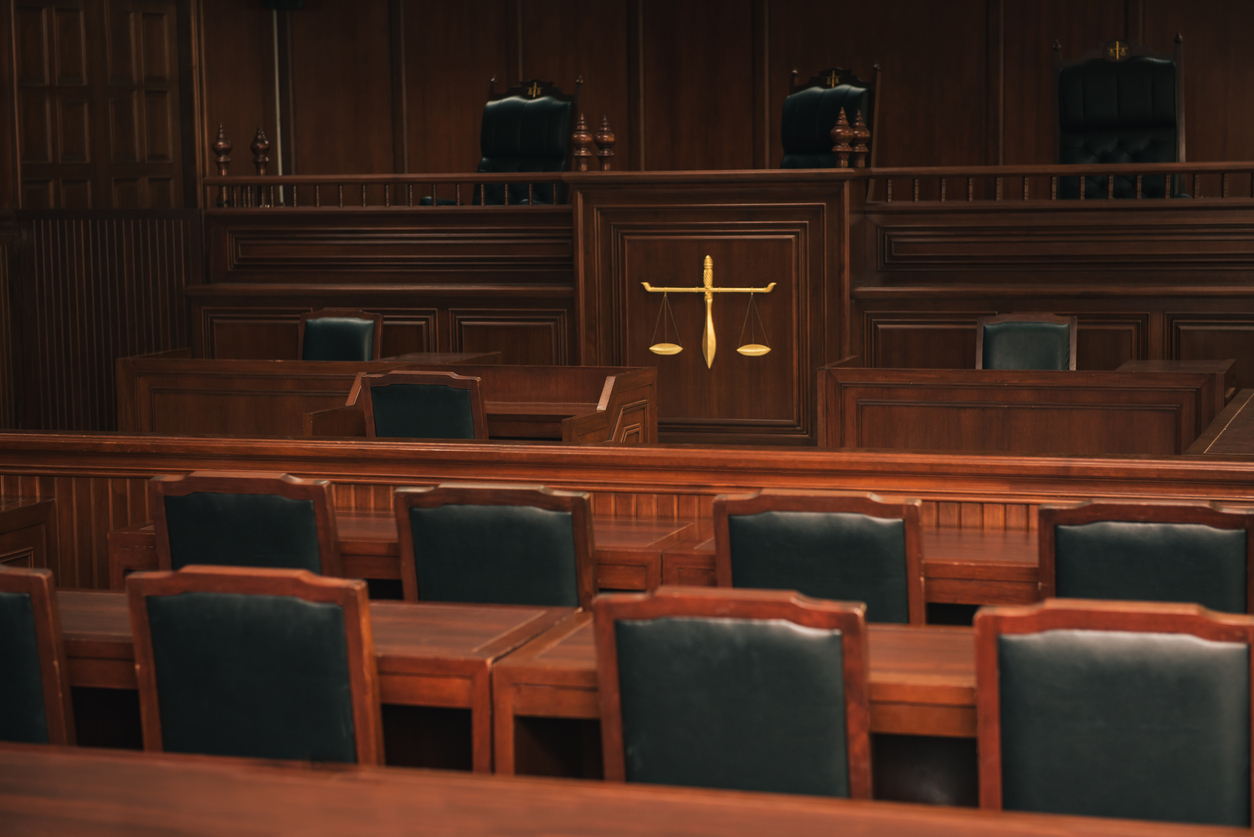
William Kennedy, a criminal defense lawyer, former public prosecutor and a Southern Baptist, sees the resurrection accounts as consistent with eyewitness testimony. In an interview, Kennedy talked about eyewitness testimony and evidence as viewed in the courtroom.
Charles Quarles, research professor of New Testament and biblical theology and director of the Caskey Center for Biblical Text and Translation at Southeastern Baptist Theological Seminary, weighed the gospels in light of legal standards.
This question of whether the gospels provide eyewitness testimony is important in today’s culture where many do not hold Scripture in high regard, Quarles said.
Drawing from 1 Peter 3:15, Quarles said, “We should be prepared to use sound reason to support our convictions about Jesus and about the reliability of the New Testament.”
Is the evidence trustworthy?
“The cornerstone of the admissibility of evidence is trustworthiness,” Kennedy said. “That’s the big question. Is it trustworthy?”

In the courtroom, “trustworthy” means simply that the evidence is “reliable and authentic; that it appears to be what it claims to be,” Kennedy explained.
A judge examines the evidence, “and if it is trustworthy, then that evidence will proceed to the next level which is, ‘We’ll let a jury consider it,’” Kennedy said. He added that the jury’s task is to decide if the evidence is convincing.
At the SEBTS Caskey Center, the more than 5,000 Greek NT manuscripts are researched and translated.
“Yes, the evidence is ‘what it claims to be,’” Quarles affirmed. “Although there are some differences between our ancient manuscripts, they all bear the same testimony to Jesus. I could preach the Gospel of salvation just as faithfully from any of the Greek manuscripts.
“We have no NT manuscripts that deny Jesus’ deity, His authority over our lives, His sacrificial death or His bodily resurrection … that offer another way of salvation except by faith in Jesus … that deny the virgin birth or the miracles of Jesus,” Quarles continued. “In other words, the evidence is trustworthy.”
Differences in the eyewitness testimony
Some reject the gospels as eyewitness testimony by pointing to the differences between the accounts, such as the number of angels at the empty tomb.

Differences between eyewitness testimonies do not necessarily rule them out, Kennedy said.
“Eyewitnesses describe events in different ways,” Kennedy gave as one reason truthful testimonies differ. “It is possible what they’re describing wasn’t exactly how it happened. That doesn’t mean it didn’t happen.”
Attorneys know testimonies that match too closely can mean the eyewitnesses “got together to get their story straight” and that differences in testimonies can mean they are telling the truth, Kennedy explained.
A former prosecutor in Atlanta, Kennedy said die-hard Atlanta Braves fans remember the final game of the 1992 National League Championship Series in which first baseman Sid Bream slid into home in the bottom of the ninth inning to win the game and send the Braves to the World Series.
“That is a memory sealed in Atlanta Braves fans,” Kennedy said. “And if you asked 10 people about that play, that at-bat, that famous Sid Bream slide, they’re going to tell you in 10 different ways.”
A second reason eyewitness testimonies may differ, Kennedy explained, is that traumatic or startling experiences, such as an armed bank robbery or seeing an angel, can leave gaps in an eyewitness’ memories.
“[A traumatic event] puts people in a completely different state of mind,” Kennedy said. “The emotional state you’ve been taken to in a quick amount of time will literally put holes in your memory … the angel appearing is like the big gunshot.”
Kennedy said eyewitness testimony in the courtroom can vary widely regarding key details: hair color, race, number and gender of perpetrators; timeline of events; type of weapons used, and other details.
Still, jurors can reach verdicts, Kennedy said. “That where’s corroborating evidence comes in handy.”
Biblical scholars point to the thousands of NT manuscripts in Latin, Coptic, Syriac and other ancient languages; Roman and Jewish writings that mention Jesus or His followers; archaeological finds confirming NT sites and timelines; and other avenues, as corroborating evidence for the gospel accounts.
Differences, similarities point to truth telling
Quarles went one step further by pointing out that differences are not the same as disagreements.
Matthew and Mark mention one angel at the empty tomb. Luke and John say two.

“[This] is indeed a difference in the accounts,” Quarles said. “But it would not be a contradiction or disagreement unless Matthew and Mark had said that only one angel was present at the tomb, and they do not say this. We find many differences between the gospels but we do not find disagreements.”
Quarles agreed with Kennedy that differences between the gospels can indicate “independent testimony,” but that the many similarities between the gospels also point to truth-telling.
In the gospels, “the testimonies about Jesus’ deeds and teachings are often amazingly similar, agreeing even verbatim line after line.,” Quarles said. “That could mean that the gospel writers collaborated or that one gospel writer used an earlier gospel as one of his sources. It certainly does not imply that the matching testimonies are unreliable.”
As in the courtroom, Scripture views corroborating testimonies as crucial, Quarles explained. He pointed to Deuteronomy 19:15 and its requirement for two or more witnesses as “the threshold of reliable testimony.”
“We see this corroboration of independent testimonies in the gospel accounts,” Quarles said. As example, he noted the “amazing agreement in detail” between the accounts of Jesus’ feeding of the multitudes.
Quarles noted that while John’s gospel uses “significantly different” wording than the other gospels, the details are the same: “the location of the event, the size of the crowd, the value of the bread necessary to feed such a crowd, the command to sit on the green grass, the use of specifically five loaves and two small fish, the number of baskets of leftovers, and still more details.”
John gives additional details the other gospels do not include, Quarles said, including that the five loaves and two fish belonged to a boy, and that the loaves were made of barley.
This satisfies one test of reliability used in biblical scholarship, “the criterion of multiple independent attestation,” Quarles said.
Imperfect eyewitnesses
An eyewitness’ character flaws or troublesome background will prompt a courtroom attorney to expose compromising information to the jury as soon as possible to mitigate a bad impression, Kennedy said.
“As an attorney, I can’t pick my eyewitnesses,” Kennedy said. “But even if the witness has flaws, his testimony can communicate the truth.”
Quarles noted that “the criterion of embarrassment” is another test of reliability which holds that fictional accounts would not highlight the main characters’ shortcomings.
“It is hard to imagine,” Quarles continued, “that the apostles had no embarrassment over the fact that Jesus’ betrayer was one of their own, that the leading apostle Simon Peter denied Jesus three times, or that some of the disciples continued to doubt Jesus’ resurrection despite the adamant testimony of fellow apostles even after witnessing Jesus’ post-resurrection appearances themselves.”
Being an eyewitness requires courage and is persuasive evidence the testimony is true, Kennedy said.
“Why would [the witness] put herself through this again?” Kennedy said of facing the perpetrator in court. “To look him in the eye, to be around him; it’s powerful.”
For the disciples, their testimony of Jesus’ life, death and resurrection came at great cost, Quarles pointed out.
“If someone wants to claim that the apostles … were liars, he would need to explain what the apostles had to gain by their deception,” Quarles said.
“Rather than being idolized, they were constantly humiliated,” Quarles continued. “Rather than becoming materially wealthy, they made enormous financial sacrifices. Rather than living in luxury and comfort, they were persecuted, tortured, and in some cases, even martyred. Only an insane person would testify at such great cost if they were not convinced that their testimony was true.”
Quarles pointed to Paul’s perseverance (1 Thessalonians 1:4; 2:2); Peter and John’s boldness (Acts 4:20); and the disciples’ persistence after being flogged (Acts 5:41).
“These men did not bear testimony to Jesus timidly, hesitantly, or with a yawn of boredom,” Quarles said. “Their testimony was passionate, courageous and full of conviction.”
Quarles works with the Greek NT manuscripts “every day” through his work and writing, he said. He concluded, “I have encountered nothing in my study of the ancient manuscripts that shakes my faith in Jesus or in the reliability of the New Testament.”
Related posts:
 The Authority of the Bible God the Son ~ His Redeeming Work on the Cross
  FIRST-PERSON: Doctrinal fidelity without methodological conformity
  FIRST-PERSON: Peace that floods our hearts
  FIRST-PERSON: For the Bible tells me so
  ETS regional meetings: ‘a joy’ for SBC seminaries Hell—The Place of Everlasting Punishment
  Reformers urged learning of biblical languages