Christians in Burma/Myanmar continue to suffer systematic violations of religious freedom carried out by the military junta known as the Tatmadaw, according to a Jan. 29 briefing hosted by the Burma Research Institute.
Christians affected are in Chin, Kachin, Karenni, Karen states (those inhabited by the Karen ethnic group), and the Sagaing region. Systematic violations include church bombings, imprisonment of pastors, and killings of Christian leaders.
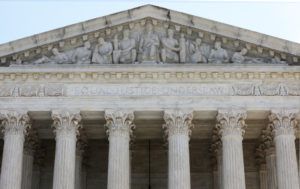
Robin Stoops, Burma Research Institute board chair and former associate general secretary of American Baptist Churches USA, and Zo Tum Hmung, Burma Research Institute president and CEO conducted the briefing in the Dirksen Senate Office Building in Washington, D.C.
The immense violence in the region has resulted in the U.S. State Department designating Burma/Myanmar a “Country of Particular Concern” under the International Religious Freedom Act of 1998 for discrimination against Christian and Muslim minorities every year since 1999.
Examples of attacks on religion
Attacks by the Tatmadaw on houses of worship and religious communities continued to increase throughout 2025, Vicky Hartzler, U.S. Commission on International Religious Freedom chair, noted.

Tatmadaw refers widely to the Burma/Myanmar military and is used commonly to refer to specific forces that inflict harm on Christians and civilians.
Hartzler shared the story of an ethnic Chin pastor fleeing from religious persecution at the hands of the Tatmadaw.
“The military council told him to cease any religious activities, including preaching and worshiping. He had no choice but to flee Burma with his wife and children,” she said.
Hartzler described the junta’s plan to host a sham election on Dec. 28, claiming the junta reportedly encouraged Christian churches in Kachin state townships to conduct Christmas celebrations prior to Dec. 20 to prevent election interference. Airstrikes were carried out by the junta on Christmas day.
According to Hartzler, the Tatmadaw is using deliberate tactics to demoralize the Christian communities in the country, noting the examples she shared “are just a few of the many atrocities committed against religious communities throughout Burma.”
USCIRF’s “mandate is to monitor religious freedom worldwide using international standards and to make policy recommendations to the U.S. president, the secretary of state, and Congress,” Hartzler explained.

USCIRF has urged the administration to designate Burma/Myanmar Temporary Protected Status, she said.
“Furthermore, we have recommended that Congress reintroduce past legislative efforts, such as the BRAVE Burma Act, to bring targeted sanctions against members of the junta and limit its ability to use military aircrafts,” Hartzler added.
Report on religious persecution
Roughly 6.2 to 8 percent of the population in Burma/Myanmar is Christian, with this religious concentration primarily in Chin, Kachin, Karen, and Karenni states, according to a report on severe violations of religious freedom in Burma/Myanmar presented by Zo Tum Hmung, president and CEO of Burma Research Institute.
Chin state has the largest proportion of Christians, with roughly 85 percent of the population identifying as Christian. Many humanitarian concerns exist in these areas due to high levels of displacement, Hmung said.
“As of the end of Dec. 2025, according to the United Nations High Commissioner for Refugees, 3.63 million people were [internally] displaced and 1.1 million [people] slept outside Burma as refugees,” he said.
According to figures on the UNHCR website, as of Dec. 31, 2025, Burmese refugees and asylum seekers number nearly 1.6 million.
Christian churches destroyed
Between 2021 and 2025, Burmese Research Institute estimates 343 Christian churches and buildings were damaged or destroyed by the Tatmadaw, Robin Stoops, BRI board chair, said.
Data pulled from Open Doors International showed 149 Christians had been killed and 218 imprisoned for faith-related reasons. Among these are 11 Christian pastors who have been killed and 21 arrested, with 13 still actively detained.
Stoops explained how, despite Burma/Myanmar’s designation as a Country of Particular Concern, little action has been implemented to make a difference.
“BRI concludes the attacks on churches, clergy, and Christian communities constitute crimes against humanity and war crimes,” Stoops said.
“International humanitarian law prohibits intentionally harming civilians and religious buildings that are not military objectives,” she continued.
BRI urges three actions
Burma Research Institute recommends three actions, Hmung explained.
The Trump administration needs to make a formal determination that crimes against humanity have been committed against Christians by the Tatmadaw, Hmung said.
Also, “press for the release of Christian pastors and other clergy and for political prisoners,” he continued.
As recently as Jan. 4, Myanmar’s military granted amnesty to more than 6,000 prisoners nationwide. Since the 2021 coup, the military has detained over 30,000 political prisoners.
Hmung called for the redesignation of Burma/Myanmar’s Country of Particular Concern status and the enforcement of accountability by imposing sanctions against the regime and others responsible for atrocities.
“The U.S. Congress needs [to use] funds to support the pro-democracy movement and resistance organizations in Burma,” Hmung said.
He also called for the Trump administration to “unfreeze” $1 billion of Myanmar central bank reserves being held at the Federal Reserve Bank of New York.
“Make [this money] available … for nonlethal assistance to pro-democracy groups and resistance organizations,” Hmung said.
He called on the administration to condemn and reject the sham elections and their results and to appoint a special policy coordinator for Burma/Myanmar.
Burma and Texas Baptists
“The war in Burma does matter to Texas Baptists,” Mark Heavener, director of Texas Baptists’ Intercultural Ministries and advocate for Burmese communities within the U.S. and abroad, stated in an email to Baptist Standard.
“That conflict impacts the members from 36 [Texas Baptist] congregations. Please engage in praying for peace, justice, and the love of Jesus to change Burma,” Heavener added.
Today, there are more than Burmese Baptist congregations in the U.S.
This article originally appeared in the Baptist Standard.

Related posts:
 6 Indonesian Christians await presidential ruling
  Nigeria again excluded from State Department’s CPC list Christians ‘punished’ in Vietnam’s Central Highlands
  Global Christian Relief launches 2025 Red List annual persecution report
  China house church labeled ‘criminal clique,’ tithes deemed ‘illegal income’
  ERLC again commends CPC tag for Nigeria; USCIRF, others turn up heat North Korea added to list of religious liberty violators U.S. religious liberty commission stalled by appointment process