
NASHVILLE (BP) – After theology professor Gregg Allison taught about the Holy Spirit to a group of Southern Baptists, an older man approached him. The man said he had been a Southern Baptist 40 years and had not heard a single sermon or lesson on the Holy Spirit until that day. His conclusion: “I feel cheated.”
“I don’t know how common that kind of sentiment is,” said Allison, professor of Christian theology at Southern Baptist Theological Seminary. “But even as I teach at the seminary, it appears the students are not getting a lot on the Holy Spirit from their churches.”
That is a tragedy, Allison says. He wants Southern Baptists “to become more excited about and dependent on the Holy Spirit.”

Al Jackson, a retired Alabama pastor who emphasized the Holy Spirit in his ministry, agrees. “If I had one sermon to preach to Christians,” he said, “I’m probably going to preach from Ephesians 5:18-21 on how to be filled with the Spirit. It was such a radical life change for me.”
High church traditions like Eastern Orthodoxy, Anglicanism and Lutheranism spotlight the Holy Spirit annually on Pentecost Sunday—May 24 this year among churches in the western world. The observance falls 50 days after Easter and commemorates the Spirit’s descent on the church in Acts 2.
Southern Baptists should take note of Pentecost Sunday too, Allison says. It can remind ministers to preach and teach more on the Holy Spirit.
‘A divine person’
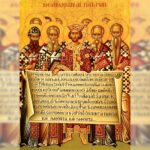
Christians have worshiped the third Person of the Trinity, along with the Father and the Son, since the church’s earliest days. In A.D. 381, the Council of Constantinople confessed belief “in the Holy Ghost, the Lord and Giver-of-Life, who proceeds from the Father, who with the Father and the Son together is worshipped and glorified, who spoke by the prophets.” Followers of Jesus maintained that belief through the medieval, Reformation and modern periods.

Theology of the Holy Spirit took a new turn with the advent of Pentecostalism in the early 20th century. Pentecostals and some charismatics believe Christians can experience a “baptism of the Holy Spirit” subsequent to salvation that elevates them to new levels of spiritual power and faithfulness.
Southern Baptists reject that notion, along with many other evangelicals. Article II of The Baptist Faith and Message states, “At the moment of regeneration [the Holy Spirit] baptizes every believer into the Body of Christ.”
Yet “fear of being lumped together with charismatics and Pentecostals” has provoked some Southern Baptists to steer clear of teaching the full complement of blessings the Spirit desires to confer on all believers, said Jackson, retired pastor of Lakeview Baptist Church in Auburn, Ala.
Most Americans misunderstand biblical teaching on the Holy Spirit, according to Lifeway Research’s 2025 State of Theology report. More than half (57 percent) say the Holy Spirit is a force, not a personal being.
Despite the apparent dearth of teaching on the Spirit, there is much that Southern Baptists get right on this topic, said Allison and New Orleans Baptist Theological Seminary theology professor Adam Harwood. Churches stress the Spirit’s deity, His role in new spiritual birth and sanctification, His ministry of comfort to believers and His production of spiritual fruit in believers’ lives.
Biblical teachings about the Spirit that need more emphasis include:

- The Spirit “is a divine person,” Allison said. “He is not a power. He is not an influence. He is not an it.”
- The Spirit guides believers. As Paul did in Acts 16, contemporary believers should “depend on the Holy Spirit to move us around according to His will,” Allison said, noting the Spirit’s guidance occurs through Scripture, prayer and the wise counsel of others. The Spirit’s guidance always is consistent with the Bible.
- The Holy Spirit illuminates Scripture, helping “us to understand and apply the truth of Scripture,” Allison said.
- The Spirit “disturbs unbelievers, driving home that they are undone, they are not in a good place before God, they are in dire straits before God,” Allison said. “And that readies them to accept the Gospel through repentance and faith.”
- The Spirit helps believers pray “by interceding before the Father according to His will,” Harwood said. “The truth that God’s Spirit helps us when we pray should bring us great comfort.”
- “The same Holy Spirit who empowered Jesus also empowers us to live the Christian life,” Harwood said.
- The Spirit “does not empower believers for their own benefit,” Harwood said. Rather, He empowers Christians “to be faithful witnesses of Jesus through God’s Word to all people.”
‘Fullness of the Spirit’
“The consequences of neglecting these biblical truths are that believers will fail to experience the Spirit-empowered and fruitful lives God intends for His children,” Harwood said. “Pastors and Christian leaders would do well to study and teach biblical truths about the person and work of the Holy Spirit.”
A more robust theology of the Holy Spirit would lead to practical differences in churches. It did for Jackson. He preached often at Lakeview on the person and work of the Holy Spirit, including a 20-part series on the gifts of the Holy Spirit. He recommends other pastors preach more on the Holy Spirit, which can occur naturally in a sermon series on Acts.
Allison suggested preaching through John to cover several major Bible passages on the Spirit. Worship services should include prayers for the Spirit to illumine the Word He inspired, and evangelism should be preceded by prayers for the Holy Spirit to convict nonbelievers and prepare them for the Gospel message.
A reemphasis on the Holy Spirit could rejuvenate evangelism among Southern Baptists, Jackson said, replacing mere pragmatism with spiritual power.
“The fullness of the Spirit results in a boldness in Gospel witness that often is not going to take place” otherwise, he said. A “gregarious, extroverted person” might talk about Jesus apart from the Spirit’s empowerment. But an introvert will not talk about Jesus unless he or she “is walking in the Spirit.”
Jackson knows firsthand that depending on the Holy Spirit works. He first asked the Holy Spirit to fill him as a college student more than 50 years ago, influenced by the teaching of Campus Crusade for Christ (now Cru). Since then, part of his daily confession of faith has been, “O Lord, I ask you to fill me with your Spirit. I do not ask because I am deserving but because I am weak and helpless and apart from you I can do nothing.”
“I began to walk in the Spirit in March 1967,” he said. “That’s been almost 60 years, and my life hasn’t been the same.”