
NASHVILLE (BP) – A desire to protect Southern Baptist theology is motivating at least one Southern Baptist theologian in Texas and a North Carolina pastor-historian to look to the Nicene Creed to shore up some importance stances, but opinions differ on the best way for Southern Baptists to affirm the ancient creed.
An electronic search of SBC Annuals yields only one reference to the Nicene Creed in the first 178 years of SBC Annual Meeting proceedings and reports: a mention of it in the introduction of O.S. Hawkins’ 2003 Convention Sermon.
That changed the past two years, when the Nicene Creed was mentioned more than a dozen times in Annual Meeting proceedings and reports. The discussion turned on whether the SBC should affirm the ancient confession of faith in some official capacity. The discussion may continue at this year’s Annual Meeting in Orlando, Fla.
“Polls repeatedly conducted by Lifeway Research show large numbers of evangelicals hold unorthodox beliefs about God,” said Malcolm Yarnell, research professor of theology at Southwestern Baptist Theological Seminary and an advocate for SBC affirmation of Nicaea. “When theologians today fail to teach the ancient creeds, including those of Nicaea and Chalcedon, we allow both new errors and old heresies to thrive. False teachers, including Mormons and Jehovah’s Witnesses, consider Southern Baptists a ripe mission field, precisely because of this lacuna.”
Yarnell does not know the best way for the SBC to affirm the Nicene Creed, but he says some affirmation should occur.
“The procedure for helping our numerous theological institutions recall the importance of basic Christian beliefs might include a change in the confession, a change in the bylaws of the Southern Baptist Convention or another method. I pray wisdom guides us in the proper way.”
Others are not sure a formal affirmation is needed. The SBC Executive Committee declined to take action on two separate 2024 Convention messenger motions advocating Nicene Creed affirmation. In response to both motions, the EC noted in the 2025 SBC Annual that “Southern Baptist churches and entities, acting autonomously, may choose to adopt confessional, doctrinal, or theological statements at their discretion.”
Southern Baptists appear united in their agreement with the Nicene Creed’s statements about Jesus. They differ on the need to include that creed in the Baptist Faith and Message (BF&M).
‘One essence with the Father’
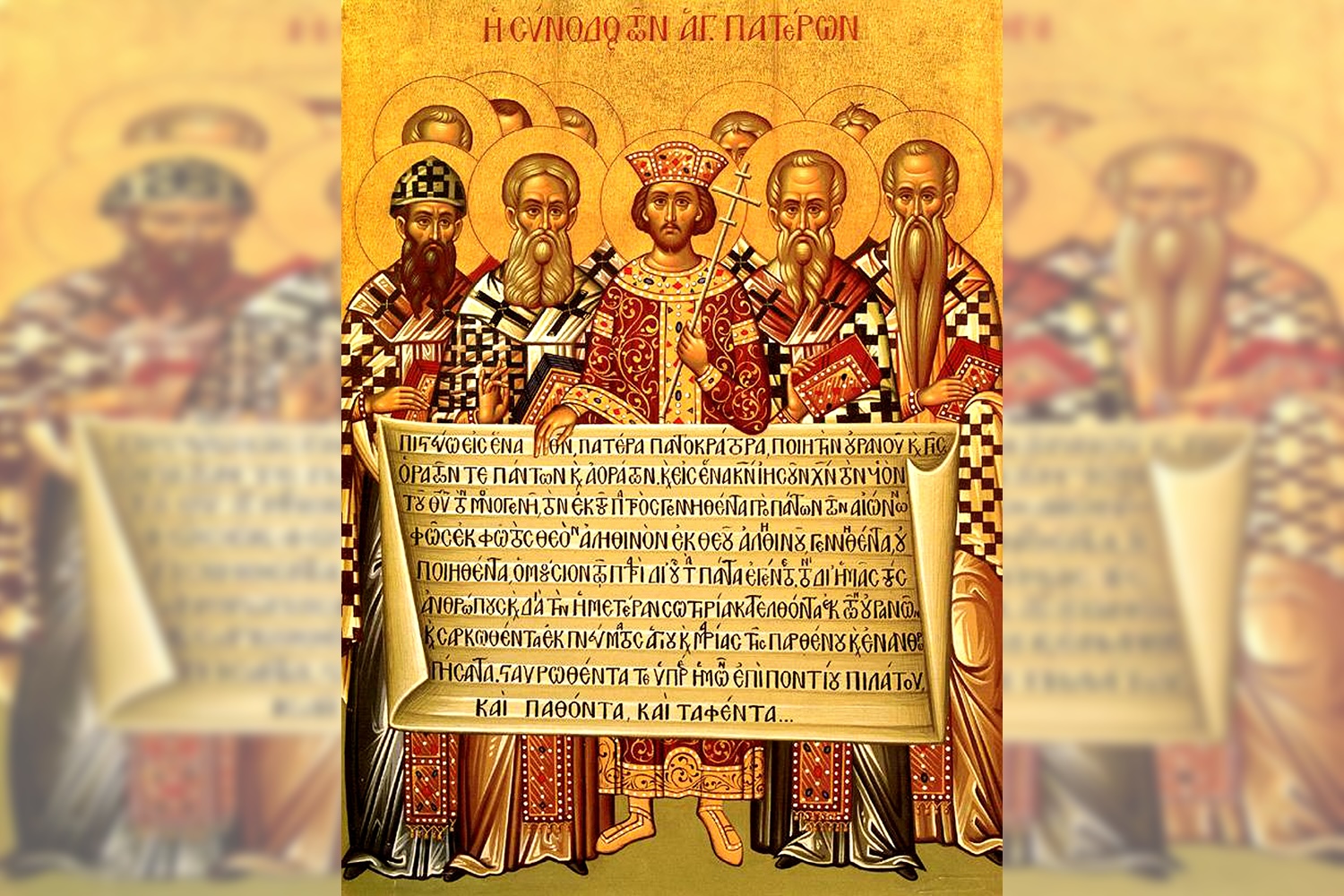
The Nicene Creed was first adopted by the Council of Nicaea in AD 325 and amended in 381 by the Council of Constantinople. It countered the teaching of an ancient heretic named Arius who said the Son was the first and highest created being but was not equal to God the Father.

The Nicene Creed affirmed belief “in one Lord Jesus Christ, the Son of God, the Only-begotten, Begotten of the Father before all ages, Light of Light, Very God of Very God, Begotten, not made; of one essence with the Father; by whom all things were made.”
Arianism has been recycled in various forms over the centuries, including in the doctrine of cults and the deism of early Americans like Thomas Jefferson.
Baptists consistently opposed that heresy. At times they drew from the Nicene Creed, as in the Second London Confession of 1689, “one of the most important of all Baptist confessions,” according to Baptist historian William Lumpkin’s “Baptist Confessions of Faith.”
Borrowing phrases from Nicaea, the Second London Confession stated that the Son is “of one substance” with the Father and is “eternally begotten of the Father.”
A 2025 SBC resolution “honoring the centennial anniversary of the Baptist Faith and Message” stated, “From our confessional beginnings, Baptists have identified ourselves with the historic Christian tradition, especially on the doctrines concerning Christ and the Trinity as exemplified, for example, by the Nicene Creed.”
So, why do some say a further emphasis on Nicene doctrine is needed now?
Yarnell told Baptist Press there are two factors. First, “deeply embedded in portions of the Southern Baptist academy” are discussions of whether God the Son has submitted to God the Father eternally and whether the Son emptied Himself of some divine attributes when He became human. Yarnell thinks some ideas propounded in those discussions challenge the biblical doctrine of Christ.
Second, some polls “indicate deep tendencies toward heresy and error regarding the identity of God,” said Yarnell, author of “Word,” a volume explaining the person and work of Christ in B&H’s Theology for Every Person series.
Nearly half of Americans (49 percent) agree that “Jesus was a great teacher, but He was not God,” according to the 2025 State of Theology Study by Lifeway Research and Ligonier Ministries.
“The two major classical dogmas, of God the Trinity and of Jesus Christ as truly God and truly human, separate true churches from counterfeit churches,” Yarnell said. “The fourth century theologians who crafted the Nicene Creed, including Athanasius and Gregory Nazianzus, exegeted their ideas directly from the biblical text. They were responding to deceptive heresies which have never disappeared.”
‘The Nicene Creed stands’
Andy Davis, a church historian and pastor of First Baptist Church in Durham, N.C., told BP the Nicene Creed is more detailed in its teaching about Jesus than the BF&M. While the SBC’s confession of faith is entirely correct in what it states, Davis believes a clever heretic like Arius “would be able to swim through it,” potentially claiming it permitted his teaching.
“Arius could probably take on the BF&M,” Davis said, explaining that Arius might agree Jesus is “the eternal Son of God” (Article 2) but redefine the terms to fit his heresy. That should not count against the BF&M, he said, because it was not written specifically to counter Arianism. The Nicene Creed, in contrast, “is like a very fine mesh, and [Arius] can’t swim through it.”
If a believer is combating attacks against Christ’s deity, Davis said, the BF&M “is not your weapon. You want the Nicene Creed.”
Pastors should study and teach the doctrines of key ecumenical councils like Nicaea (325), Constantinople (381) and Chalcedon (451), Davis said. Whether the SBC needs to formally affirm the conclusions of those councils remains an open question for Davis.
“Use them all,” Davis said of the various Christian creeds. “We are not required to use BF&M only. We’re actually not required to use it at all. But wherein it’s helpful, use it. But if you need more help on doctrines of incarnation, then the Nicene Creed stands and has since 325 to help with that.”
SBC President Clint Pressley agrees pastors should learn and use the Nicene Creed, but he believes the Convention need not formally adopt it.
“The BF&M is sufficient for Southern Baptists and has served us well for 100 years,” Pressley said. “While the Nicene Creed is excellent, I don’t think it’s necessary to further define who we are. In addition, I’m not aware of a widespread discussion around the Nicene Creed.”
Sections of Baptist confessions on the Trinity and the person of Christ have shrunk over the years. The Second London Confession’s three detailed paragraphs on the Trinity and 10 on the person of Christ decreased to one total paragraph on those doctrines in the 1833 New Hampshire Confession of faith, a forerunner confession of the BF&M.
That grew to four paragraphs in the BF&M (2000). SBC messengers in Orlando this summer will have to decide whether that is sufficient.