
SICILY, Italy (BP) – “The goal is to get the Gospel out,” says Steve Brown, a missionary in Europe serving as a team leader through the International Mission Board for 22 years, the last five based in Palermo, Sicily.
He recently came up with a new strategy for doing so, specifically designed to appeal to members of smaller and rural Southern Baptist churches.
“The majority of our ministry has been in major metro areas,” Brown told Baptist Press. “Over the years we’ve noticed and grew a heart for rural people, where there aren’t many evangelical churches.
“We can still minister in the city we live in,” Brown continued. “But we want to also take our heart and a real burden for people to hear the Gospel who live outside the major cities. This grew out of being aware of a lack of churches and of a Gospel presence in rural areas.”
The IMB has approved the concept of smaller churches in the U.S. connecting with rural areas in Europe, Jeff Clark told Baptist Press. Clark is the IMB’s strategist for its Rural Network.
“This is our first real initiative to involve rural churches in the U.S. and Europe,” Clark said. “Since 2019 we’ve been strengthening rural churches worldwide.”
At least 45 percent of the world live in rural areas, Clark said, giving credit to Brown for his proposal to connect smaller churches in America with churches in non-urban areas in Europe.
“Often rural churches don’t think they can be actively involved in missions,” Clark said. “They go, ‘I’m just a farmer; how can I be involved?’ We already have missionaries who farm, who train farmers. With [Brown’s] proposal, we can first get [members of smaller churches in the U.S.] to see they can be involved hands-on in missions. Second, to let them know how they can be involved.”
Leaders in smaller churches in several states are making plans to travel to Europe in late summer to connect with IMB missionaries and churches in non-urban areas.
Wyoming Baptists plan to go to Spain, where 84 percent of the land is rural and where 16 percent – nearly 800,000 – of the nation’s 48 million people live in 53 towns classified as rural, according to the European Union’s Rural Pact Community Platform.

“I have always thought Spain would be the one country I’d like to go to,” Bill Harvison told Baptist Press. He’s pastor of Victory Baptist Church in Powell, near Cody, Wyo., and in his first one-year term as president of the Wyoming Southern Baptist Mission Network.
“Spain’s culture is kind of laid back; it always looked interesting to me. This opportunity opened for a vision tour and I said, ‘This sounds like me right here!’ I think it’s going to be cool.
“I hope my church people see the need and opportunity of missions whether in Spain or in Pinedale, [Wyo., where Victory Powell plans to help this fall in a church plant,] and get more involved in missions and doing more,” Harvison continued. “This is an opportunity to take the Gospel to the lost. I see Spain as a place our people can say, ‘Let’s do this!’”
Oklahoma has already started in Slovakia, where 78 percent of the nation’s land is rural and 45 percent of the nation’s 5.3 million population live in towns of less than 5,000 residents, according to the U.S. State Department.
In what perhaps was a pre-launch of the rural churches’ U.S./Europe partnership, Scott Melton, pastor of Northeast Baptist Church in Ponca City, Okla., was one of seven Oklahoma leaders last April who went on a vision tour of Slovakia, Hungary and the Czech Republic.
“In Slovakia we met with six area pastors and saw the unity they had as a group of pastors working together,” Melton said. “That struck a chord with us. They were all small churches trying to make an impact in their communities and wanting to start work in other communities.
“We’re not a large church but we too want to make an impact,” Melton continued. Northeast Ponca’s four-year partnership with Bangladesh recently concluded.
Melton meets every month via Whatsapp with the group of Slovakian pastors he met last year, one of whom visited Northeast Ponca the first week of February this year. The church has plans for a mission trip to Slovakia in July to do a VBS, three-day youth rally and canvassing in neighboring towns with an eye towards starting Bible studies.
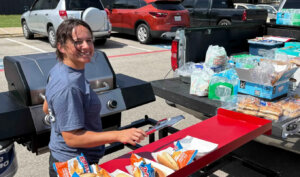
“The key is to minister well in rural areas,” said Brown, who is spearheading partnerships of smaller American churches with smaller European churches. “They’re hard to get to. We could go, do a block party and hand out information, but the key to long-term effective ministry is a permanent presence, my wife and I realized. That led us to look for like-minded churches in these areas of rural Sicily to partner with.
“We cultivated relationships with a few churches and took 10 to 15 percent of our time to encourage the body of Christ there and also get encouragement from them. We began to also sort of dream with the pastors and say, ‘What can we do? What do you want to do? Can we do this together?’ Most pastors would love to do more, would love to reach their community, but they lack resources, members and maybe even the ability to try and do something new.”
Brown has been dabbling in rural ministry (in addition to work he’s doing in major metro areas as European team leader for five years). East Cooper Baptist Church in Mount Pleasant, S.C., has been a four-year partner in that rural ministry.
“Everything we do is based on deep relationships and trust with one another,” Brown said. “The church of East Cooper has loved the people so well the [Slovakian] pastor asked them if his kids could go there for a visit!
“The church [in Sicily] sits on the grounds of an orphanage. The church is now growing and extremely encouraged to serve their community. They realized, ‘What these Americans are doing we can do as well!’ Now they are effectively engaging with their community.
“What we want to ultimately see is effective ministry and disciples made by our IMB teams in partnership with local European churches and SBC churches working hard together, mutually encouraging one another, and proclaiming the gospel of Jesus Christ among rural peoples of Europe,” Brown said. “I like that.”