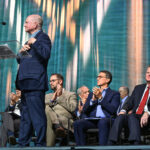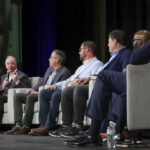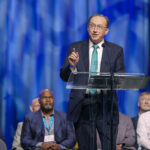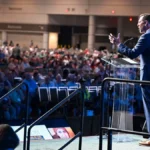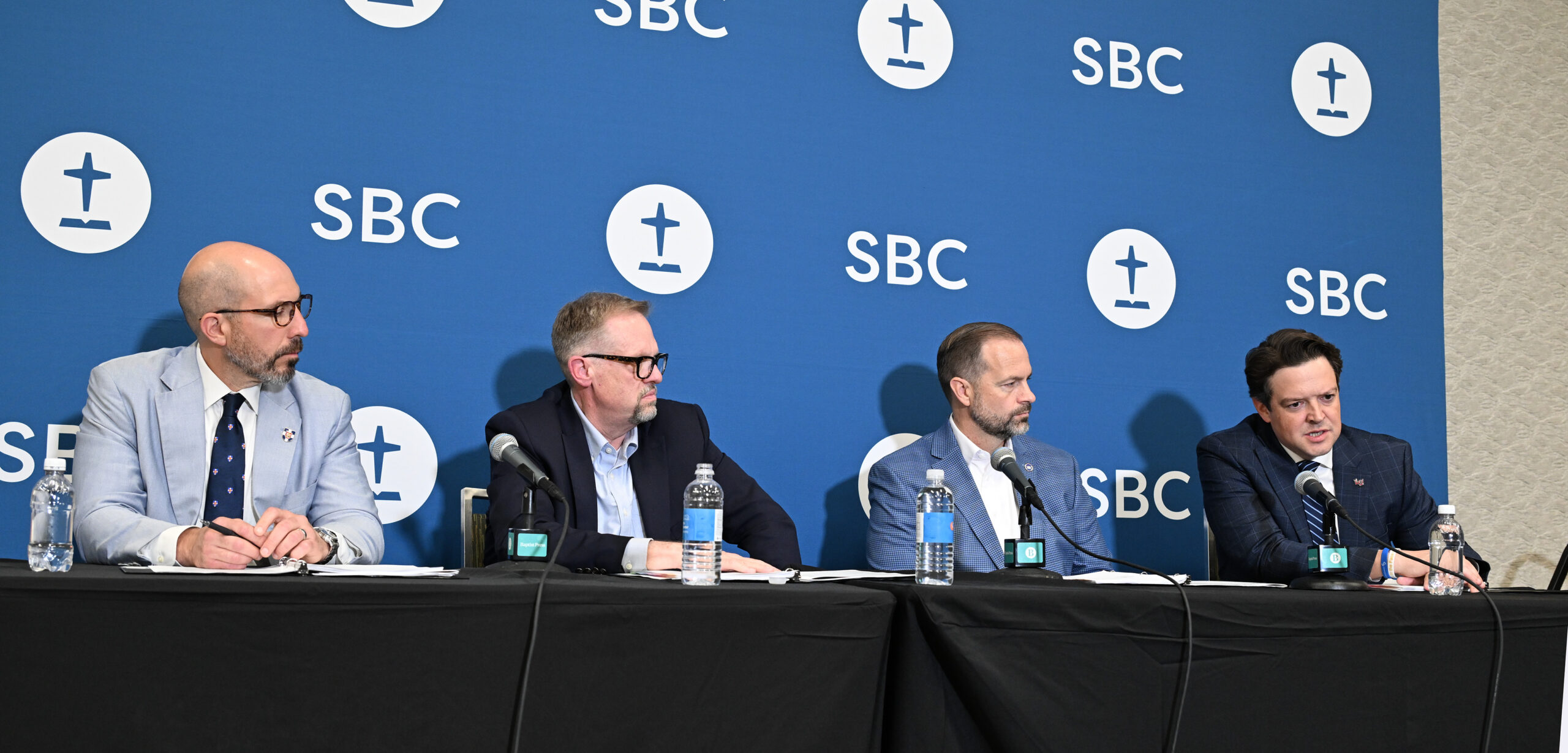

ORLANDO (BP) – More than 40 resolutions were submitted by Southern Baptists for consideration by the SBC Committee on Resolutions this year, and the committee used 18 of those to craft the 11 resolutions adopted by messengers to the SBC Annual Meeting in Orlando June 9-10.
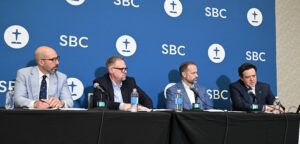
A resolution on the nature and the importance of the physically gathered church in a digital age “was very important to prioritize,” chairman Hunter Baker, provost and dean of faculty at North Greenville University, said at a press conference following the resolutions report.
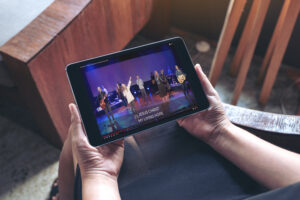
“One of the things that I’ve observed as a Baptist layperson is, especially in bigger cities, you’ll have people who just sort of tune in to YouTube for their church experience. I think that’s probably become quite a common thing after COVID,” Baker said.
Jeremy Pierre, an elder at Clifton Baptist Church in Louisville, Ky., and dean of the Billy Graham School of Evangelism, Missions and Ministry at Southern Baptist Theological Seminary, said the issue matters not just because of ecclesiology but also anthropology.
“Ecclesiology is obviously the study of the church. What is the church? Well, it’s a gathered people. You have to gather,” Pierre said. “The New Testament is full of commands that we call ‘one another commands’: loving, serving, forgiving – things that require physical presence under the Word of God.”
A lot of rich doctrine regarding the church compelled the committee to address what it looks like in a digital age, Pierre said.
“We would also make the argument that [the issue] is anthropological,” he said. “It’s about humanity itself. Human beings were made by God to form one another in community with each other under the revealed Word of God.
“We actually think it’s dehumanizing to individuals to be separated from each other. To take a three-dimensional relationship and flatten it to a two-dimensional image, it just doesn’t work. You can’t carry out the ‘one anothers’ that are meant to build and to form one another.”
On immigration, Baker acknowledged flaws in the American system that led to a resolution.
“In my view, one of the tremendous problems is that the system has been overwhelmed by just the sheer number of people who have come over, and we don’t have an adequate judicial apparatus or regulatory apparatus to give everybody due process,” Baker said. “Probably the asylum exception has been overused in a way that is not manageable.”
The United States, Baker said, has been left with “an immigration system that is highly discretionary in terms of its application and the way it’s run. It leaves people not knowing where they stand. It’s just very difficult to manage.”
The committee, he said, was arguing for a consistency of government processes “while at the same time making clear to messengers that we absolutely deny any kind of tribalism or racial view of the thing.”
Regarding antisemitism, Baker said generational changes are evident in society.
“I think that speaking as somebody who’s a college professor and highly aware of how academics are thinking and college students, I think that we’ve gone beyond just sort of a resistance to the state of Israel and its politics into something more sinister,” Baker said.
A rise in hate crimes and campus intimidation against Jews led the committee to unanimously agree they wanted to take up the issue, Baker said.
Discussion on the convention floor during the committee’s report included an amendment to add Charlie Kirk’s name to the resolution on political violence and speech. The amendment failed.
Ryan Helfenbein, vice president of communications at Liberty University, explained that the decision not to add Kirk’s name “came down to precedent.”
“In this case, we had a large catalog [of resolutions], and we went back and looked. There were many events historically going all the way back to MLK and others, but [names] just simply were not mentioned,” Helfenbein said.
During floor discussion, Helfenbein said he was personal friends with Kirk and had accompanied him on a preaching trip to South Korea just days before his death.
Baker said the committee anticipated Kirk would be part of the conversation surrounding a resolution on political violence.
“As we thought about it, we realized that we’ve had attempted assassinations of the president, we’ve had a couple of Minnesota lawmakers who were killed. There’s been a variety of different incidents of this sort, and I think that we really wanted to try to capture that broader phenomenon,” Baker said.
The relevance of resolutions passed annually by the SBC endures, said Evan Lenow, a messenger from Morrison Heights Baptist Church in Clinton, Miss.
“Of course, we know that resolutions technically are nonbinding as our polity goes, however they do represent what the body of messengers that gathers together at an annual meeting each year believes and wants to promote as, ‘These are important issues to Southern Baptists,’” Lenow said.
Speaking as the new president of the Ethics & Religious Liberty Commission, Lenow said the commission looks to resolutions “for guidance on what issues Southern Baptists want us to speak on. So, despite the fact that they are nonbinding, they are still important for our work as Southern Baptists.”