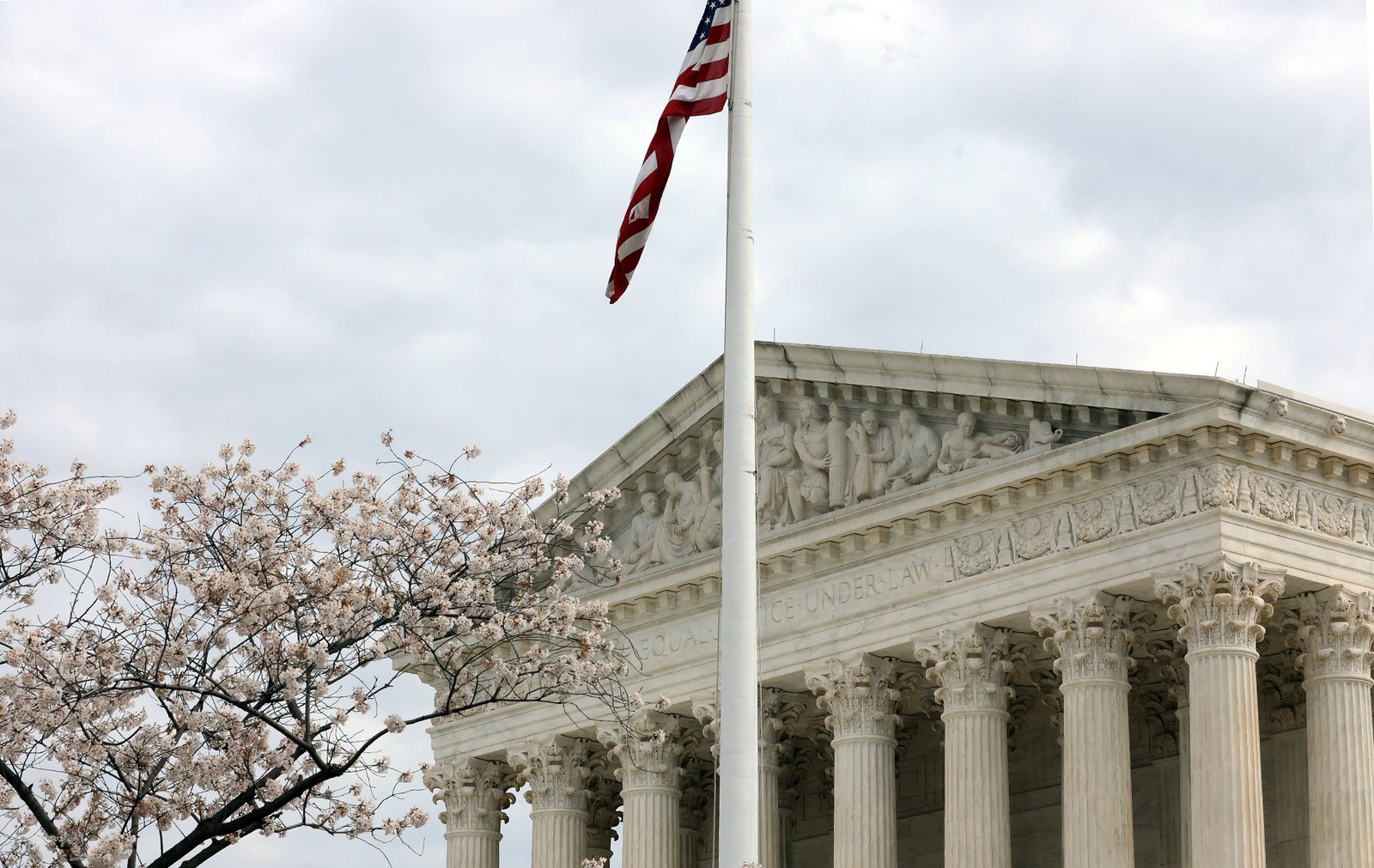

WASHINGTON (BP) – Haitian pastor Keny Felix professed terror to Baptist Press regarding the future prospects for the 1.3 million immigrants living in the U.S. under temporary protected status (TPS).
As the U.S. Supreme Court heard arguments April 29 impacting the future of TPS, Felix was advocating on Capitol Hill as he has done frequently in the past year in Washington, Miami and Ohio. As president of the Southern Baptist Convention National Haitian Fellowship and senior pastor of Bethel Evangelical Baptist Church in Miami, he ministers to those directly impacted by the litigation.
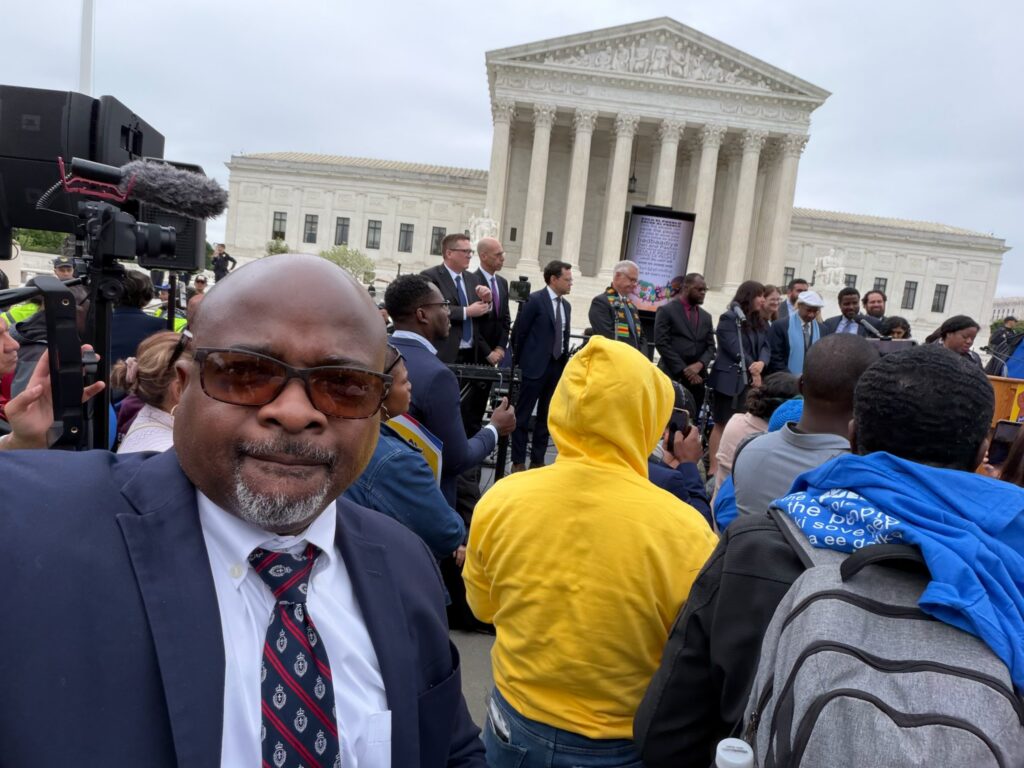
“There’s a part of me that’s terrified,” Felix told Baptist Press after SCOTUS heard arguments on two combined cases regarding TPS for Haitians and Syrians. “Although a decision is not expected until June, I’m scared for what may happen to the 1.3 million lives that will be impacted by the court’s decision, not just my Haitian brothers and sisters.”
Amy Howe, an attorney with the nonpartisan SCOTUSblog, reported that the court appeared divided on the questions of the case, while the transcript of the arguments shows keen interest among conservative and liberal justices.
“The Supreme Court on Wednesday was divided in Mullin v. Doe over the Trump administration’s efforts to strip citizens of Haiti and Syria of their protections under a federal program that allows foreign citizens to remain in the United States when the U.S. government believes that it is not safe for them to go home,” Howe wrote. “After roughly one hour and 45 minutes of oral arguments, it was not clear whether a majority of the justices would allow the challengers’ claims to go forward, or whether the challengers would ultimately prevail if they did.”
Wednesday’s arguments, which consolidated the cases “Mullin, Sec. of Homeland Security v. Doe” and “Trump, President of United States. v. Miot,” centered on whether respondents could secure judicial review of the Trump administration’s attempts to end TPS for Haitians and Syrians in particular, but other TPS holders broadly.

While attorneys for the administration argued that as TPS was established, judicial review of administration decisions is prohibited; attorneys for the TPS holders argued that when Congress established TPS, lawmakers implied judicial review to make sure the administration complied with guidelines in determining TPS, the transcript indicates.
The Trump administration’s desire to end TPS for Haitians and Syrians is race-based against Black and brown people, argued respondents’ attorney Geoffrey M. Pipoly.
“It’s certainly a race-based claim, we would argue, given the … evidence certainly suggests racial animus,” Pipoly said in responding to questions from Associate Justice Elena Kagan. “We do think it’s racially motivated. … I certainly think that the record supports the idea that the President in particular has focused in on Haitians, but it is broader than that. Haitians are our plaintiffs. But the … relevant group here is all TPS countries, all of which are non-white.”
Attorneys for the administration refuted the claim.
“This claim just doesn’t get off the starting blocks,” D. John Sauer, solicitor general of the U.S. Justice Department, told the court. “The Court should apply the logic of Regents (Department of Homeland Security v. Regents of the University of California, 2020) which says, first of all, the President’s statements are less relevant; the Secretary’s statements are what matter. Again, these kinds of statements don’t refer to race.”
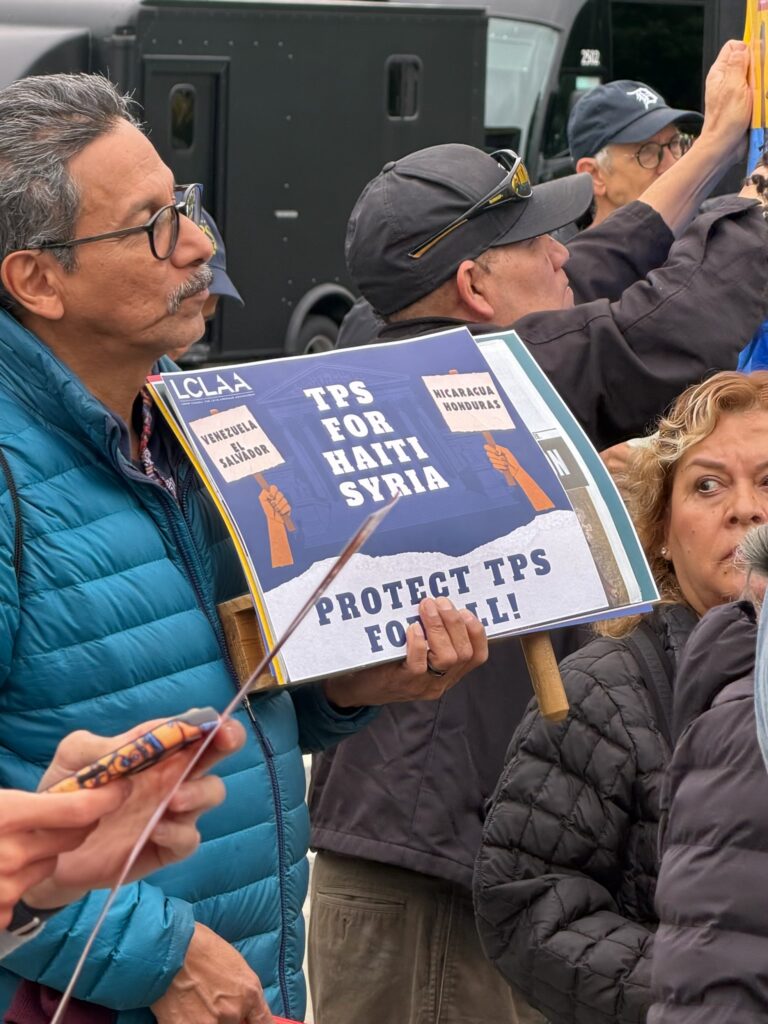
During oral arguments that morning, Felix rallied with others outside the Supreme Court.

“Haitians, Venezuelans, Nicaraguans, Cameroonians and others from Burma (Myanmar), Ethiopia, Honduras, Lebanon, Nepal, Nicaragua, Somalia, South Sudan, Sudan, Syria, Ukraine, and Yemen,” attended the rally, Felix told Baptist Press, “all pleading for the opportunity to continue life in the United States as conditions back home remain challenging.”
Felix was among Haitian pastors and community advocates who helped secure passage April 16 of a House bill extending for three years TPS for about 350,000 Haitians. Wednesday, he advocated for passage of the bill in the Senate, meeting with staff members of U.S. Sen. Rick Scott (R-FL) and U.S. Sen. Ashley Moody (R-FL), as well as staff members of the South Florida Republican House delegation — including Mario Díaz-Balart, Carlos Antonio Giménez and María Elvira Salazar — to thank them for their support of the April 16 legislation. Felix and others met with the staff of Senate Minority Leader Chuck Schumer (D-NY).
Felix was among Haitian clergy from Florida, Massachusetts and New York who delivered to senators an April 20 letter from Faith in Action, the Haitian Evangelical Clergy Association and 610 clergy signatories advocating for passage of the bill in the Senate. Jewish, Catholic and Protestant leaders signed the letter, according to a copy of the letter Felix shared with Baptist Press, spanning 18 pages.
A decision from the Supreme Court is expected by June, but Congressional legislation could extend TPS outside of a court decision.
EDITOR’S NOTE: This story was updated to clarify the names of congressional members whose staff met with Keny Felix.

Related posts:
 Mohler calls for end to ‘confusion’ around pastoral role
  Refugee women persevere amid peril, harsh conditions
  Hardage to retire from BGCT
  Southern Baptist ‘Class of 2024’ church plants the result of multiplication
  IMB selects Langley for church relations role
  Nepal’s quake prompts prayer; Baptists respond
  After two years of litigation, one count remains in Johnny Hunt suit
  Visa bans halt international adoptions for at least 300 U.S. families