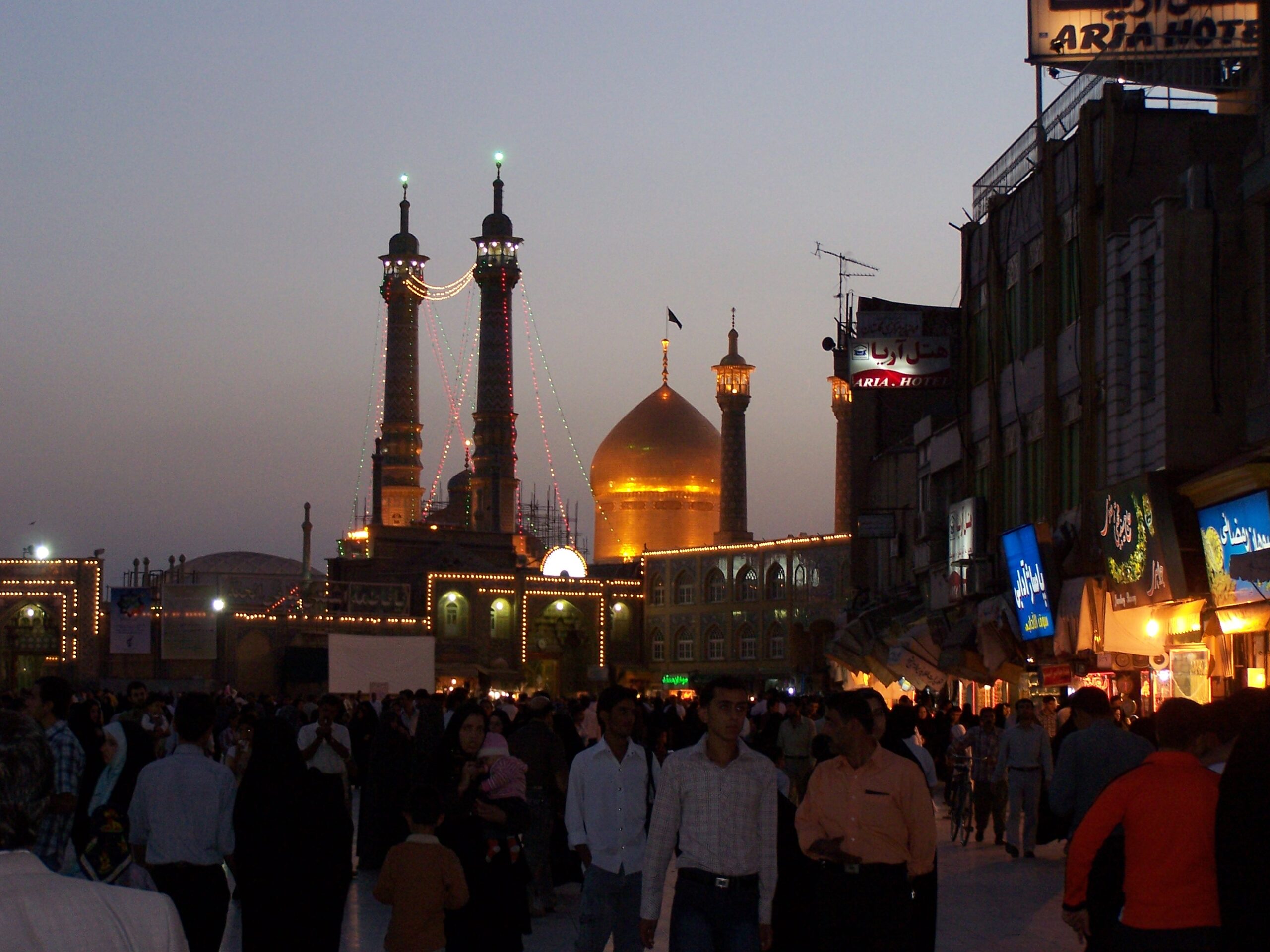

NASHVILLE (BP) – American Christians keeping track of recent protests throughout Iran should continue to pray for an evangelical Church with a bigger footprint than most may imagine, said a Southern Baptist seminary professor.
Before his current role as professor of missions and chair of the Missions and Intercultural Studies department at Gateway Seminary, Philip O Hopkins lived and taught for nearly 20 years overseas in Armenia, Turkey, and the United Kingdom. That time included numerous visits to Iran and contributing written pieces published in the country.

“I had several Iranian students and just developed a heart for the people,” said Hopkins, who earned a Ph.D. in modern Iranian history from the University of St. Andrews.
A severe economic downturn in late December sparked widespread protests throughout the country. Now in their third week, those protests grew with social media reports of police joining marchers rather than following crackdown orders. Although an internet blackout late last week limited updates, rights groups say the death toll has grown to at least 544 and some 10,000 detained.
Protests – and attacks on them – have also reached the U.S., where a U-Haul truck drove into a crowd of protesters in Los Angeles on Sunday.
Economics began the protests, but chants quickly moved toward regime change as government authorities blamed outside forces like Israel as instigators. President Trump said the U.S. would “get involved” due to the deadly force used against protesters and reported yesterday that Iranian leaders had reached out to negotiate. A briefing is scheduled for Tuesday (Jan. 13) to go through options.
Iran has been an Islamic Republic for 47 years. And although it is illegal for Christians to proselytize, the country’s constitution allows them to practice their faith. That is rooted in the Iranians’ pride over their education system, which allowed Hopkins to teach there.
“You can buy Bibles on the streets in Iran, even today,” he said. “There are museums in Iran where they have Bibles dating back to around 800 AD-1200 AD. They want people to see that there’s a deep Judeo-Christian heritage in Iran that goes back to Cyrus the Great. Iran has some of the most educated people in the world and takes pride in that.”
Christian missionaries enjoyed more freedom in Iran prior to the 1979 revolution. And while the Church experienced hardship with that change, it also followed a historically familiar route when facing such challenges.
“There were about 3,000 Bible-believing Christians in Iran in 1979, when it was open to the West. There was a wide presence of missionary engagement,” Hopkins said. “Roughly 50 years later, with a lack of religious freedom, the numbers of Christians who come from a Muslim background range from 300,000 to 1.5 million.”

He considers the higher end of those figures an exaggeration, but the point is made that Iran’s Christian church has grown under Islamic rule. Some of that could be attributed to the country’s growing number of secular Muslims.
Out of the roughly 90 million Iranians, there are “roughly 50 million people or so [who are] cultural Muslims. I would compare them to many American Christians in the South; the other 40 million are on the extreme ends of secularism (20 million) and Islam (20 million).”
“When the West had to leave, the few Iranian Christians remaining had to ‘own it.’ They ended up moving into more house churches where they could be a bit freer in their worship. More Muslims started converting to Christianity. The language was more in Farsi instead of English, Armenian or Assyrian.”
Iran is no stranger to protests. The most recent one from 2022-2023 began over the death of a 22-year-old woman protesting hijab rules and, like the current wave, spread to all 31 provinces. More than 500 were reported killed, with about 20,000 detained.
Prayer is a potent weapon for all those involved.
“As Christians, our citizenship is first and foremost in heaven,” said Hopkins. “My concern about all this isn’t what’s best for Iran or what’s best geopolitically or even what’s best for America. How do we as Christians, as the body of Christ, as the church universal, and as a church local, help our brothers and sisters in Christ who are suffering? That’s the perspective that I think sometimes is lost when it comes to all these geopolitical conflicts.
“I think the way we can pray is to pray that God strengthens the Church through this. We need to pray that the Christians persevere.”
See Baptist Press’ companion story here, featuring interviews with the founder of Iran Alive Ministries and with an Iranian Baptist pastor in the U.S.

Related posts:
 State Department urges Americans to leave 14 Middle Eastern countries
  ‘No safe place anymore’ for Lebanon Baptists as Israeli-Hezbollah war escalates
  Religious persecution continues in Venezuela despite Maduro’s capture, CSW reports
  ERLC again commends CPC tag for Nigeria; USCIRF, others turn up heat