
WILLOW GROVE, Pa. (BP) – The National African American Fellowship of nearly 4,000 churches and missions is calling for extended dialogue among Southern Baptists on the proposed Truth and Unity constitutional amendment.
The amendment against women preaching to the assembled congregation represents an “ecclesial shift” in the Southern Baptist Convention that must be addressed before the final vote at the 2027 SBC annual meeting, NAAF said in its statement signed by newly elected president Jerome Coleman.
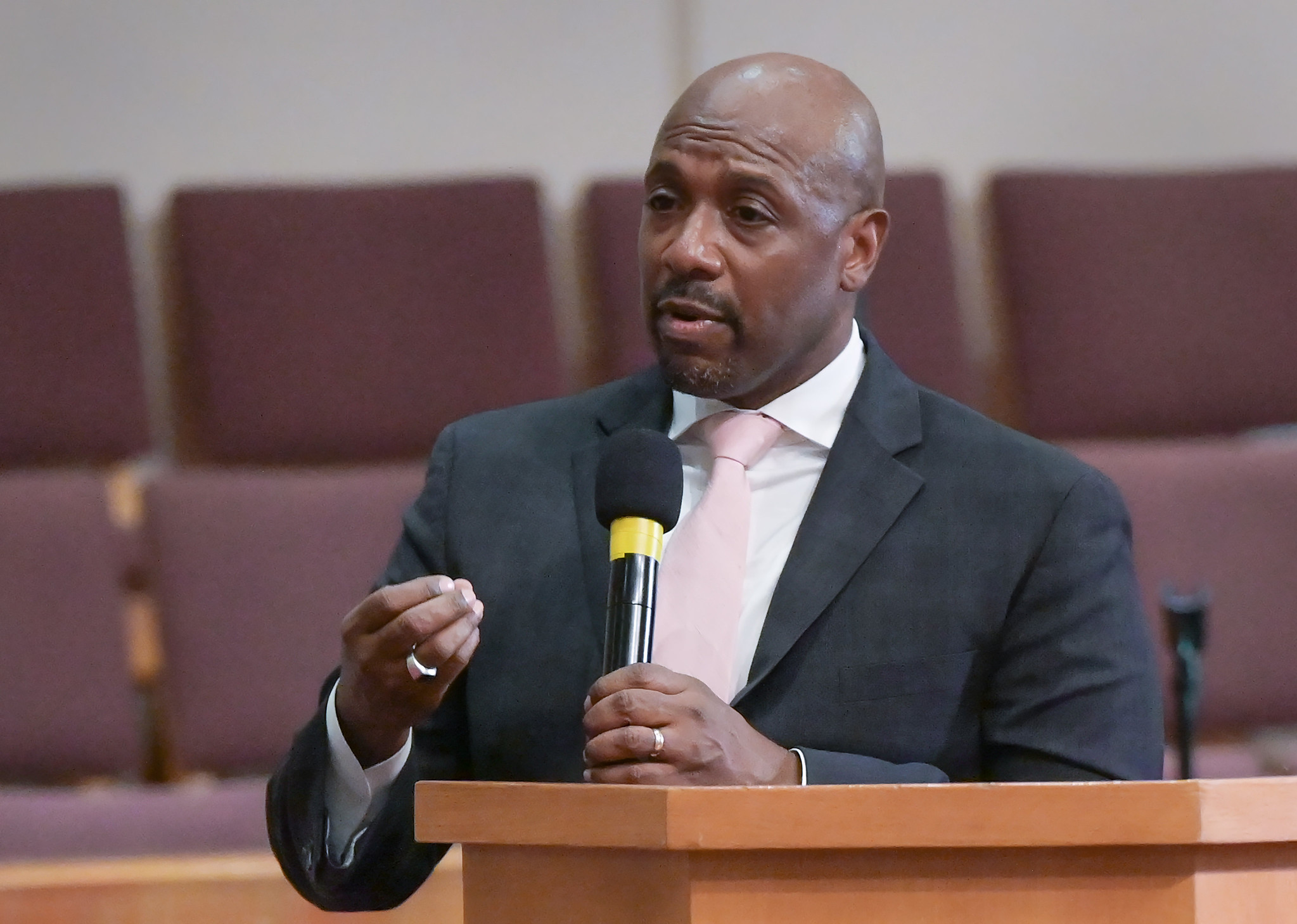
“We fully respect the right and the conscience of the messengers who cast their votes. However, we must honestly confront the ecclesial shift this decision represents,” said Coleman, senior pastor of Crestmont First Baptist Church in Willow Grove, Pa. “The Southern Baptist Convention has historically thrived as a ‘bottom-up’ fellowship, but this constitutional amendment introduces a distinctly ‘top-down’ mandate upon the local church that fundamentally alters our cooperative identity and threatens our cooperative unity.”
More than the required two-thirds, 74.66 percent, of messengers to the 2026 SBC Annual Meeting approved the amendment. But the 25.09 percent of messengers who voted against the change warrants further discussion, NAAF said in its statement.
“We grieve the lack of meaningful, open dialogue leading up to this monumental shift. A decision that fractures our fellowship demands careful listening and mutual respect, rather than swift constitutional mandates,” NAAF said. “If any of our churches had a 25 percent disagreement in terms of the future direction of our church, we all would be greatly concerned. By choosing bureaucratic conformity over historical Baptist liberty, we are narrowing our definitions to the detriment of our cooperative mission.
“We urge a return to a space where we can discuss these convictions openly, recognizing that our unity has never been maintained by edict nor enforcement, but by a shared commitment to our Lord Jesus Christ, our Great Commission, and the freedom of the local church.”

The amendment submitted by Southern Baptist Theological Seminary President Albert Mohler, who titled it the Truth and Unity Amendment, would alter Article III of the constitution to prohibit churches from affirming, appointing or endorsing women “serving in the office or function of a pastor/elder/overseer, specifically preaching to the assembled congregation.”
At least two-thirds of messengers to the June 2027 annual meeting in Indianapolis, Ind., must also approve the amendment for it to take effect.
Among its objections to the amendment, NAAF said the change:
- is “in direct contradiction to Article VI of the Baptist Faith and Message, which explicitly defines the church as an autonomous local congregation of baptized believers, governed by His laws, and exercising the gifts, rights, and privileges invested in them by His Word.”
- is clothed in rhetoric that “creates a troubling theological dichotomy” that frames “one specific viewpoint as the singular standard of truth and conviction,” carrying “a painful implication” suggesting “that those who interpret and/or apply leadership passages differently are not operating in truth, or that they lack biblical fidelity,” and
- “overlooks kingdom work by using vague language to target women preaching to an ‘assembled congregation,’ a term that has no precise definition in the New Testament and therefore “threatens to create arbitrary lines for selective enforcement.”
“The ambiguity introduces possible chaos into daily church life,” NAAF said. “By policing ambiguous spaces rather than celebrating Gospel advancement, the convention substitutes bureaucratic control for biblical clarity.”
Does an “assembled congregation” reference a female youth minister teaching teenagers and male chaperones at camp, NAAF asked. Does it ban a female director from leading a coed Bible study, or a female missionary from teaching doctrine on the mission field?
“By using a term so open to interpretation, we risk policing the very shepherding, pastoring, and teaching functions that women are already actively fulfilling in our local churches every day,” NAAF said. “We are denying reality. Whether they are architecting spiritual formation in children’s and youth ministries, guiding and counseling adult small groups, or functioning as church planters on the front lines of global evangelism, women are doing the heavy lifting of ministry. In these essential venues, the function of what they are called to do, and the necessity of Gospel advancement routinely outpaces rigid bureaucratic titles.”

Mohler, in a press conference following the June 10th vote on the amendment, verbally answered some of the questions NAAF poses in its statement.
“I do not think this applies to any setting other than the setting of the church,” Mohler said. “That would be the church wherever it’s found, but it defines the church in friendly cooperation with the Southern Baptist Convention. … This specifies one [central] function – preaching to the gathered assembly. I don’t think it says anything about anyone teaching Sunday School [or] missionary services. It doesn’t intend to.”
Mohler also said he doesn’t “think the Southern Baptist Convention has the will to go into the life and ministry of individual churches,” in response to a question at the press conference. “I don’t think [the SBC] has any will to spend a great deal of its time and energy basically asking questions beyond what is specified.”
But Mohler’s answers are not part of the amendment as drafted and presented to messengers, which NAAF finds problematic.
“A little yeast works its way through the whole batch of dough,” Coleman told Baptist Press in referencing the amendment’s wording. “The continued ambiguity of ‘assembled congregation’ is open to many interpretations. … If the intention is not to go into the life and ministry of individual churches, then why this mandating to local church pastors as to how they should title and employ their staff persons? This amendment already goes into the life and ministry of individual churches.”
Coleman, elected to NAAF’s presidency June 8, intends to encourage dialogue on the amendment by first meeting with NAAF’s board to discuss the autonomy of the Baptist church and NAAF’s perceptions of the amendment, and will also reach out to the Black Collective of fellowships representing the African diaspora. The board will then develop an action plan, Coleman said, that will likely include panel discussions recorded for viewing by the larger SBC family, with opportunity for continued and documented discussion.
“We hope that these recorded and posted discussions will provoke dialogue from those who view them. Also, I will discuss with NAAF and the Black Collective a specific request that those who support the Truth and Unity amendment agree to a recorded discussion with us,” Coleman told Baptist Press. “We hope this will allow people to see for themselves that women on staff with the title and function of pastor is not liberalism ‘creep’ nor ‘wokeism,’ and that there are persons whose basis of belief is the Bible.
“This is something that we believe is a secondary issue in the church and that we can agree to disagree,” Coleman said, “but still move forward together in our effort to fulfill the Great Commission.”
The amendment “opens the door to amendments that require a pastor to ‘keep his children under control with all dignity,’ and any pastor whose child has been arrested, (is) currently on drugs, etc.,” Coleman posed, with such an amendment requiring “that churches remove such pastors from their pulpits. This is the door we are opening.”
Read NAAF’s full statement here:
Dear Brothers and Sisters,
I am writing to address the recent vote on a formal ban regarding women pastors at the
convention. We fully respect the right and the conscience of the messengers who cast their
votes. However, we must honestly confront the ecclesial shift this decision represents. The
Southern Baptist Convention has historically thrived as a “bottom-up” fellowship, but this
constitutional amendment introduces a distinctly “top-down” mandate upon the local
church that fundamentally alters our cooperative identity and threatens our cooperative
unity.
The move to constitutionally ban churches that have women pastors on staff stands in direct
contradiction to Article VI of the Baptist Faith and Message; It explicitly defines the church
as an autonomous local congregation of baptized believers, governed by His laws, and
exercising the gifts, rights, and privileges invested in them by His Word. The convention is a
voluntary association of independent churches rather than a hierarchical denomination.
Transforming a confession of faith into a mechanism for constitutional exclusion shifts the
convention from a voluntary fellowship into an enforcement agency. This infringes upon the
sacred right of a local congregation to discern its own pastoral leadership under the sole
Lordship of Jesus Christ.
Furthermore, the rhetoric surrounding the “Truth and Unity Amendment” creates a troubling
theological dichotomy. Framing one specific viewpoint as the singular standard of truth and
conviction carries a painful implication. It suggests that those who interpret and/or apply
leadership passages differently are not operating in truth, or that they lack biblical fidelity.
The casual application of the label “liberalism” to conscientious Baptists is deeply unfair and
inaccurate. Faithful, Bible-believing Christians can arrive at different conclusions regarding
the application of pastoral texts without discarding biblical authority or the inerrancy of
Scripture. Disagreement on matters of church structure does not constitute a departure
from orthodox faith.
This amendment overlooks kingdom work by using vague language to target women
preaching to an “assembled congregation.” The New Testament offers no precise definition
for this phrase, thereby, it threatens to create arbitrary lines for selective enforcement. The
ambiguity introduces possible chaos into daily church life: does an “assembled
congregation” include a female youth minister teaching teenagers and male chaperones at
camp? Does it ban a female director from leading a co-ed Wednesday night Bible study, or a
female missionary from teaching doctrine on the mission field? By policing ambiguous
spaces rather than celebrating Gospel advancement, the convention substitutes
bureaucratic control for biblical clarity. By using a term so open to interpretation, we risk
policing the very shepherding, pastoring, and teaching functions that women are already
actively fulfilling in our local churches every day. We are denying reality. Whether they are
architecting spiritual formation in children’s and youth ministries, guiding and counseling
adult small groups, or functioning as church planters on the front lines of global evangelism,
women are doing the heavy lifting of ministry. In these essential venues, the function of what
they are called to do, and the necessity of Gospel advancement routinely outpaces rigid
bureaucratic titles.
We grieve the lack of meaningful, open dialogue leading up to this monumental shift. A
decision that fractures our fellowship demands careful listening and mutual respect, rather
than swift constitutional mandates. If any of our churches had a twenty-five percent
disagreement in terms of the future direction of our church, we all would be greatly
concerned. By choosing bureaucratic conformity over historical Baptist liberty, we are
narrowing our definitions to the detriment of our cooperative mission. We urge a return to a
space where we can discuss these convictions openly, recognizing that our unity has never
been maintained by edict nor enforcement, but by a shared commitment to our Lord Jesus
Christ, our Great Commission, and the freedom of the local church.
In His Service,
Dr. Jerome F. Coleman
President-National African American Fellowship

Related posts:
 For the Church lunch focuses on 100 years of BF&M
  ‘Post-Gospel’ Indy friendly, slow to embrace Church, association rep says
  Baptist organizations, fellowships to meet in New Orleans
  Pressley urges Southern Baptists to walk worthy of Gospel calling
  ‘Accept and bear the weaknesses’ of others, Barber urges in presidential address
  Stone addresses crowd at Conservative Baptist Network breakfast
  SBC DIGEST: Luter on ‘Road to New Orleans;’ NOBTS Mission Week
  National Hispanic Baptist Network workshops focus on women’s ministry, missions, evangelism